
Movement Snacks: Fitting Physical Activity Into a Sedentary Workday

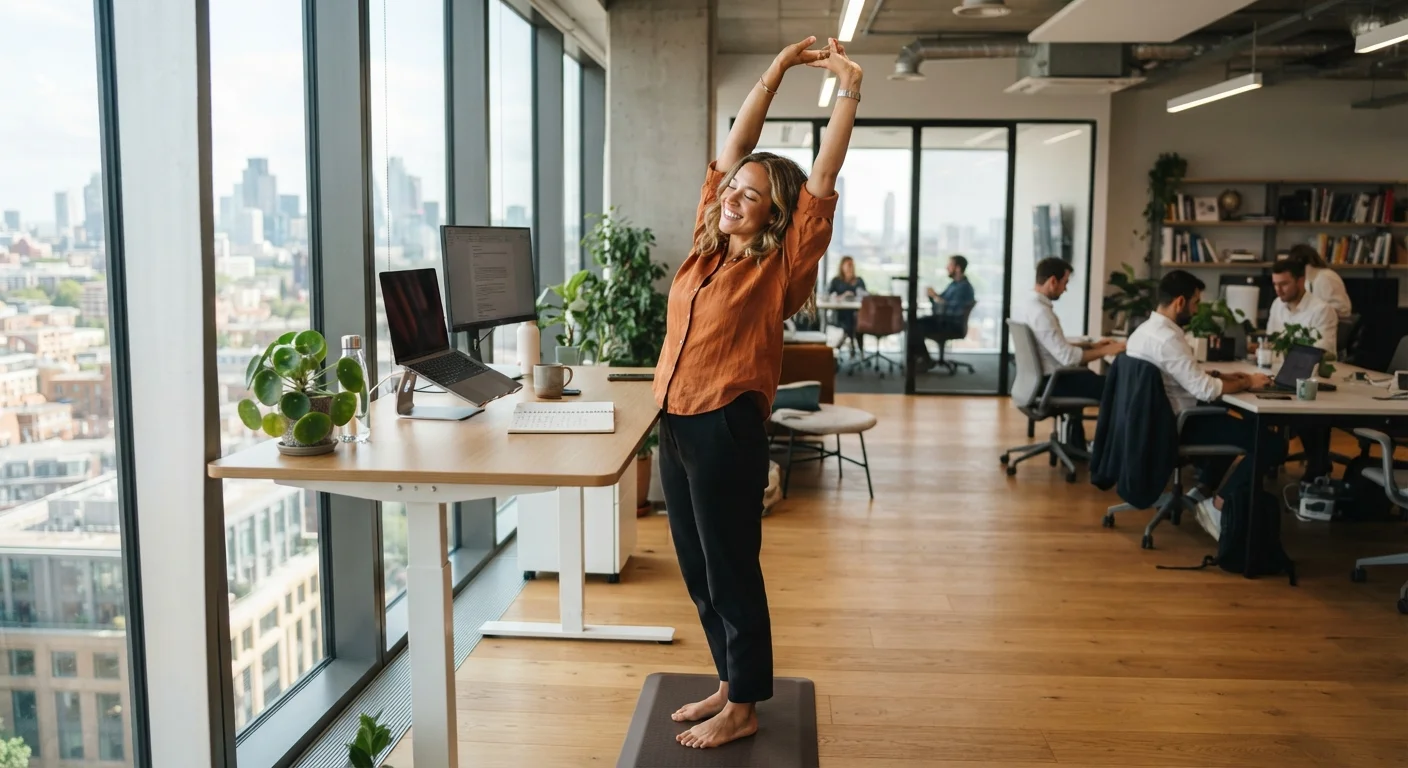
Photo: InfoAlly.net | Finding Info Made Easy editorial
Key Takeaways
- Brief bursts of movement throughout the day, called 'movement snacks,' can help counter the effects of prolonged sitting.
- You don't need a gym or equipment - most movement snacks take two to five minutes and require only floor space.
- Consistency matters more than intensity; small, repeated efforts accumulate into meaningful daily activity.
- Setting environmental cues and reminders makes it easier to build movement snacks into an existing routine.
- Movement snacks complement, but do not fully replace, structured physical activity sessions recommended by health guidelines.
Why Sedentary Work Is a Distinct Health Challenge
Many people who exercise regularly are still considered sedentary for much of the day. Spending six to ten hours sitting at a desk - even if you run in the mornings - is associated with its own set of health risks, distinct from low overall fitness. Public health researchers sometimes describe this as the 'active couch potato' paradox: structured workouts don't fully cancel out long, unbroken bouts of sitting.
The mechanism is partly metabolic. When large muscle groups are inactive for extended periods, processes involved in blood sugar regulation and lipid metabolism slow down in ways that brief exercise sessions don't completely offset. Musculoskeletal strain is the other dimension - sustained static postures tighten hip flexors, compress lumbar discs, and create chronic tension across the shoulders and neck.
Movement snacks - small, intentional activity breaks lasting two to five minutes - address this by regularly interrupting sedentary stretches rather than compensating for them at the end of the day. Think of them as the movement equivalent of hydration: consistent small inputs throughout the day, rather than a single large dose. Just as regular walking supports physical and mental health in ways that are easy to underestimate, these micro-breaks can deliver real cumulative benefit.
This Is General Information, Not Medical Advice
How to Build Movement Snacks Into Your Day
The steps below are designed for anyone working a primarily desk-based role, regardless of fitness level. You'll need minimal equipment and no dedicated workout space.
What you will need
Phone or Smartwatch Timer
Set recurring reminders every 45-90 minutes to prompt a movement break.
Calendar App
Block short movement slots into your daily schedule so they appear alongside meetings.
Resistance Band
Adds light muscle engagement to seated or standing desk exercises without taking up space.
Yoga Mat or Non-Slip Rug
Provides a stable, comfortable surface for floor-based stretches or bodyweight movements.
Audit your current sitting patterns
Before changing anything, observe how your day actually flows. Note roughly how many hours you sit consecutively and when natural transition points occur - between meetings, before lunch, at the end of a task block. This honest baseline helps you identify realistic insertion points rather than forcing movement into moments that will never work.
Set timed movement reminders
Use your phone's timer, a smartwatch, or a calendar app to schedule a short alert every 45 to 90 minutes. Research consistently associates prolonged unbroken sitting with adverse metabolic and musculoskeletal outcomes, so the goal is simply to interrupt long sedentary stretches before they compound. Choose an interval that feels manageable - starting at 90 minutes is fine if shorter feels disruptive.
Choose two to three go-to movement snacks
Decision fatigue is a real barrier. Pick a short menu of movements you'll rotate through rather than deciding each time. Good options that require no equipment include:
- Standing hip circles - loosens the hip flexors tightened by sitting
- Wall sit (20-30 seconds) - engages lower-body muscles with minimal space
- Neck and shoulder rolls - relieves tension accumulated from screen posture
- Marching in place - elevates heart rate gently without leaving the room
- Seated spinal twists - mobilises the thoracic spine without standing
Aim for movements that address the specific strains of desk work: hip tightness, rounded shoulders, and lower-back compression.
Use transition moments as built-in triggers
Beyond timed reminders, lean on natural workday transitions. Stand during phone calls. Walk to a colleague's desk instead of sending a message. Take the stairs between floors. These micro-decisions cost no extra time and accumulate into meaningful activity across the week. Everyday activities that count as exercise explores how habits like these contribute more than most people realise.
Gradually increase duration and variety
Once movement snacks feel habitual - typically after two to three weeks of consistency - you can begin extending individual sessions from two minutes to four or five, or adding more challenging movements like bodyweight squats or resistance band rows. This gradual progression keeps the habit from feeling stale and gently builds physical capacity over time. When you're ready to think beyond the workday, building a sustainable weekly movement routine offers a practical framework for expanding your activity.
Pair Movement With an Existing Habit
Movement Snacks Don't Replace Structured Exercise
As your movement habits evolve, it's worth considering how physical activity fits alongside other lifestyle factors. Sustainable fitness habits outlines the broader principles that keep people active over the long term - not through willpower, but through realistic structure.
This article is for general informational and educational purposes only and does not constitute medical advice. Always consult a qualified healthcare professional before making changes to your physical activity, particularly if you have an existing health condition, injury, or are in a special population such as pregnancy.
The content on this site is for informational purposes only and is not a substitute for professional advice. Always consult a qualified professional for guidance specific to your situation.