
Tracking Every Dollar You Spend for 30 Days

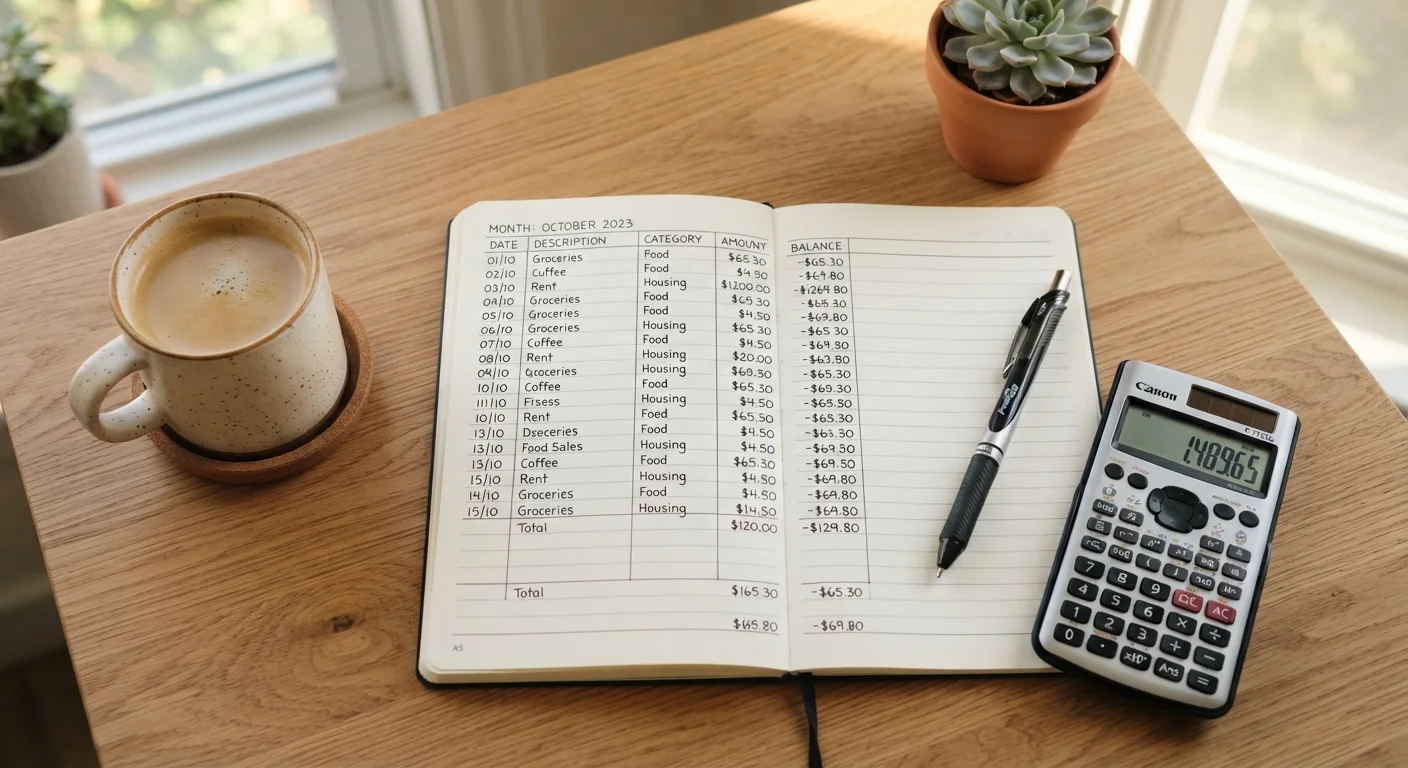
Photo: InfoAlly.net | Finding Info Made Easy editorial
Key Takeaways
- Recording every transaction daily for 30 days reveals spending patterns that estimates and apps often miss.
- Categorising your expenses into fixed, variable, and discretionary groups makes the data actionable.
- A mid-month review prevents the exercise from becoming an end-of-month surprise.
- The goal is awareness, not judgment - honest data is more useful than a perfect record.
- Insights from the audit feed directly into smarter monthly budgeting decisions.
Why a 30-Day Spending Audit Works
Most people estimate their monthly spending from memory - and most of those estimates are wrong. Studies in behavioral economics consistently show that people underestimate discretionary spending while overestimating how much they save. A 30-day tracking exercise bypasses memory entirely and replaces guesswork with a factual record.
Unlike automated categorisation in a banking app, manual tracking creates a moment of friction at each transaction. That brief pause - writing down a purchase - is itself a financial tool. It makes spending conscious rather than automatic, which tends to change behavior even before you review any totals. If you have ever wondered whether your habits reflect what you actually value, compare your results to the structured spending audit approach for a deeper look at the values dimension.
Notebook or journal
Record transactions by hand immediately after spending, which reinforces awareness.
Spreadsheet (e.g., Google Sheets or Excel)
Organise and subtotal spending by category without manual arithmetic.
Banking or budgeting app
Pull transaction history automatically to cross-check your manual log for accuracy.
Printed or digital category template
Standardise how you classify each purchase so comparisons stay consistent across weeks.
How to Set Up and Execute Your 30-Day Tracker
The steps below cover setup, daily practice, weekly check-ins, and the end-of-month review. Each phase builds on the last - don't skip the mid-month review, as it is often where the most useful realizations occur.
What you will need
Set up your tracking system before Day 1
Choose one method - paper, spreadsheet, or app - and commit to it for the full month. Create columns or fields for: date, merchant, amount, payment method (cash, debit, credit), and category. Decide your categories in advance. A simple starter set: Housing, Transportation, Groceries, Dining Out, Subscriptions, Health, Personal Care, Entertainment, and Miscellaneous.
Log every transaction the same day it occurs
Record each purchase before the end of the day - not in batches at week's end. Include small cash purchases: a $2 coffee and a $4 parking meter add up to patterns worth seeing. If you forget a transaction, check your bank or card app the next morning and back-fill it rather than skipping it.
Conduct a brief weekly review
At the end of each week, total your spending by category and note anything that surprised you. You are not making budget cuts yet - you are simply observing. Ask: Did any category come in much higher than I expected? Were there purchases I have already forgotten? This weekly pulse check keeps the exercise meaningful rather than mechanical.
Do a mid-month deep dive on Day 15
Halfway through, compare your first two weeks against your rough expectations. Identify your top three spending categories and check whether the amounts align with your actual priorities. This is the right moment to spot patterns that quietly undermine your goals before they complete a full month's worth of drift.
Complete the 30-day total and categorise your findings
On Day 30, sum every category and calculate each one as a percentage of your total outflow. Separate your spending into three buckets: Fixed (rent, loan payments - amounts that don't change month to month), Variable necessities (groceries, utilities, fuel), and Discretionary (dining, entertainment, impulse purchases). The discretionary bucket is where most people find the most room.
Turn insights into next-month adjustments
Use your 30-day data as the foundation for a real budget - one built on what you actually spend, not what you think you spend. Reference the monthly budget review checklist to structure your analysis. Then consider the habits that keep everyday spending aligned with what you value to make adjustments that stick. The audit's value compounds when you repeat it or check in monthly with a savings health check.
Honest Data Beats Perfect Data
What to Do After the 30 Days
Your completed tracker is a data set. The numbers tell you where your money actually goes; your reaction to those numbers tells you whether your spending aligns with your priorities. If large gaps exist between the two, that's where the real budgeting work begins.
Common patterns people discover include: subscription creep (paying for services they rarely use), dining spending that dwarfs their grocery budget, and a near-absence of saving in months where they felt financially comfortable. These are not moral failures - they are structural habits that can be adjusted once they are visible. For more on how habits form around spending, the Intentional Spending Habits hub offers a useful ongoing reference.
This Is Information, Not Judgment
This Article Is General Financial Education
This article is for general informational and educational purposes only and does not constitute personalised financial advice. Consult a licensed financial professional for guidance tailored to your situation.
The content on this site is for informational purposes only and is not a substitute for professional advice. Always consult a qualified professional for guidance specific to your situation.