
Factors That Shape a Credit Score Over Time

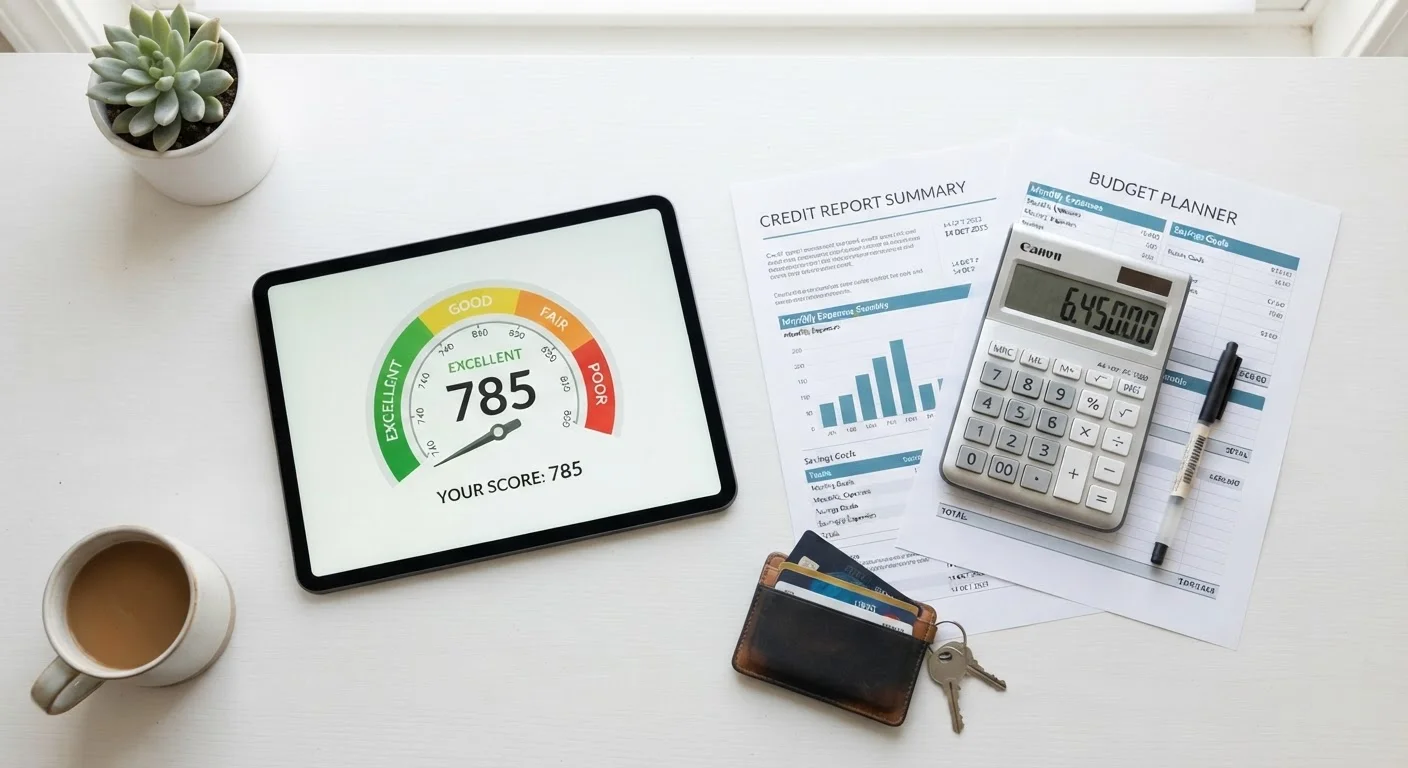
Photo: InfoAlly.net | Finding Info Made Easy editorial
Why Your Credit Score Isn't Fixed
A credit score is a three-digit number - typically ranging from 300 to 850 - that summarizes how reliably you've managed borrowed money. It isn't permanent. Scores shift every time lenders and creditors report new activity to the major credit bureaus, which generally happens monthly. Understanding which factors carry the most weight helps you make deliberate choices rather than hoping for the best.
If you're starting from scratch, see our guide to building credit from zero for foundational steps before diving into score mechanics.
| Score Range (FICO) | 300 - 850 (FICO scoring model) |
| Largest Score Factor | Payment history (~35%) (FICO scoring model breakdown) |
| Late Payment Reporting Threshold | 30 days past due (General industry standard) |
| Negative Item Reporting Duration | Up to 7 years (most items) (Fair Credit Reporting Act (FCRA)) |
| Commonly Cited Utilization Target | Below 30% per card and overall (General financial education guidance) |
The Five Core Factors Explained
Most widely used scoring models weight five categories of information. Here's what each one means in practice:
Payment History (~35%)
This is the single largest factor. Lenders want to see that you pay on time, every time. A single missed payment - especially one that goes 30 or more days past due - can cause a noticeable drop. The impact fades gradually over time, but a derogatory mark can remain on your credit report for up to seven years.
Amounts Owed - Credit Utilization (~30%)
This measures how much of your available revolving credit (mainly credit cards) you're currently using. Using a high percentage of your limit signals risk to lenders. Many financial educators suggest keeping individual card utilization and overall utilization below 30%, though lower is generally better. Paying down balances has a relatively fast effect on this factor.
Length of Credit History (~15%)
Scoring models consider the age of your oldest account, your newest account, and the average age of all accounts. Longer histories provide more data for lenders to assess. Closing old accounts can shorten your average age and reduce total available credit - two effects that can nudge your score downward.
Credit Mix (~10%)
Having experience with different types of credit - such as revolving accounts (credit cards) and installment loans (auto or student loans) - can positively influence your score. You don't need every type; this factor carries less weight than payment history or utilization.
New Credit - Hard Inquiries (~10%)
Each time you formally apply for credit, the lender typically performs a hard inquiry on your report. A single inquiry has a small, temporary effect. Multiple applications in a short period can compound that effect, though scoring models generally group rate-shopping inquiries (like mortgage or auto loan comparisons) made within a short window into one inquiry.
Credit Utilization
The percentage of your available revolving credit limit that you're currently using. For example, a $500 balance on a $1,000 limit equals 50% utilization. Lower utilization is generally viewed more favorably by scoring models.
Hard Inquiry
A review of your credit report triggered when you apply for new credit, such as a loan or credit card. Hard inquiries are recorded on your report and can temporarily lower your score slightly.
Derogatory Mark
A negative item on your credit report, such as a late payment, collection account, or bankruptcy. Derogatory marks reduce your score and can remain on your report for up to seven years, depending on the type.
Credit Mix
The variety of credit account types in your history, including revolving accounts (credit cards) and installment loans (mortgages, auto loans, student loans). A diverse mix can modestly benefit your score.
Average Account Age
A calculation used by scoring models that averages the ages of all open credit accounts. A longer average age generally signals experience and stability to lenders.
How Scores Change Month to Month
Because creditors report activity on different schedules, your score can fluctuate even when you haven't done anything dramatic. A large purchase that raises your utilization mid-month, an account reaching a new payment milestone, or a hard inquiry from a recent application can each move the needle.
35%
Weight of payment history in FICO scores
Payment history is consistently the largest single factor across widely used credit scoring models.
~30%
Weight of amounts owed (utilization)
Credit utilization is the second-largest factor, making balance management a high-impact lever for score changes.
7 years
How long most negative marks stay on record
Under the Fair Credit Reporting Act, most derogatory items - including late payments - can remain on your report for up to seven years.
Consistent, positive habits - on-time payments, keeping balances low, avoiding unnecessary new applications - tend to produce steady upward movement over months and years. Conversely, a single serious delinquency can outweigh several months of responsible behavior, so protecting your payment history is the highest-leverage action available.
For practical day-to-day habits that reinforce good credit behavior, our article on habits that keep debt manageable over the long term is a useful complement.
This article is for general informational purposes only and does not constitute personalized financial or legal advice. Consult a qualified financial professional for guidance tailored to your individual situation.
The content on this site is for informational purposes only and is not a substitute for professional advice. Always consult a qualified professional for guidance specific to your situation.