
How Noise-Cancelling Headphones Actually Work

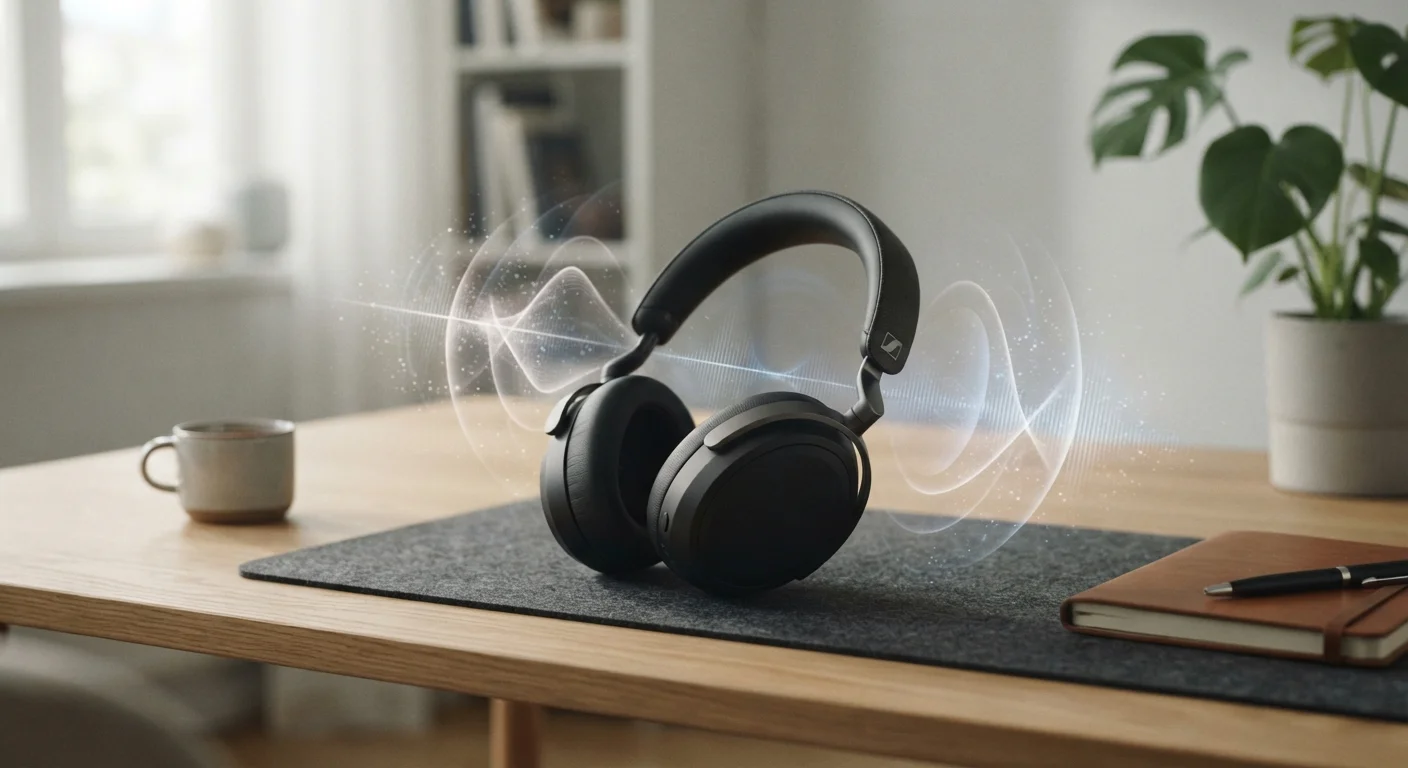
Photo: InfoAlly.net | Finding Info Made Easy editorial
Key Takeaways
- ANC headphones use microphones to listen to outside noise and create an opposing signal to cancel it out.
- The technology works best on steady, low-frequency sounds like engine rumble or HVAC hum.
- Passive noise isolation - the physical seal of the earcups - works alongside ANC for better overall quiet.
- ANC requires battery power, which is why ANC headphones need charging.
- Higher-priced ANC headphones generally process sound faster and handle a wider range of noise types.
The Problem ANC Solves
Everyday listening environments are rarely quiet. Airplane cabins produce a constant low roar, office HVAC systems hum relentlessly, and commuter trains create rhythmic mechanical noise. Simply turning your volume up to compete with that background noise can damage your hearing over time. Noise-cancelling headphones offer a smarter solution: reduce the noise itself, so you can listen at comfortable levels and stay more focused.
This is the core promise of active noise cancellation (ANC) - and understanding how it works helps you know what to expect from it in real life.
The Science in Plain Terms: Sound Waves and Cancellation
Sound travels as waves - rhythmic compressions and expansions of air. Every sound has a shape to its wave, defined by its frequency (pitch) and amplitude (loudness). The key insight behind ANC is that two identical waves, when perfectly offset from each other, cancel out.
Think of it like ripples on a pond. If two identical ripples collide at exactly the right moment - one at a crest while the other is at a trough - they flatten each other. ANC electronics replicate this effect with sound.
“Noise cancellation works on the principle that sound is just pressure waves in air - and if you can create an equal and opposite wave, the two cancel each other out. The hard part is doing it fast enough and accurately enough to matter in real listening conditions.”
— Audio Engineering Educator, Instructor in consumer acoustics and signal processing
Here's what happens inside your headphones:
- Microphones listen. Small microphones on the outside of the earcups pick up the ambient noise around you.
- A processor analyzes the sound. Onboard electronics measure the shape of the incoming noise wave almost instantly.
- An anti-noise signal is generated. The headphone's speaker plays a sound wave that is the mirror image of the noise - same shape, opposite phase.
- The waves cancel. When the original noise and the anti-noise meet at your ear, they neutralize each other, and you hear significantly less of the background sound.
All of this happens continuously, many times per second, adjusting as the surrounding noise changes.
What ANC Handles Well - and Where It Has Limits
ANC is most effective on low-frequency, steady-state noise: the drone of jet engines, the hum of air conditioning, the rumble of a subway car. These sounds are predictable and consistent, giving the processor enough time to generate an accurate cancelling signal.
It is less effective on sudden, sharp sounds - a door slamming, a dog barking - because the noise changes faster than the electronics can fully respond. Speech and higher-pitched sounds also present challenges for similar reasons.
Maximize ANC Effectiveness With Fit
This is why ANC headphones also rely on passive noise isolation: the physical seal created by cushioned earcups that simply block sound from entering. The combination of passive isolation and active cancellation is what makes a well-designed pair genuinely quiet.
Why Battery Life Matters for ANC
Active noise cancellation is not free - it requires continuous electrical processing. This is why ANC headphones have rechargeable batteries and why turning ANC on shortens battery life compared to using the headphones in passive mode.
~20-30 dB
Typical noise reduction from quality ANC headphones
Consumer audio testing generally places effective ANC performance in the 20-30 decibel reduction range for low-frequency noise.
20-40 hrs
Typical ANC battery life range for over-ear headphones
Battery life varies widely by model and ANC intensity settings; using ANC continuously reduces total playback time compared to passive listening.
When the battery runs low, most headphones allow you to keep listening in standard passive mode - you just lose the active cancellation benefit. Some models shut off entirely when the battery dies, so battery planning matters on long trips.
Feedforward, Feedback, and Hybrid ANC
Not all ANC systems are identical. Engineers use different microphone arrangements to tackle noise from different angles:
- Feedforward ANC
- Microphones are placed on the outside of the earcup, capturing noise before it reaches your ear. This setup reacts quickly but can struggle if you cup your hands over the headphones.
- Feedback ANC
- The microphone sits inside the earcup, near your ear, hearing what you actually hear. It's better at fine-tuning the cancellation but slightly slower to react to new sounds.
- Hybrid ANC
- Uses microphones in both positions simultaneously, combining the strengths of each approach. This is common in higher-quality consumer headphones and generally delivers more consistent results across a wider range of environments.
Hybrid ANC Is More Common Than It Sounds
Frequently Asked Questions
The content on this site is for informational purposes only and is not a substitute for professional advice. Always consult a qualified professional for guidance specific to your situation.