
Morning Light vs. Blue-Light Blockers: Two Strategies, Different Sleep Goals

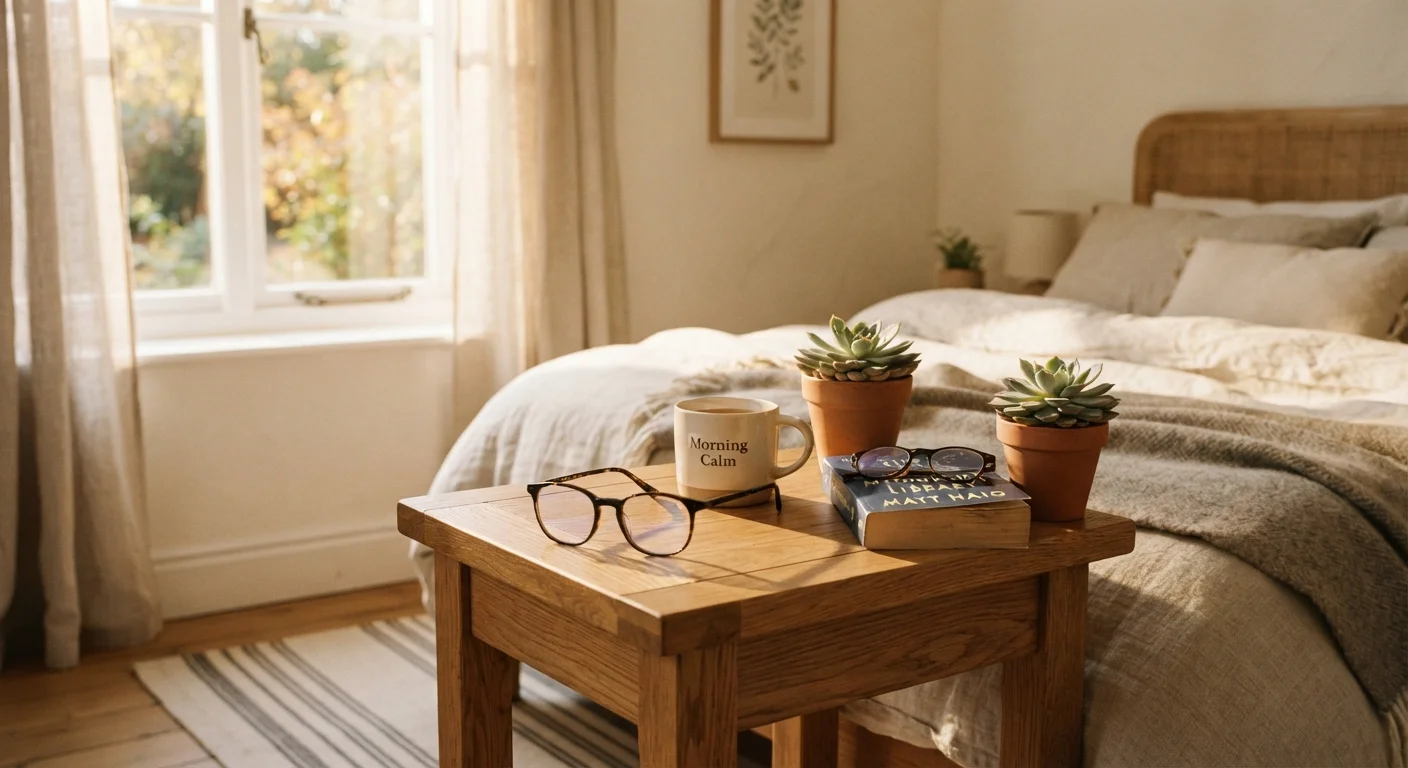
Photo: InfoAlly.net | Finding Info Made Easy editorial
Key Takeaways
- Morning sunlight exposure helps anchor your body's internal clock, making it easier to fall asleep at a consistent time.
- Blue-light blocking glasses and filters aim to reduce evening alertness signals that can delay sleep onset.
- These two strategies are not competing - they address opposite ends of the same daily light cycle.
- Research on blue-light blockers is more mixed than popular coverage suggests; morning light evidence is stronger.
- Combining both may offer more benefit than relying on either one alone.
How Light Shapes Your Sleep Biology
Your body runs on a roughly 24-hour internal clock known as the circadian rhythm. Light is its primary regulator. Specialized cells in the retina called intrinsically photosensitive retinal ganglion cells (ipRGCs) detect light intensity and wavelength, sending signals to the brain's suprachiasmatic nucleus - the master pacemaker. That signal controls when your body releases melatonin, the hormone associated with sleepiness, and when it suppresses it.
In broad terms, bright light in the morning reinforces wakefulness and locks in an earlier, more consistent sleep window. Light in the evening - particularly the short-wavelength blue light emitted by screens - can signal the brain to delay melatonin release, potentially pushing sleep onset later. Both morning light and blue-light blockers are attempts to work with this system, just at different times of day. Understanding their distinct mechanisms helps clarify what each can realistically offer.
For a broader look at how sleep science intersects with daily mental balance, see our end-to-end guide to restorative rest.
Morning Light Exposure: Anchoring the Clock
Getting outdoor light - or bright indoor light - within roughly an hour of waking is one of the more consistently supported behavioral strategies in sleep research. Exposure to light in the 1,000-10,000 lux range (typical of outdoor daylight even on cloudy days) helps suppress residual nighttime melatonin quickly and advances the circadian phase, meaning your body will cue sleepiness earlier that evening.
The mental health implications are also notable. Bright morning light is the basis of light therapy used clinically for seasonal affective disorder and, more recently, studied in relation to non-seasonal depression and mood regulation. While this article covers general information rather than medical advice, the link between morning light and mood stability is a meaningful part of why sleep researchers emphasize it as a foundational habit.
Maximize Morning Light Easily
Even 10-15 minutes of outdoor time on a clear morning can deliver significantly more light than most indoor environments. Overcast skies still provide substantially more lux than typical home or office lighting.
Blue-Light Blockers: Evening Screen Management
Blue-light blocking glasses and software filters (such as night-mode settings on phones and computers) work by reducing the proportion of short-wavelength light reaching the retina in the evening. The rationale is straightforward: if blue light is the primary driver of evening melatonin suppression, filtering it should preserve the natural rise of melatonin as bedtime approaches.
The evidence, however, is more nuanced than marketing often conveys. Some studies find modest improvements in sleep onset timing with blue-light glasses; others find minimal effect when overall screen brightness and the stimulating nature of screen content are accounted for. A 2021 review in Sleep Medicine Reviews suggested the alerting effect of screens may owe as much to content engagement and light intensity as to blue-wavelength light specifically.
That said, for people who genuinely cannot avoid device use in the evening, a screen filter or glasses represents a low-effort, low-risk habit worth trying. It is worth pairing with other evening habits worth reconsidering for a fuller effect.
| Morning Light Exposure | Blue-Light Blockers | |
|---|---|---|
| Primary mechanism | Anchors circadian clock via morning light signal | Reduces evening melatonin suppression from screens |
| Time of use | Within ~1 hour of waking | 1-2 hours before bedtime |
| Strength of evidence | Strong, well-replicated research base | Mixed; modest effects in some studies |
| Mental health relevance | Linked to mood regulation and reduced depression risk | Indirect benefit via improved sleep onset |
| Ease of adoption | Requires outdoor or bright-light access | Glasses or free software settings on devices |
| Cost | Essentially free (outdoor daylight) | Free (software) to low-cost (glasses) |
Which Strategy Should You Prioritize?
If you can only change one thing, prioritize morning light. Its circadian anchoring effect works upstream of the entire sleep-wake cycle, and its mood-related benefits add a layer of value beyond sleep alone. Blue-light blockers are best understood as an evening complement - useful for those with rigid screen schedules, but not a substitute for the daytime light signal your clock depends on.
It is also worth noting that both strategies are additive rather than competitive. Morning light sets the clock; evening filtering avoids disrupting it. Used together, they address both ends of the same daily light arc. Our guide on sleep beliefs science has complicated explores how other common assumptions about rest hold up under scrutiny.
This article is for general informational and educational purposes only and does not constitute medical advice. If you have concerns about sleep quality or mental health, please consult a qualified healthcare professional.
The content on this site is for informational purposes only and is not a substitute for professional advice. Always consult a qualified professional for guidance specific to your situation.