
Sleep Across the Lifespan: How Rest Needs and Patterns Shift Over Time

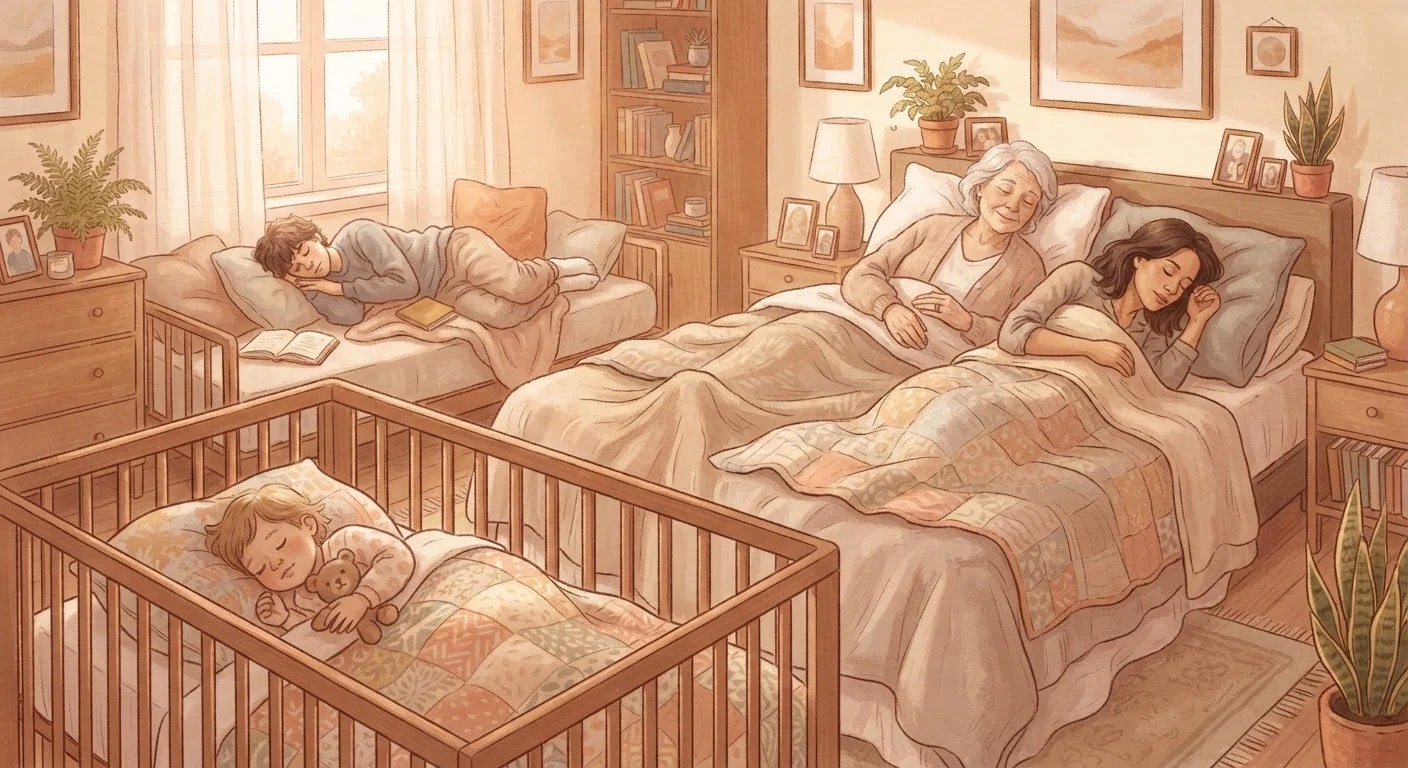
Photo: InfoAlly.net | Finding Info Made Easy editorial
Why Sleep Needs Are Not One-Size-Fits-All
Most people have heard that adults need roughly eight hours of sleep. While that figure is a reasonable general benchmark, the full picture is more nuanced. Sleep duration, timing, and internal architecture all evolve as we age - shaped by biology, hormones, lifestyle, and mental health. Understanding these shifts is a practical first step toward meeting your body's actual rest requirements at any stage of life.
The comprehensive guide to restorative rest and mental balance covers sleep science in depth; this article focuses specifically on how needs differ across key life stages.
| Recommended sleep for toddlers (1-2 years) | 11-14 hours (including naps) (American Academy of Sleep Medicine) |
| Recommended sleep for school-age children (6-12) | 9-12 hours per night (American Academy of Sleep Medicine) |
| Recommended sleep for teenagers (13-18) | 8-10 hours per night (American Academy of Sleep Medicine) |
| Recommended sleep for adults (18-64) | 7-9 hours per night (National Sleep Foundation) |
| Recommended sleep for older adults (65+) | 7-8 hours per night (National Sleep Foundation) |
| Adolescent circadian phase shift | Sleep timing shifts ~2 hours later at puberty (Peer-reviewed chronobiology research) |
Sleep by Life Stage: A Developmental Overview
Children and Adolescents
Young children require the most sleep of any age group. School-age children generally need 9-11 hours, while toddlers and preschoolers may need considerably more. During adolescence, a biological shift in the circadian rhythm (the internal 24-hour clock) pushes the natural sleep window later, making it genuinely difficult for teenagers to fall asleep early. This is a physiological phenomenon, not simply a behavioral preference. The American Academy of Sleep Medicine recommends 8-10 hours for teenagers. Chronic shortfalls during this period have been linked in research to impacts on mood regulation, attention, and academic performance.
Young and Middle-Aged Adults
For most adults, 7-9 hours remains the commonly cited target range. However, sleep architecture - the cycling through light, deep, and REM sleep stages - begins to change subtly from the mid-twenties onward. Slow-wave (deep) sleep gradually decreases, and waking during the night becomes slightly more common. High-stress periods can reshape these cycles further; see what stress does to sleep architecture for a detailed explanation.
Older Adults (65+)
A common misconception is that older adults need less sleep. Research generally indicates the need remains around 7-8 hours, but the ability to achieve consolidated, deep sleep decreases. Older adults tend to experience earlier sleep timing, more frequent nighttime awakenings, and lighter overall sleep. Daytime napping becomes more common, though it can complicate nighttime rest. The case for and against daytime napping examines these trade-offs carefully.
Circadian rhythm
The body's internal biological clock that regulates the roughly 24-hour cycle of sleep and wakefulness. It is influenced by light exposure, meal timing, and other environmental cues.
Sleep architecture
The structured pattern of sleep stages - including light sleep, deep (slow-wave) sleep, and REM sleep - that cycle throughout the night. The proportion of each stage changes with age.
REM sleep
Rapid Eye Movement sleep is a distinct sleep stage characterized by vivid dreaming and thought to play an important role in emotional processing and memory consolidation.
Slow-wave sleep
Also called deep sleep or N3, this is the most physically restorative sleep stage. It is most abundant in childhood and adolescence, and naturally decreases with age.
Sleep consolidation
The ability to sleep in one continuous, uninterrupted block through the night. Consolidation tends to decline with age, leading to more frequent brief awakenings.
The Mental Health Dimension
Sleep and mental health share a two-way relationship across every life stage. Poor sleep in adolescence is associated with elevated anxiety and depressive symptoms; in older adulthood, disrupted sleep is both a risk factor for and a consequence of depression. This is not coincidental - sleep actively supports emotional processing, memory consolidation, and stress regulation.
The science behind why sleep and mental health are inseparable explores this bidirectional relationship in detail. Recognizing that your rest needs are shaped by your mental state - and vice versa - is key to approaching sleep as part of a broader wellness practice rather than an isolated behavior.
~2 hrs
Later sleep onset shift during adolescence
Biological research on adolescent chronobiology consistently documents a circadian delay of roughly two hours beginning at puberty.
1 in 3
U.S. adults not meeting minimum sleep recommendations
According to CDC surveillance data, a substantial proportion of American adults regularly sleep fewer than 7 hours per night.
~20%
Decline in slow-wave sleep from young to middle adulthood
Research in sleep science suggests deep sleep can decline meaningfully between early and middle adulthood, affecting recovery and cognitive restoration.
Consistency in sleep timing also matters as much as total duration. Research suggests a stable wake time may be particularly protective across all age groups. See why sleep schedule consistency matters for more on that evidence.
This article is for general informational purposes only and is not a substitute for medical advice. If you have concerns about your sleep or mental health at any stage of life, consult a qualified healthcare professional.
The content on this site is for informational purposes only and is not a substitute for professional advice. Always consult a qualified professional for guidance specific to your situation.