
Hydration and Food: How What You Eat Affects Your Daily Fluid Balance

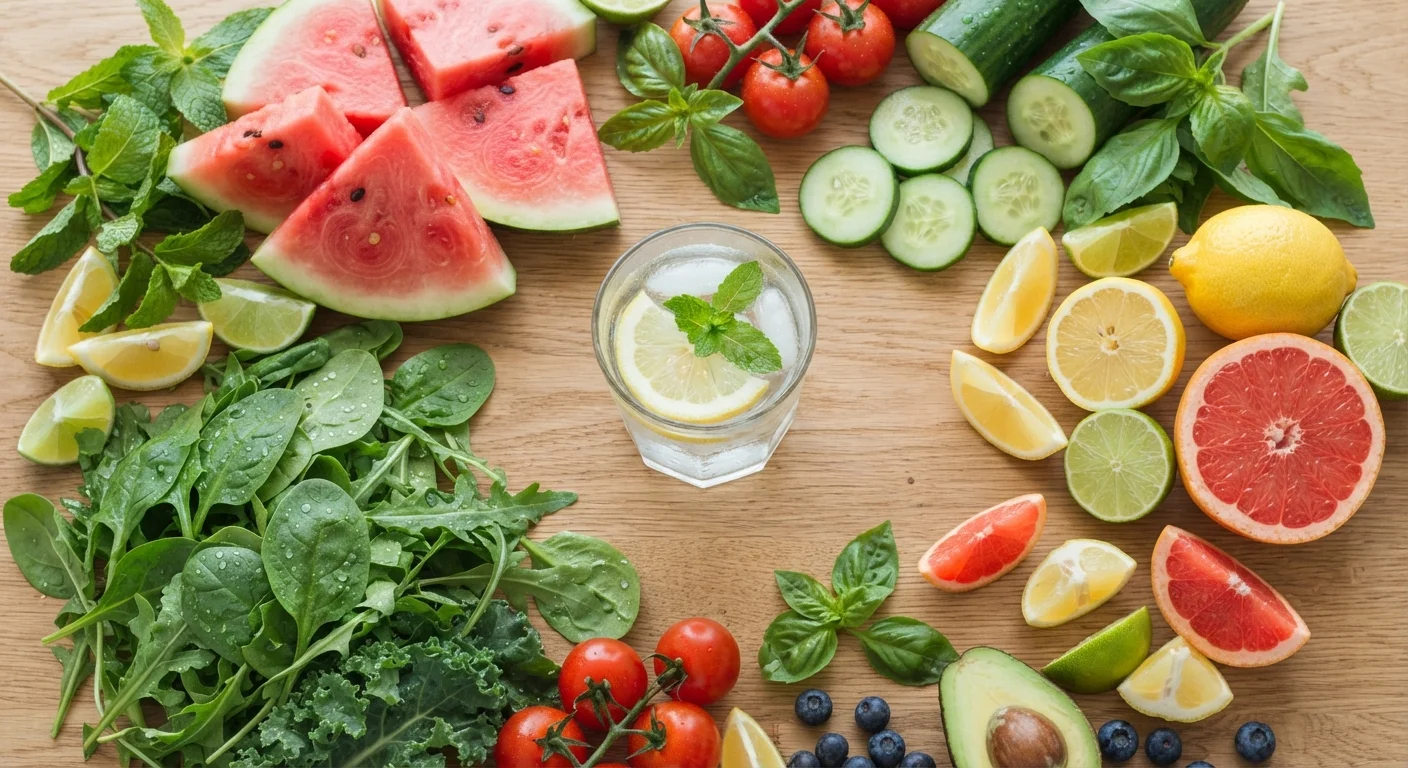
Photo: InfoAlly.net | Finding Info Made Easy editorial
Key Takeaways
- Food typically contributes 20-30% of total daily water intake for most adults.
- High-sodium diets can increase fluid loss and raise hydration needs.
- Water-rich foods like cucumbers, watermelon, and leafy greens actively support hydration.
- Electrolytes from food - particularly sodium, potassium, and magnesium - help the body retain and use fluids effectively.
- Certain eating patterns, like high-protein or high-fiber diets, can alter daily fluid requirements.
Hydration Is More Than Just Drinking Water
Most people think of hydration as a simple equation: drink enough water each day and you're covered. In reality, your hydration status is shaped by a combination of beverages, food, physical activity, environment, and even your eating habits. Understanding how food fits into that picture can help you make more informed choices about your overall diet.
Research consistently shows that food accounts for roughly 20-30% of total daily water intake for most adults. This figure varies based on what types of food dominate your diet and how your meals are prepared. A diet centered on whole fruits, vegetables, and cooked grains provides considerably more water than one dominated by dry, processed, or high-sodium foods.
20-30%
Share of daily water from food
According to general nutrition research, food typically provides around 20-30% of an adult's total daily fluid intake.
90%+
Water content in top hydrating foods
Foods like cucumbers, lettuce, and watermelon are composed of more than 90% water by weight, making them highly effective hydration sources.
~2-3L
Total daily water intake recommended for adults
General guidance from health authorities suggests total daily water intake (from all sources) of around 2-3 liters, varying by sex, activity, and climate.
Water-Rich Foods and Their Hydrating Effect
Certain foods are particularly effective at contributing to daily fluid intake. Produce like cucumbers, iceberg lettuce, celery, tomatoes, strawberries, and watermelon contain over 90% water by weight. Incorporating these foods into meals and snacks offers a passive, food-first way to support hydration - especially useful during warmer months or periods of physical activity.
Cooked foods also matter. Oatmeal, soups, stews, and legumes absorb substantial amounts of water during cooking, delivering that moisture when consumed. A bowl of vegetable soup or a serving of cooked lentils can make a meaningful contribution to your fluid intake alongside its nutritional value.
How Nutrients Like Sodium, Potassium, and Protein Influence Fluid Needs
Electrolytes are minerals that carry an electrical charge and play a central role in regulating how water is distributed throughout the body. Sodium is the primary electrolyte in fluid outside cells; potassium operates inside cells; and magnesium supports numerous processes that involve fluid regulation. When these are in balance - largely achieved through a varied, whole-food diet - the body uses ingested fluids more efficiently.
Sodium deserves particular attention. Diets high in processed foods often contain elevated sodium levels, which can increase thirst and drive higher fluid needs. This doesn't mean sodium is harmful at appropriate levels - it's an essential nutrient - but consistently high intake can strain the body's fluid-balancing systems. Eating patterns that emphasize whole foods, like those described in our overview of Mediterranean and DASH dietary approaches, tend to provide more balanced electrolyte profiles.
Higher-protein diets also raise fluid requirements. The kidneys need water to excrete urea, a byproduct of protein metabolism. People following higher-protein eating plans should be mindful of increasing fluid intake accordingly - though specific amounts depend on individual factors a healthcare professional can help assess.
Balance Electrolytes Through Whole Foods
Practical Ways to Align Your Diet with Better Hydration
Improving hydration through food doesn't require dramatic changes. Small, consistent shifts in food selection and meal planning can make a genuine difference over time.
- Lead meals with produce: Build plates around vegetables and fruits first - they bring both nutrients and water to the table.
- Choose whole foods over heavily processed ones: Ultra-processed foods tend to be higher in sodium and lower in water content, shifting the balance away from hydration.
- Include soups or broth-based dishes regularly: These are among the most efficient food-based sources of water and electrolytes combined.
- Pair high-fiber foods with adequate fluids: Fiber draws water into the digestive tract to function properly - without sufficient hydration, increasing fiber intake can cause discomfort.
For a practical look at how these principles can be structured across a full day of eating, see our guide to nutritionally sound eating across different lifestyles.
This article is for general informational purposes only and does not constitute medical or nutritional advice. Consult a qualified healthcare professional for guidance specific to your health needs.
Frequently Asked Questions
The content on this site is for informational purposes only and is not a substitute for professional advice. Always consult a qualified professional for guidance specific to your situation.