
Sugar by Any Other Name: Understanding Added Sugars on Ingredient Lists

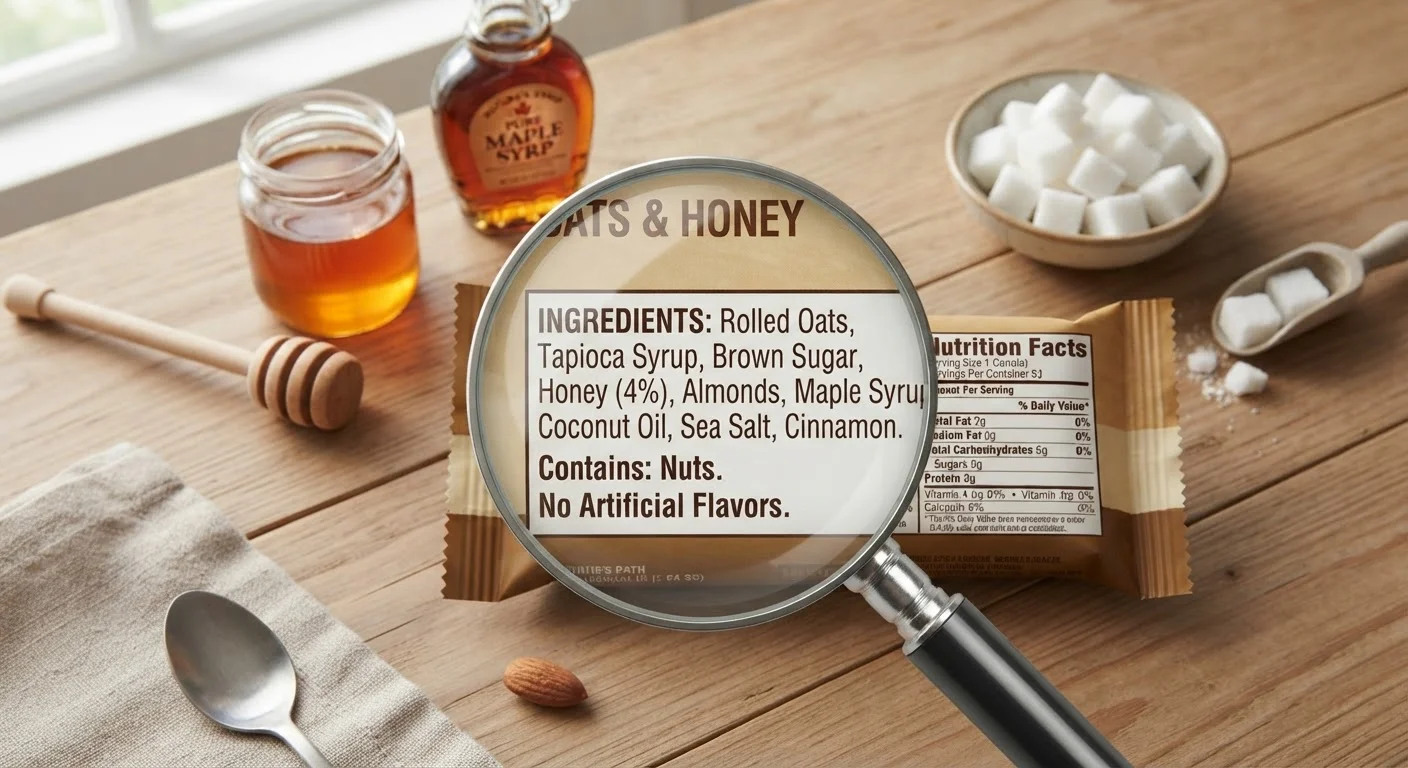
Photo: InfoAlly.net | Finding Info Made Easy editorial
Key Takeaways
- Added sugars appear under more than 60 different names on ingredient lists.
- The FDA requires added sugars to be listed separately on Nutrition Facts panels.
- Ingredients are listed by weight, so multiple sugar aliases near the top signals a high-sugar product.
- Natural-sounding sweeteners like agave nectar and coconut sugar are still classified as added sugars.
- Spotting added sugars early helps you make more informed, balanced food choices.
Why Added Sugars Are Hiding in Plain Sight
Walk down any supermarket aisle and you'll find added sugars in places that might surprise you - salad dressings, pasta sauces, sandwich bread, and flavored yogurts. Food manufacturers use dozens of different names for sweeteners, which can make it genuinely difficult to spot them unless you know what to look for.
Understanding how to read an ingredient list is one of the most practical nutrition skills you can develop. See our guide to reading nutrition labels accurately for a broader overview of decoding front- and back-of-pack information.
Added Sugars vs. Naturally Occurring Sugars
Decoding the Many Names for Sugar
Ingredient lists are required to name every sweetener individually, which is why a product can appear low in sugar at first glance even when several sweeteners are present. Here are the main categories to watch for:
- '-ose' endings: Glucose, fructose, sucrose, dextrose, maltose, and lactose are all sugar molecules. When you see any word ending in '-ose,' you're looking at a sugar.
- Syrups: Corn syrup, high-fructose corn syrup, rice syrup, malt syrup, and golden syrup are concentrated liquid sweeteners.
- Natural-sounding sweeteners: Agave nectar, coconut sugar, date sugar, honey, and maple syrup are all classified as added sugars despite their wholesome image.
- Juice concentrates: Apple juice concentrate, grape juice concentrate, and similar ingredients are effectively sugar solutions with much of the water removed.
- Other aliases: Molasses, caramel, treacle, turbinado, muscovado, and evaporated cane juice round out the most common terms.
A simple rule of thumb: if an ingredient name sounds sweet or syrupy, it almost certainly is an added sugar.
Quick Label Scan: The Three-Ingredient Rule
How to Use Ingredient List Position to Your Advantage
Ingredients are listed in descending order by weight, meaning the ingredient present in the largest quantity appears first. If sugar - under any of its aliases - appears within the first three ingredients, that product is likely high in added sugar relative to its other components.
Another strategy is to count the number of sweetener aliases in a single product. A food might list oat flour, then apple juice concentrate, then brown rice syrup, then molasses. Individually, each looks modest; together, they represent a substantial amount of added sugar.
60+
Names used for added sugars on ingredient lists
The FDA has identified more than 60 distinct names that manufacturers use to list added sugars in ingredient declarations.
~17 tsp
Average daily added sugar intake for US adults
According to CDC data, the average American adult consumes roughly 17 teaspoons of added sugar per day - well above the Dietary Guidelines recommendation.
74%
Packaged foods containing added sugars
Research published in the journal Lancet Diabetes & Endocrinology found that approximately 74% of packaged foods sold in the US contain some form of added sugar.
Pairing ingredient-list awareness with the Nutrition Facts panel gives you the clearest picture. The 'Added Sugars' line tells you how much is present in grams; the ingredient list tells you what form it takes and how prominent it is in the recipe.
Putting Added Sugar Knowledge Into Daily Practice
Awareness doesn't mean eliminating sweetness from your diet - it means making deliberate choices. A few practical habits can help:
- Compare similar products side by side. Checking two brands of the same item and comparing their added sugar content takes less than a minute and can reveal meaningful differences.
- Watch portion sizes. Added sugar grams on a label reflect one serving. If a serving is half a cup but you typically eat a full cup, your actual intake doubles.
- Prioritize whole foods where possible. Whole fruit, plain dairy, and minimally processed grains contain naturally occurring sugars alongside fiber, vitamins, and minerals that slow absorption and support satiety.
Reading ingredient lists is a skill that gets faster with practice. The goal isn't to count every gram with anxiety, but to understand what you're eating so your choices align with your overall wellness picture.
This article is for general informational and educational purposes only and is not a substitute for personalized dietary advice. If you have specific health concerns or dietary needs, consult a registered dietitian or qualified healthcare professional.
Frequently Asked Questions
The content on this site is for informational purposes only and is not a substitute for professional advice. Always consult a qualified professional for guidance specific to your situation.