
Reading a Nutrition Label Without Getting Confused by the Marketing

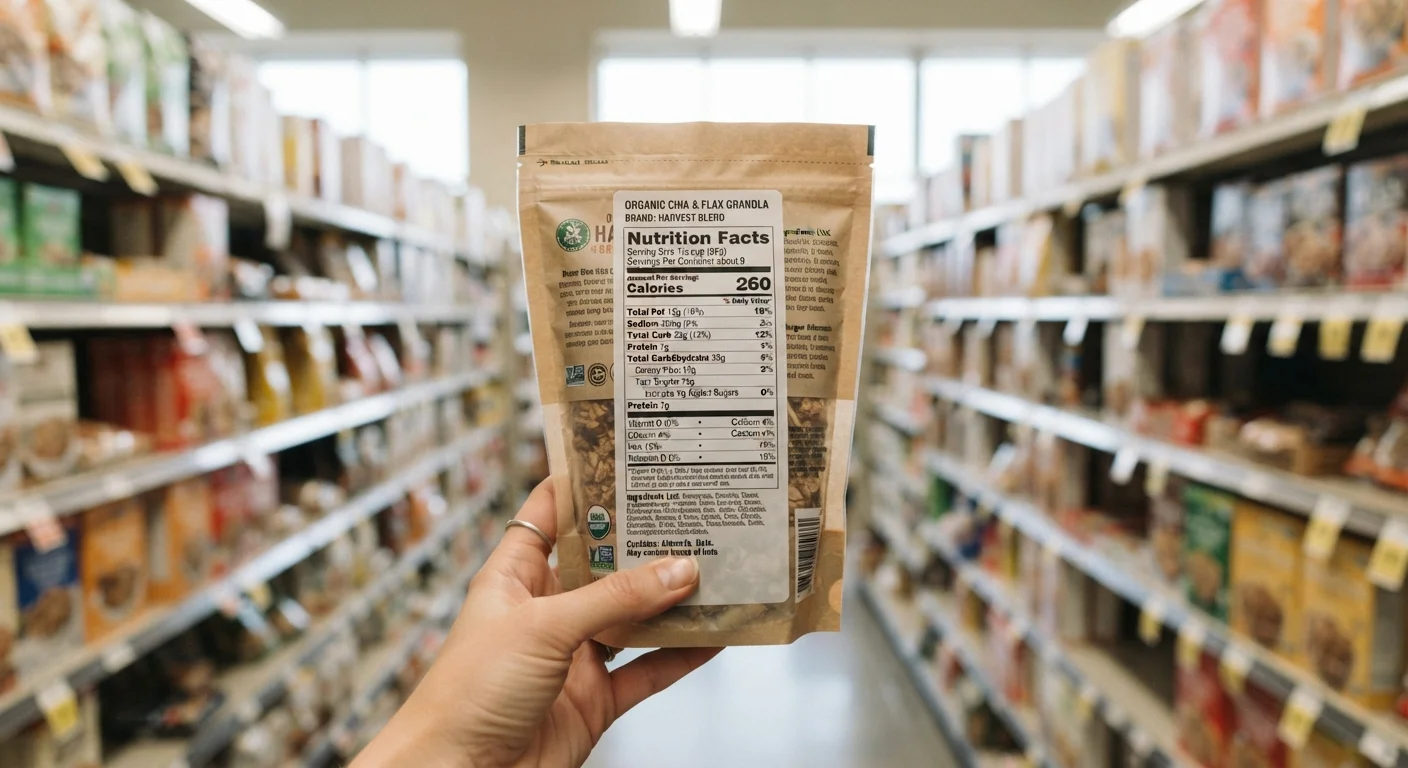
Photo: InfoAlly.net | Finding Info Made Easy editorial
Key Takeaways
- Front-of-pack claims are marketing; the Nutrition Facts panel is the regulated, standardized truth.
- Serving size is the most commonly overlooked figure - it changes every number on the label.
- Daily Value percentages help you quickly assess whether a nutrient is present in a meaningful amount.
- The ingredient list reveals what the product is actually made of, in order of weight.
- Words like 'natural,' 'light,' and 'multigrain' have no universal legal definition on food packaging.
Why the Two Sides of the Package Tell Different Stories
Food packaging communicates on two levels simultaneously. The front is a sales pitch: bold claims, bright visuals, and carefully chosen statistics. The back - specifically the standardized Nutrition Facts panel mandated by the FDA - is regulated disclosure. Understanding this distinction is the foundation of confident label reading.
Manufacturers are legally required to present the Nutrition Facts panel in a standardized format, making it possible to compare products on equal footing. The front of the pack has no equivalent standardization. This is why the same product can appear to be both a health food (front) and a relatively high-sodium, low-fiber item (back) without any contradiction in the legal sense.
Front-of-Pack Claims Are Not Regulated the Same Way
For a parallel exercise in reading ingredient-based disclosures critically, the skill applies across categories - see how the same approach works when reading skincare ingredient lists cuts through marketing noise in the same way.
This Is General Information, Not Medical Advice
What You Need Before You Start
What you will need
Packaged food product
Provides the actual Nutrition Facts panel and ingredient list you'll be reading.
FDA 'How to Understand and Use the Nutrition Facts Label' reference page
A free, authoritative government resource for clarifying specific label terms and daily value benchmarks.
No expertise required - the Nutrition Facts panel is designed to be readable by a general audience. What helps is knowing which numbers to look at first and what to do with them once you find them.
Ignore the front of the pack first
Set aside the large-print claims on the front - 'high protein,' 'low fat,' 'made with whole grains' - until you've read the back. These phrases are designed to create a positive impression before you examine the details. Marketers are skilled at highlighting a single favorable attribute while quietly omitting less flattering ones.
Find the serving size and servings per container
The serving size sits at the very top of the Nutrition Facts panel and governs every figure that follows. A bag described as '90 calories' may contain 3.5 servings - meaning the full bag is 315 calories. This single figure is the most commonly misread piece of information on any label.
Check servings per container alongside serving size. For products you're likely to consume in one sitting, mentally multiply the key numbers accordingly.
Scan calories in context
Calories per serving give you a basic energy density measure. A food is not automatically 'good' or 'bad' based on calorie count alone - context matters, including what else you've eaten and what nutrients accompany those calories. A calorie-dense food that delivers protein and fiber may serve you better than a low-calorie food delivering very little.
Check the % Daily Value column
The %DV column shows how much of a nutrient one serving contributes toward a general daily reference intake (based on a 2,000-calorie diet). Use it as a quick signal rather than a precise prescription - your individual needs may differ.
[tip_callout]Nutrients where a higher %DV is generally desirable: dietary fiber, vitamin D, calcium, iron, potassium. Nutrients where a lower %DV is generally preferable: sodium, saturated fat, added sugars.
Read the ingredient list top to bottom
Ingredients are listed in descending order by weight. The first three or four ingredients make up the bulk of the product. If added sugar (under any of its many names) appears in the first few slots of a product marketed as healthy, that's worth noting. For a deeper dive on sugar aliases, see how added sugars appear on ingredient lists.
Length of the ingredient list is not inherently a quality indicator - some long lists include vitamins and minerals added for fortification. Focus on what the first several ingredients are, not just how many there are.
Now revisit the front-of-pack claim
Return to whatever caught your attention on the front. Does the Nutrition Facts panel support it? A 'good source of protein' claim requires at least 10% of the Daily Value per serving under FDA guidelines - but check whether that amount is meaningful for your needs given the rest of the nutritional profile.
Use the back-panel data to decide whether the front-of-pack claim reflects genuine nutritional value or is simply the product's most flattering angle. The two often diverge.
Putting It Into Practice at the Store
The goal is not to memorize nutritional rules for every food category but to develop a reliable reading habit. With practice, the process from step one through step six takes under a minute per product.
When comparing two similar products, align them on serving size first - then compare sodium, fiber, added sugars, and the top three ingredients. Those five data points will tell you more than any front-of-pack claim.
Label literacy also connects directly to broader eating patterns. Once you can read individual products clearly, building a fuller picture becomes more straightforward - see what a nutritionally sound day of eating looks like across different lifestyles for how product choices fit into an overall daily pattern. For more on the nutrients the label highlights, the Nutrition Basics hub covers fiber, added sugars, whole versus processed foods, and more in plain language.
This article provides general consumer education about reading standardized food labels. It is not personalized dietary or medical advice. Consult a qualified healthcare professional or registered dietitian for guidance specific to your health needs.
The content on this site is for informational purposes only and is not a substitute for professional advice. Always consult a qualified professional for guidance specific to your situation.