
Your First Budget in Seven Steps

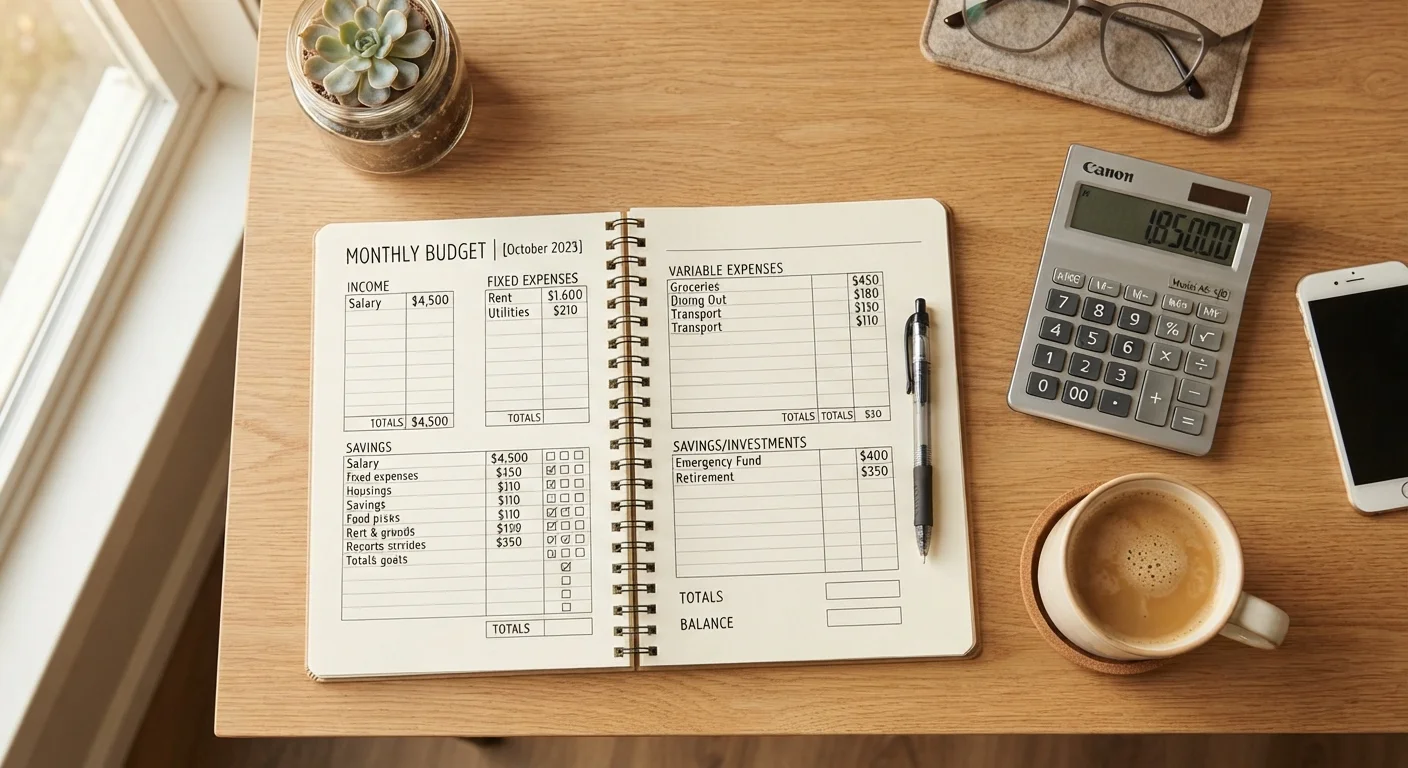
Photo: InfoAlly.net | Finding Info Made Easy editorial
Key Takeaways
- Start with your actual take-home pay, not your gross salary, to get accurate numbers.
- Separate expenses into fixed and variable categories before setting any spending limits.
- A realistic budget accounts for irregular costs like car repairs and annual subscriptions.
- Small, consistent adjustments matter more than aiming for a perfect budget on the first try.
- Tracking spending weekly helps you catch problems before they become setbacks.
Why a First Budget Feels Hard - and Why It Doesn't Have to Be
Most people who have never made a budget before assume it requires financial expertise or a perfect grasp of their finances. In reality, budgeting is simply a plan for your money - a written intention about where your income goes each month. The discomfort usually comes from confronting actual numbers rather than from any real complexity.
Starting a budget does not require sophisticated software or a financial background. It requires your real income figures, a list of your real expenses, and the willingness to look at both honestly. For a broader foundation on how budgeting works before you dive in, our guide on personal budgeting from the ground up covers the core concepts clearly.
This Is Education, Not Personal Advice
What You'll Need Before You Start
Gathering the right materials upfront saves significant frustration. Budgeting with guessed numbers produces a budget that doesn't reflect reality - which means it won't hold up past the first week.
What you will need
Bank or pay stub statements (last 2-3 months)
Used to accurately calculate your average monthly take-home income and identify recurring expenses.
Spreadsheet software or paper worksheet
Provides a structured space to list income, categories, and spending limits in one place.
Calculator
Helps you total income and expenses quickly and check that your budget balances.
Budgeting app
Automates transaction tracking and category totals if you prefer a digital workflow over manual entry.
The Seven Steps
Work through each step in order. Some steps will take only a few minutes; others - particularly estimating variable expenses - may take longer the first time. That's expected. The goal is an accurate, workable plan, not a fast one.
Give Every Dollar a Job
Calculate your true take-home income
Start with the money that actually lands in your bank account after taxes, Social Security, Medicare, and any other payroll deductions. This is your net income, not your gross salary. If your income varies month to month - because you freelance, work hourly, or receive tips - average the last three months of deposits to get a working baseline.
List every fixed expense
Fixed expenses are costs that stay the same each month: rent or mortgage, car payment, insurance premiums, loan minimums, and any subscription billed at a flat rate. Write each one down with its exact dollar amount. These are non-negotiable line items that must be covered before anything else is allocated.
Estimate your variable expenses
Variable expenses change from month to month - groceries, gas, dining out, entertainment, clothing, and personal care. Look at your bank or credit card statements from the past two to three months to find realistic averages for each category. Resist the urge to guess low; use your actual numbers.
Account for irregular and annual costs
Think beyond the monthly cycle. Car registration, medical co-pays, holiday gifts, back-to-school costs, and annual software renewals are real expenses that will arrive eventually. List them, total them for the year, then divide by 12. Add that monthly figure as its own budget line - often called a sinking fund - so the money is ready when the bill comes.
Set a savings allocation before spending
Treat savings as a fixed expense, not whatever is left over. Decide on an amount - even a small, consistent one - and place it at the top of your budget, right after income is recorded. Whether you're building an emergency fund or working toward a goal, consistent saving is easier to maintain when it's automatic and non-negotiable. For a practical starting point, see our guide on building your first savings buffer.
Balance your budget
Add up all your expense categories and your savings allocation. Subtract the total from your net income. If the result is zero or positive, your budget is balanced. If it's negative, you're planning to spend more than you earn - and something needs to change. Look first at variable expenses for cuts, then consider whether any fixed costs can be renegotiated or reduced over time.
Track spending and adjust monthly
A budget written once and ignored offers little value. Review your actual spending against your plan at least once a week, and do a full monthly review to see where you landed. Expect to adjust category amounts during the first few months - that's normal and healthy. Over time, your budget will become more accurate and easier to maintain. For a broader look at spending habits, explore our overview on building a personal spending philosophy.
Don't Skip Irregular Expenses
Once your budget is balanced and you're tracking consistently, you'll be in a strong position to tackle related goals. Managing any existing debt alongside your new budget is a natural next move - explore our Debt & Credit resources for clear guidance. When you're ready to put more money to work, our Saving & Growing hub offers practical next steps.
This article is for general informational and educational purposes only. It does not constitute personalized financial, tax, or legal advice. Please consult a qualified financial professional before making decisions based on your individual circumstances.
The content on this site is for informational purposes only and is not a substitute for professional advice. Always consult a qualified professional for guidance specific to your situation.