
Debt Consolidation: What It Does - and What It Doesn't Fix

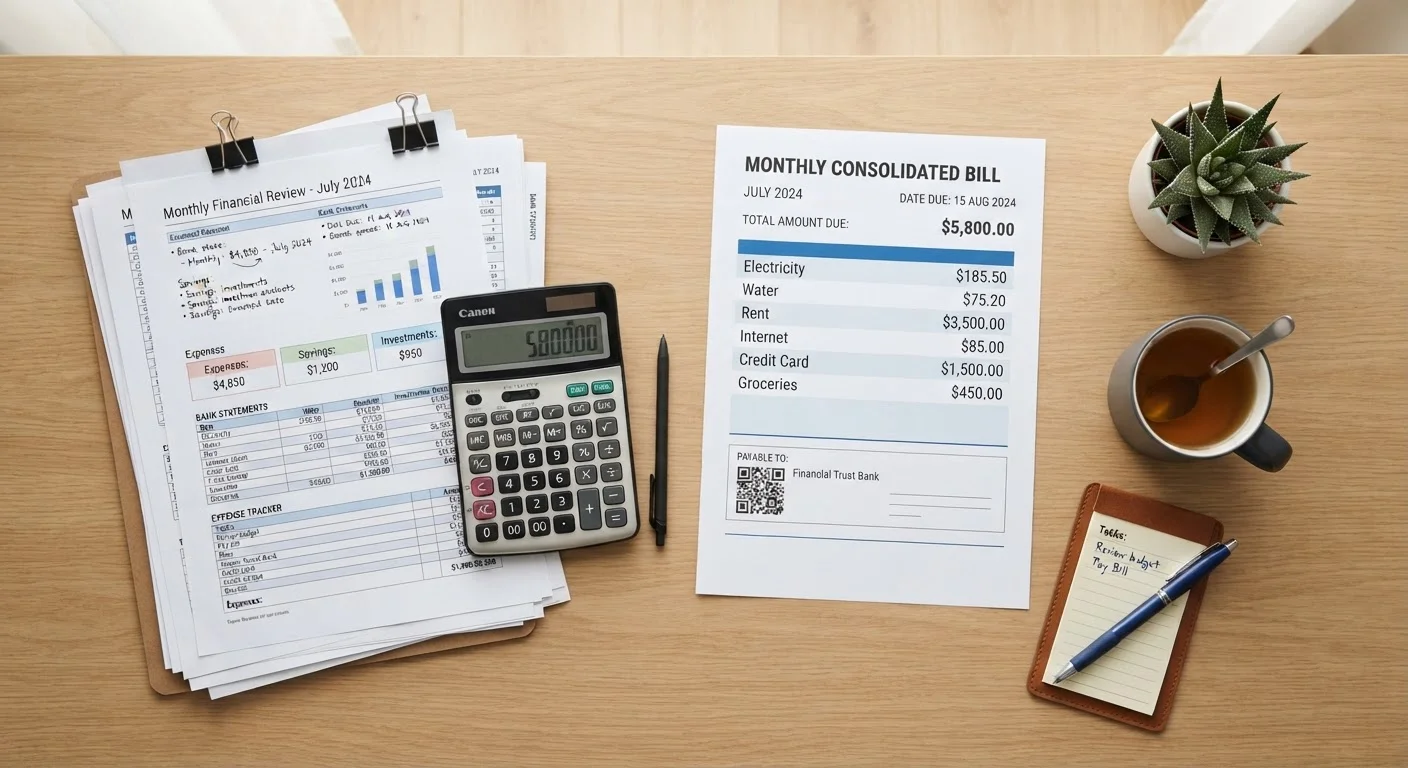
Photo: InfoAlly.net | Finding Info Made Easy editorial
Key Takeaways
- Debt consolidation rolls multiple debts into one payment, potentially lowering your interest rate.
- It simplifies repayment but does not erase what you owe - the balance still exists.
- Without addressing the spending habits that created the debt, consolidation can leave you worse off.
- Your credit score, income, and debt type all affect whether consolidation makes financial sense.
- Always consult a licensed financial professional before making significant debt decisions.
One payment replaces multiple due dates
Managing a single monthly payment reduces the cognitive load of tracking multiple creditors and lowers the risk of missing a payment through oversight.
Potentially lower interest rate
Borrowers with a solid credit score may qualify for a personal loan rate meaningfully below what credit cards charge, reducing total interest paid over the life of the debt.
Fixed repayment timeline
Unlike revolving credit card balances, most consolidation loans have a set term, giving you a clear payoff date and a defined end to the debt.
Can reduce monthly payment amount
Spreading repayment over a longer term may lower the monthly amount due, easing short-term cash flow pressure - though this can mean paying more interest overall.
Does not reduce the amount owed
Consolidation moves debt from one place to another. The principal balance remains, and if the new term is extended, total interest paid may actually increase.
Qualification depends on your credit profile
A lower interest rate is only available to borrowers who qualify for it. Those with poor or fair credit may receive rates that offer little improvement over existing balances.
Fees can offset interest savings
Balance-transfer cards often charge transfer fees of 3-5% of the amount moved; personal loans may carry origination fees. These upfront costs eat into any rate advantage.
Risk of accumulating new debt
Freed-up credit card limits after consolidation can tempt borrowers to spend again, resulting in more total debt than before the consolidation was done.
Secured options put assets at risk
Using a home equity loan to consolidate unsecured credit card debt converts that debt into a secured obligation - meaning your home is at risk if you cannot repay.
What Debt Consolidation Actually Means
Debt consolidation means combining several existing debts - typically credit card balances, medical bills, or personal loans - into a single new loan or credit product with one monthly payment. The mechanics vary: common routes include a personal consolidation loan, a balance-transfer credit card, or a home equity loan. In each case, the lender pays off your existing balances, and you repay the lender under new terms.
The potential appeal is straightforward: instead of tracking five due dates and five interest rates, you manage one. If the new rate is lower than the weighted average of your old rates, you may also pay less in interest over time. For a deeper look at the terminology involved, see our plain-English debt glossary.
What consolidation does not do is reduce the principal - the amount you actually borrowed. You are reorganizing debt, not removing it.
The Real Advantages
When the conditions are right, consolidation offers tangible benefits that go beyond convenience.
One payment replaces multiple due dates
Managing a single monthly payment reduces the cognitive load of tracking multiple creditors and lowers the risk of missing a payment through oversight.
Potentially lower interest rate
Borrowers with a solid credit score may qualify for a personal loan rate meaningfully below what credit cards charge, reducing total interest paid over the life of the debt.
Fixed repayment timeline
Unlike revolving credit card balances, most consolidation loans have a set term, giving you a clear payoff date and a defined end to the debt.
Can reduce monthly payment amount
Spreading repayment over a longer term may lower the monthly amount due, easing short-term cash flow pressure - though this can mean paying more interest overall.
~20%
Average credit card APR in the US
According to Federal Reserve data, average credit card interest rates have remained near or above 20% in recent years, making rate reduction a key driver of consolidation decisions.
35%
Weight of payment history in FICO scores
FICO, the most widely used credit scoring model, assigns the largest single weight to payment history, underscoring the importance of consistent on-time payments after consolidating.
Simplification alone has practical value: missed payments become less likely when you only have one due date to track, and payment history is the single largest factor in most credit scoring models. Consistent, on-time payments on a consolidation loan can support your credit health over time.
The Limitations You Need to Know
Consolidation has a narrow window where it truly helps. Outside that window, it can create new problems.
Does not reduce the amount owed
Consolidation moves debt from one place to another. The principal balance remains, and if the new term is extended, total interest paid may actually increase.
Qualification depends on your credit profile
A lower interest rate is only available to borrowers who qualify for it. Those with poor or fair credit may receive rates that offer little improvement over existing balances.
Fees can offset interest savings
Balance-transfer cards often charge transfer fees of 3-5% of the amount moved; personal loans may carry origination fees. These upfront costs eat into any rate advantage.
Risk of accumulating new debt
Freed-up credit card limits after consolidation can tempt borrowers to spend again, resulting in more total debt than before the consolidation was done.
Secured options put assets at risk
Using a home equity loan to consolidate unsecured credit card debt converts that debt into a secured obligation - meaning your home is at risk if you cannot repay.
Understanding how different types of debt work for or against you can help you decide whether restructuring makes sense - or whether a different repayment strategy is the better fit.
When Consolidation May Not Be the Right Move
The Habit Problem Consolidation Cannot Solve
The most common reason consolidation backfires is straightforward: borrowers consolidate credit card balances, then gradually run those same cards back up. The result is more total debt than before, now split between the consolidation loan and fresh card balances.
Consolidation is a financial structure, not a financial behavior change. Building habits that keep debt manageable over the long term - like automating payments, tracking your debt-to-income ratio, and avoiding new high-interest balances - is what makes a consolidation strategy actually work.
If you are looking at the broader picture of how debt and credit interact, the full debt and credit guide for everyday borrowers covers repayment strategies, credit scores, and borrowing decisions in one place.
This article is for general informational and educational purposes only and does not constitute personalized financial, legal, or tax advice. Consult a qualified, licensed financial professional before making decisions about your own debt situation.
The content on this site is for informational purposes only and is not a substitute for professional advice. Always consult a qualified professional for guidance specific to your situation.