
Emergency Fund vs. Savings Account: Understanding the Difference

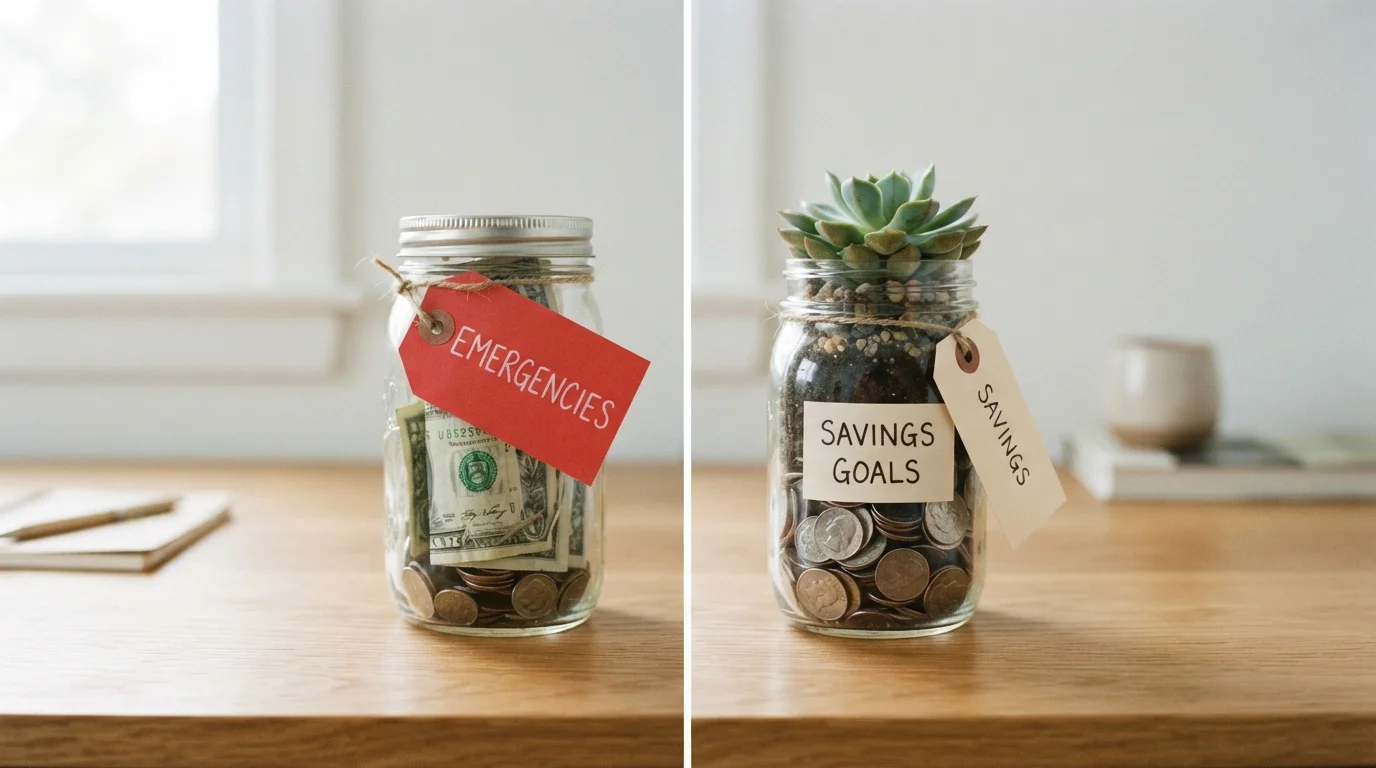
Photo: InfoAlly.net | Finding Info Made Easy editorial
Key Takeaways
- An emergency fund and a savings account serve different purposes and should not be confused.
- An emergency fund is reserved strictly for genuine, unplanned financial disruptions.
- A savings account is a tool - your emergency fund can and should be kept in one.
- Most financial guidance suggests three to six months of essential expenses as an emergency fund target.
- Keeping them in separate accounts reduces the temptation to dip into emergency reserves.
What Each One Actually Is
The terms "emergency fund" and "savings account" are often used interchangeably, but they describe two different things. A savings account is a type of bank account - a financial container. An emergency fund is a purpose - the reason you're holding a specific pool of money.
Think of it this way: a savings account is a jar. An emergency fund is what you decide that jar is for. You can keep your emergency fund in a savings account, but not every savings account is an emergency fund.
A savings account might hold money you're setting aside for a vacation, a home down payment, or a new appliance. An emergency fund holds money you do not touch unless something genuinely unexpected and financially disruptive occurs - a sudden job loss, an unplanned medical expense, or a critical home repair.
Understanding this distinction helps you make deliberate decisions about where your money lives and why. For a deeper look at how savings accounts generate returns, see how interest rates on savings accounts actually work.
| Criterion | Emergency Fund | Savings Account |
|---|---|---|
| What it is | A financial purpose/goal | A type of bank account |
| Primary use | Unplanned, urgent expenses | Planned goals or general saving |
| When to access | Only in genuine emergencies | When goal is reached or needed |
| Recommended size | 3-6 months of essential expenses | Depends on the goal |
| Where it's held | Typically in a savings account | At a bank or credit union |
| Earning interest | Yes, if held in a savings account | Yes, based on account APY |
How Much You Need - and Where to Keep It
A commonly cited guideline for an emergency fund is three to six months of essential living expenses - things like rent or mortgage, utilities, groceries, insurance, and minimum debt payments. The right amount for any individual depends on their job stability, household size, and risk tolerance. A freelancer with variable income may lean toward the higher end; a dual-income household with stable employment might feel comfortable at the lower end.
~40%
Americans who couldn't cover a $400 emergency
According to Federal Reserve surveys, a significant share of US adults report difficulty covering an unexpected $400 expense without borrowing or selling something.
3-6 months
Widely recommended emergency fund target
Most personal finance guidance - including from consumer financial education resources - suggests covering three to six months of essential living expenses.
For most people, a high-yield savings account is a sensible place to park an emergency fund. It keeps the money accessible (liquid), insured through the FDIC up to applicable limits, and earning modest interest rather than sitting idle in a checking account. The key is separation: label the account clearly and resist treating it as a general spending buffer.
Your goal-based savings - for a car, a trip, or a future purchase - can also live in a savings account, but in a separate one. Mixing funds blurs boundaries and makes it far too easy to raid your emergency reserve for a non-emergency. If you're just getting started, building your first savings buffer from scratch offers a practical starting point.
It's also worth understanding how your savings rate fits into the bigger picture. Your savings rate matters more than your income level when it comes to long-term financial resilience.
FDIC Insurance: What It Covers
Making Both Work Together
The most effective approach is to build your emergency fund first, then layer in goal-based savings. Once you have a meaningful financial cushion, you can allocate a portion of each paycheck toward specific savings goals without anxiety - because you know the safety net is already there.
Consider automating both. Set a recurring transfer to your emergency fund account until you hit your target, then redirect that same transfer to a goal-based savings account. Automation removes the need for willpower and makes saving a consistent habit rather than an occasional decision. For ideas on structuring your approach, comparing fixed savings goals versus flexible saving targets can help you find a method that fits your lifestyle.
Finally, time horizon matters. Short-term goals - like a three-month trip - call for a different strategy than saving for something a decade away. Matching your saving strategy to your timeline is a useful next step once both accounts are in motion.
This article is for general informational purposes only and does not constitute personalised financial advice. For guidance tailored to your situation, consult a qualified financial professional.
The content on this site is for informational purposes only and is not a substitute for professional advice. Always consult a qualified professional for guidance specific to your situation.