
Short-Term vs. Long-Term Saving: Matching Strategy to Timeline

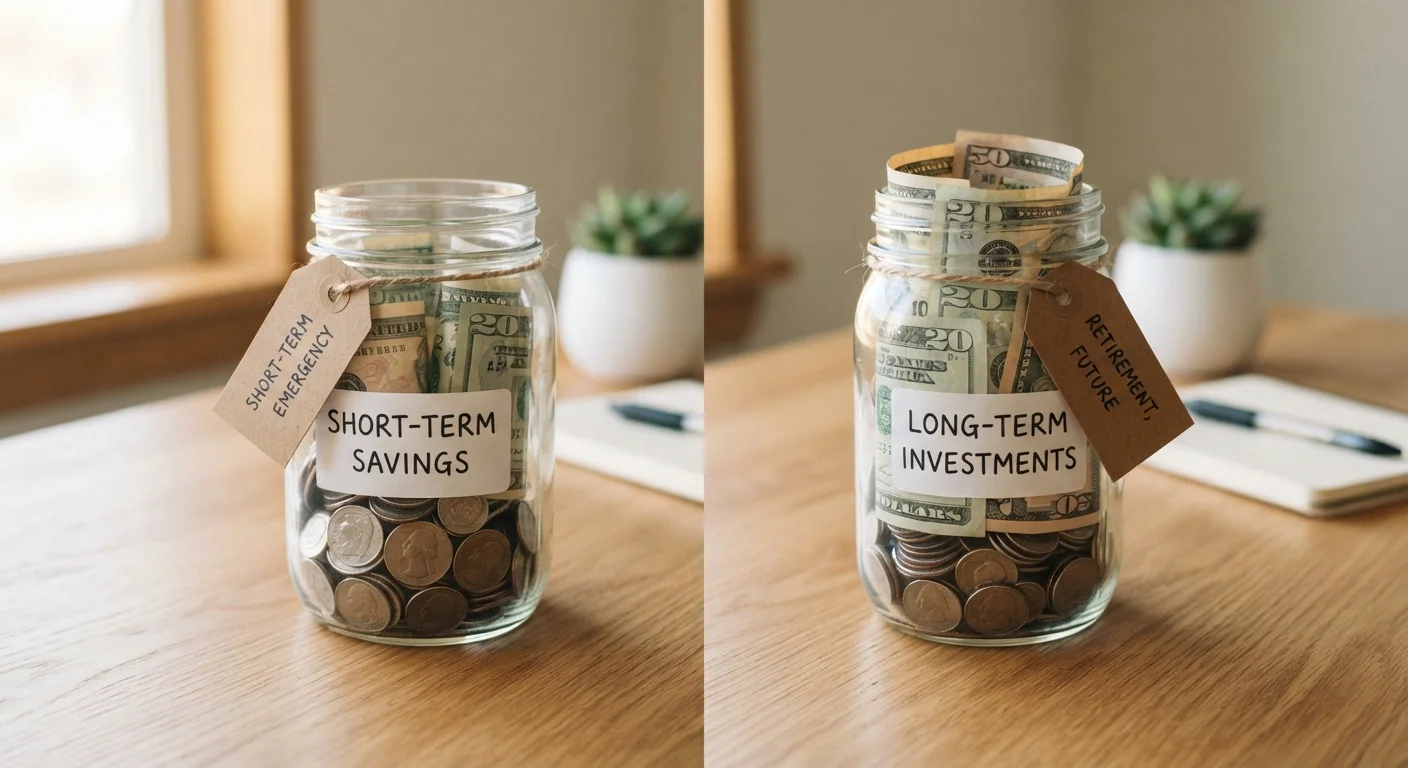
Photo: InfoAlly.net | Finding Info Made Easy editorial
Key Takeaways
- Your time horizon - not just your goal amount - should determine where and how you save.
- Short-term savings prioritize accessibility and stability; long-term savings can tolerate more growth-oriented approaches.
- Mixing strategies without a clear timeline can leave you either losing purchasing power or unable to access funds when needed.
- Most people benefit from running short-term and long-term savings in parallel, not sequentially.
Why Time Horizon Is the Starting Point
When most people think about saving, they focus on the dollar amount. But the more powerful question is: when will I need this money? That answer - your time horizon - should drive every subsequent decision about where to put your savings and how aggressively to grow them.
A holiday fund needed in eight months demands completely different handling than a retirement account you won't touch for 25 years. Treating both the same way is one of the most common and quietly costly saving mistakes. See our complete overview of saving and growing your money for a broader look at how these principles connect.
Time horizon matters for two core reasons: liquidity (how quickly you can access funds without penalty) and growth potential (how much risk and compounding your timeline can reasonably absorb).
Short-Term Saving: Stability and Access First
Short-term saving generally covers goals within one to three years - an emergency cushion, a vacation, a car repair fund, or a down payment deposit. The defining feature of these goals is that you cannot afford to lose principal or wait for a market recovery before withdrawing.
For this reason, short-term savings typically belong in liquid, low-risk accounts: high-yield savings accounts, money market accounts, or short-duration certificates of deposit (CDs) where the maturity date aligns with your goal. The priority is preserving what you put in, not maximizing growth.
Automate Each Bucket Separately
One often-overlooked consideration: inflation. Even a one- to three-year horizon can quietly erode purchasing power if your savings rate consistently trails inflation. Choosing a high-yield savings account over a basic checking account can help reduce - though not eliminate - that gap.
Emergency funds and regular savings accounts serve related but distinct roles within this timeline, and it's worth understanding both before deciding where your short-term money lives.
Long-Term Saving: Growth Becomes the Priority
Long-term saving covers goals five or more years out - retirement, a child's college fund, or a major life purchase still a decade away. With this kind of runway, your strategy can reasonably shift toward growth, because you have time to ride out market fluctuations and benefit from compounding.
Tax-advantaged accounts (such as 401(k)s or IRAs in the US context) are commonly used vehicles for long-term saving, as they offer structural incentives for keeping money invested over time. However, the key tradeoff is reduced flexibility: withdrawing early typically triggers penalties and taxes.
| Short-Term Saving | Long-Term Saving | |
|---|---|---|
| Typical timeline | Under 3 years | 5+ years |
| Primary goal | Preserve principal, stay liquid | Grow wealth over time |
| Risk tolerance | Very low | Moderate to higher |
| Common account types | High-yield savings, money market, short CDs | 401(k), IRA, brokerage accounts |
| Access to funds | Flexible, no penalty | Restricted; early withdrawal often penalized |
| Impact of inflation | More immediate concern | Compounding can help offset over time |
| Compounding benefit | Limited by short window | Significant with time |
It's also worth monitoring spending patterns that quietly undermine long-term goals, since small lifestyle creep over years can meaningfully reduce how much reaches long-term accounts.
This article is for general informational purposes only and does not constitute personalised financial or investment advice. Consult a qualified financial adviser for guidance specific to your situation.
Running Both Strategies in Parallel
A common misconception is that you must finish one saving goal before starting another. In practice, short-term and long-term saving should run simultaneously, each funded from a dedicated slice of your monthly budget.
A simple framework: identify every savings goal you have, assign each a rough timeline, and then route contributions to the account type that fits that window. This avoids the trap of keeping everything in one place - which creates its own tradeoffs, as explored in our article on the trade-offs of keeping all savings in one place.
If you're unsure how to set realistic contribution targets for each bucket, setting a savings goal you'll actually stick to offers a structured approach that works for both timelines. And if flexibility versus commitment is a tension you feel, fixed vs. flexible savings targets can help you decide how rigidly to structure each goal.
The bottom line: your time horizon is not a minor detail - it is the framework. Getting this right makes every other saving decision easier and more effective.
The content on this site is for informational purposes only and is not a substitute for professional advice. Always consult a qualified professional for guidance specific to your situation.