
Training Older Pets: What Changes and What Stays the Same

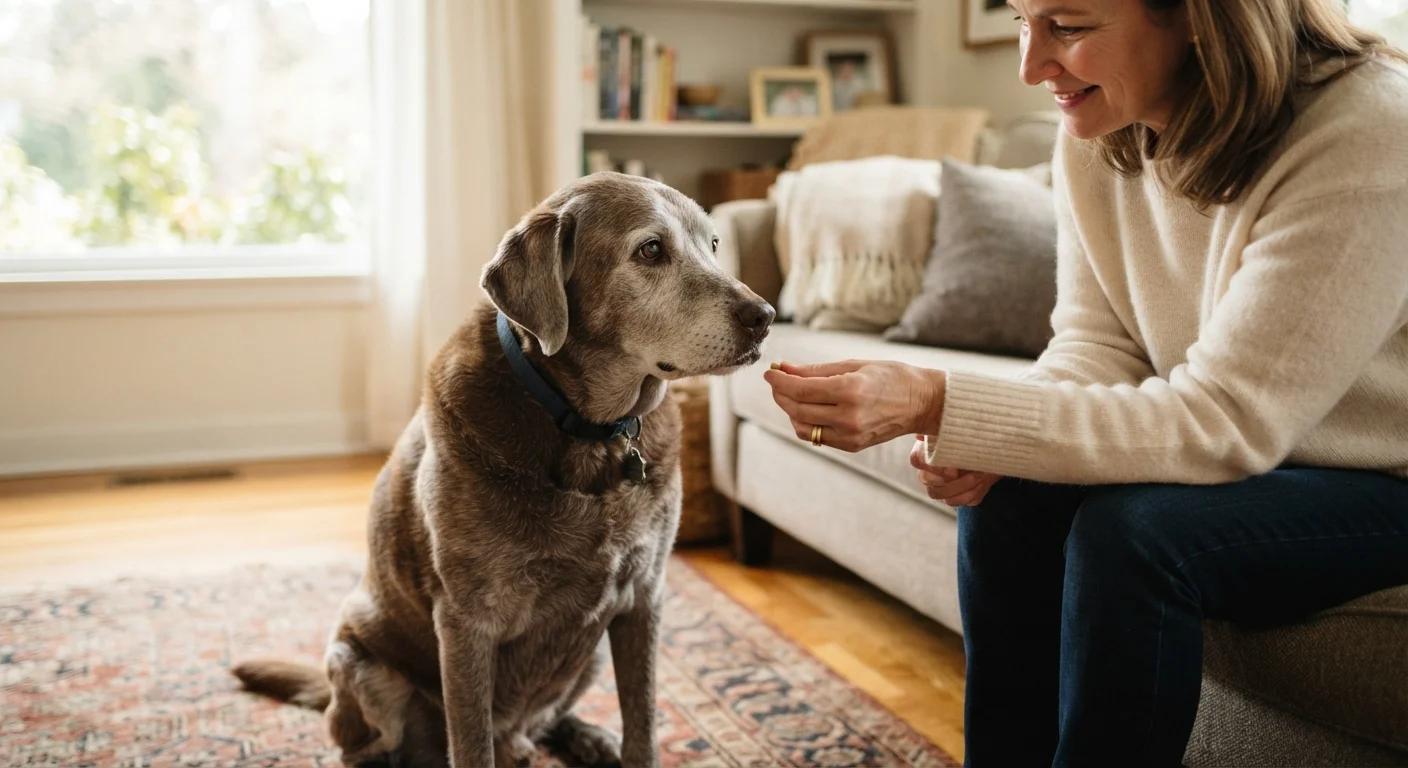
Photo: InfoAlly.net | Finding Info Made Easy editorial
Key Takeaways
- Older pets retain the ability to learn new behaviors; neuroplasticity doesn't disappear with age.
- Physical limitations like joint pain or sensory loss must be accounted for in training design.
- Shorter, more frequent sessions work better for senior pets than long practice blocks.
- Positive reinforcement remains the most effective and humane method regardless of a pet's age.
- A veterinary checkup before beginning new training helps rule out pain or cognitive factors.
Senior pets often have more patience and focus
The impulsive energy of puppyhood and adolescence has settled, meaning older pets are frequently calmer during sessions and less easily distracted by environmental stimulation.
Training provides vital mental stimulation
Cognitive engagement through learning tasks may help maintain mental sharpness. Veterinary behaviorists often recommend enrichment activities for older pets experiencing early cognitive changes.
Strengthens the bond during a vulnerable life stage
Regular, positive one-on-one sessions build trust and give owners a structured way to connect with a pet whose needs - and communication - are evolving.
Existing learned behaviors provide a strong foundation
A pet with prior training history already understands how the reward system works, making it easier to introduce adapted or modified versions of familiar cues.
Practical skills can improve daily quality of life
Teaching a senior dog to cooperate with grooming, handling, or medication routines reduces stress during veterinary visits and at-home care tasks.
Physical limitations may retire some behaviors entirely
Asking an arthritic dog to sit repeatedly or jump onto surfaces can cause pain, meaning some previously learned cues may need to be permanently modified or phased out.
Sensory loss complicates communication
Partial deafness or vision impairment requires owners to identify which senses remain reliable and redesign their cue system accordingly - a process that takes patience and observation.
Progress may be slower and less linear
Cognitive aging can affect memory consolidation, meaning a behavior learned one week may seem less reliable the next. This is normal but can feel discouraging without realistic expectations.
Underlying pain can masquerade as training resistance
A pet that stops responding to a cue it once knew may be experiencing discomfort, not defiance. Distinguishing the two requires veterinary assessment, not more repetitions.
Motivation and reward preferences may shift
An older pet's appetite or food drive may change due to health conditions or medication, requiring owners to identify new high-value rewards that actually motivate them.
The Myth That Old Pets Can't Learn
"You can't teach an old dog new tricks" is one of the most persistent - and least accurate - beliefs in pet ownership. Research in animal cognition consistently shows that older pets retain meaningful capacity for learning. What changes isn't ability; it's the conditions under which learning happens most efficiently.
Senior dogs and cats do experience gradual cognitive changes, sometimes including a condition veterinarians call Cognitive Dysfunction Syndrome (CDS), which can affect memory and attention. But the presence of cognitive aging doesn't make training futile - in fact, mentally engaging activities may help slow cognitive decline. Before starting any new training program with an older pet, a veterinary visit is strongly recommended to rule out pain, hearing loss, or vision changes that could be misread as stubbornness or disinterest. See our guide on how health needs shift as pets age for a fuller picture of what's happening physically.
Screen Before You Start
What Actually Changes With Age
Understanding the real differences helps you train smarter rather than harder.
- Stamina and mobility: Arthritis and reduced flexibility mean physical cues - like asking a dog to sit, lie down, or jump - may need to be modified or retired. Low-impact alternatives protect joints without stopping training entirely.
- Sensory changes: Partial hearing or vision loss requires switching from verbal cues to hand signals, or vice versa, depending on which sense remains stronger.
- Processing speed: Older pets often need more time between a cue and a reward. Rushing the reward timing or repeating cues too quickly can increase confusion and frustration.
- Attention span: Sessions that once ran 15 minutes may need to shrink to five or seven, with more rest between repetitions.
~50%
Senior dogs affected by cognitive dysfunction
Studies in veterinary behavioral medicine suggest cognitive dysfunction syndrome affects roughly half of dogs over age 11, though many cases go unrecognized by owners.
5-7 min
Recommended session length for senior pets
Veterinary behaviorists and certified trainers commonly recommend keeping individual training sessions to five to seven minutes for older animals to prevent fatigue and frustration.
These aren't failures - they're adaptations. The core science of how animals learn through consequence and association doesn't change. Common training myths often assume older pets need firmer handling, but modern behavioral science points in the opposite direction.
Advantages of Training a Senior Pet
There are genuine, meaningful benefits to investing in training during a pet's older years - some of which are unique to this life stage.
Senior pets often have more patience and focus
The impulsive energy of puppyhood and adolescence has settled, meaning older pets are frequently calmer during sessions and less easily distracted by environmental stimulation.
Training provides vital mental stimulation
Cognitive engagement through learning tasks may help maintain mental sharpness. Veterinary behaviorists often recommend enrichment activities for older pets experiencing early cognitive changes.
Strengthens the bond during a vulnerable life stage
Regular, positive one-on-one sessions build trust and give owners a structured way to connect with a pet whose needs - and communication - are evolving.
Existing learned behaviors provide a strong foundation
A pet with prior training history already understands how the reward system works, making it easier to introduce adapted or modified versions of familiar cues.
Practical skills can improve daily quality of life
Teaching a senior dog to cooperate with grooming, handling, or medication routines reduces stress during veterinary visits and at-home care tasks.
Training also deepens trust, which matters more than ever as pets navigate the uncertainty that can come with physical change. The science behind the human-animal bond shows that consistent, positive interaction builds neurological trust pathways - a real, measurable benefit for both species.
Challenges Worth Knowing About
Honesty matters here. Training older pets comes with real constraints that owners should plan around rather than minimize.
Physical limitations may retire some behaviors entirely
Asking an arthritic dog to sit repeatedly or jump onto surfaces can cause pain, meaning some previously learned cues may need to be permanently modified or phased out.
Sensory loss complicates communication
Partial deafness or vision impairment requires owners to identify which senses remain reliable and redesign their cue system accordingly - a process that takes patience and observation.
Progress may be slower and less linear
Cognitive aging can affect memory consolidation, meaning a behavior learned one week may seem less reliable the next. This is normal but can feel discouraging without realistic expectations.
Underlying pain can masquerade as training resistance
A pet that stops responding to a cue it once knew may be experiencing discomfort, not defiance. Distinguishing the two requires veterinary assessment, not more repetitions.
Motivation and reward preferences may shift
An older pet's appetite or food drive may change due to health conditions or medication, requiring owners to identify new high-value rewards that actually motivate them.
Consistency remains essential regardless of age. Building a reliable training routine helps senior pets feel secure - predictability reduces anxiety and makes each session more productive.
What Stays the Same: The Fundamentals
Amid all the adjustments, the foundational principles of effective training are completely unchanged for older pets.
- Positive reinforcement works. Rewarding desired behavior with something the animal values - food, praise, gentle touch - remains the most evidence-supported method at every life stage.
- Timing still matters. A reward delivered within one to two seconds of the behavior is far more meaningful than one given five seconds later, regardless of the pet's age.
- Short wins build confidence. Ending sessions on success - even a simple, well-executed known behavior - keeps motivation high for the next session.
- Your emotional state is contagious. Pets pick up on owner frustration. Calm, upbeat energy during training directly influences how an older pet engages.
If you're newer to positive training methods, our introduction to training fundamentals covers the core concepts in accessible detail - much of it applies directly to working with senior animals.
This article is for general informational purposes only and does not constitute veterinary advice. Always consult a licensed veterinarian before making significant changes to your pet's health or activity routine.
The content on this site is for informational purposes only and is not a substitute for professional advice. Always consult a qualified professional for guidance specific to your situation.