
Understanding Feline Play Aggression and How to Redirect It

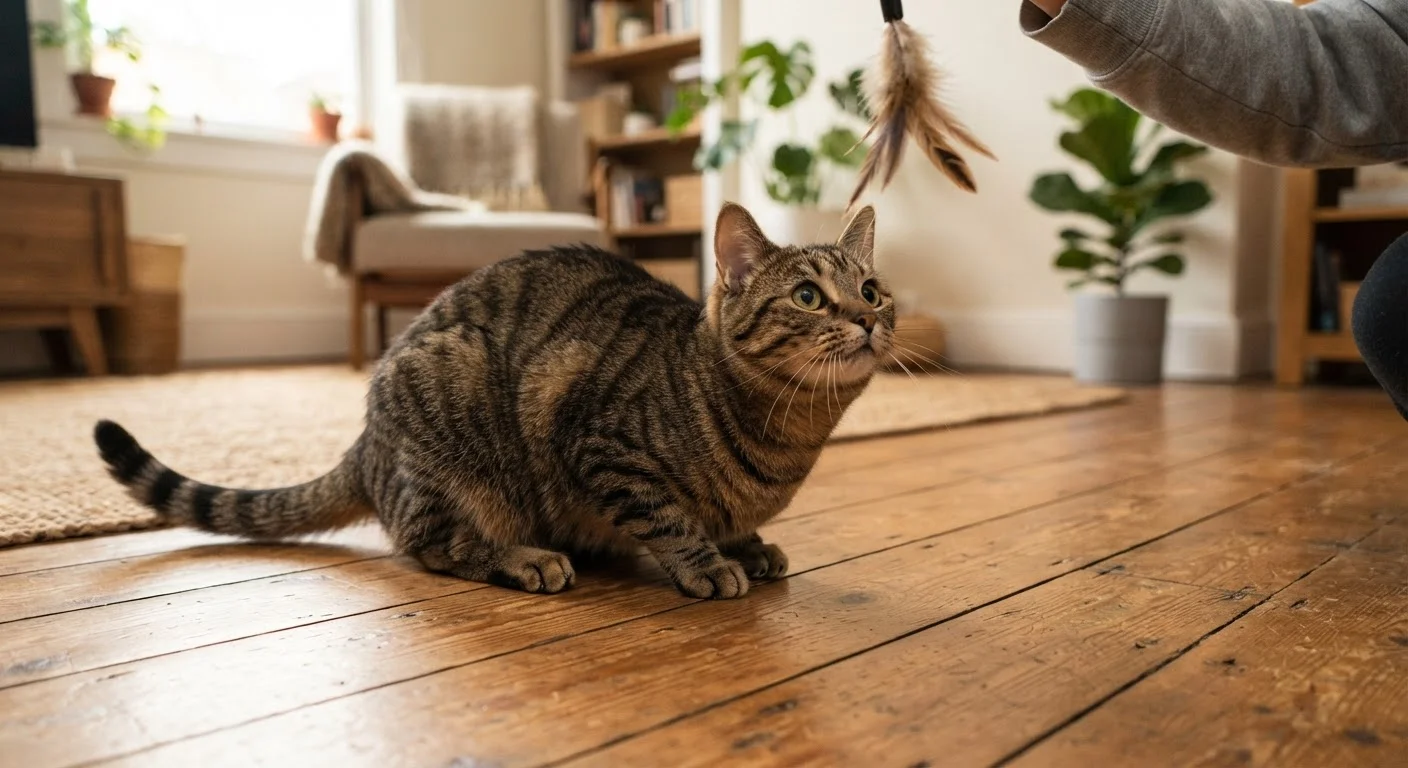
Photo: InfoAlly.net | Finding Info Made Easy editorial
Key Takeaways
- Play aggression is a normal feline behavior rooted in predatory instinct, not malice.
- Recognizing the difference between play aggression and true fear-based aggression is essential.
- Redirecting with appropriate toys and consistent routines can significantly reduce biting and scratching.
- Never use your hands or feet as play targets - this reliably reinforces unwanted biting.
- Cats benefit from multiple short, structured play sessions daily to release predatory energy.
What Is Feline Play Aggression?
If your cat has ever ambushed your ankles from behind a couch corner or left tiny tooth marks on your hand mid-cuddle, you've likely experienced play aggression - one of the most common behavior concerns among cat owners in the US. It can feel alarming, but it's almost always normal.
Play aggression stems from a cat's hardwired predatory drive. In the wild, kittens develop hunting skills by practicing on littermates, batting, biting, and wrestling. Without those sibling sparring partners, a hand, foot, or unsuspecting ankle becomes the next best target. This is especially common in cats adopted as single kittens.
It's worth distinguishing play aggression from true fear- or pain-based aggression. During play, your cat's body language tends to be loose and active - pupils dilated, tail lashing playfully, no hissing or growling. True defensive aggression usually includes flattened ears, a low growl, a puffed tail, and a crouched or cornered posture. If you're unsure which you're dealing with, consulting your veterinarian is always a good first step. For a broader look at how behavior categories work, see our complete guide to understanding and shaping pet behavior.
Play Aggression Is Especially Common in Single Kittens
Why Redirecting - Not Punishing - Works
Punishment-based responses like squirting water, shouting, or physically pushing a cat away tend to erode trust without actually teaching your cat what to do instead. Cats don't associate punishment delivered even seconds after the behavior with the behavior itself - it simply makes them anxious or more reactive.
Redirection, by contrast, channels the predatory energy toward an appropriate outlet. The goal isn't to suppress the instinct - it's to give it a legal, safe target. Many owners discover their play routines weren't actually meeting their cat's needs to begin with. Our article on why your pet's playtime isn't as enriching as you think explores this dynamic in depth.
Never Use Physical Punishment
Consistency across everyone in the household matters enormously. If one person allows hand-play while another discourages it, your cat receives conflicting signals and the unwanted behavior persists.
Step-by-Step: Redirecting Play Aggression
The steps below apply whether you're managing a kitten who's just learning boundaries or an adult cat with long-established habits. Progress may be gradual - give it several weeks of consistent practice before evaluating results.
What you will need
Stop the interaction the moment biting or scratching begins
As soon as your cat makes unwanted contact - even lightly - go completely still and then calmly withdraw. Do not pull away sharply, as sudden movement mimics prey and escalates excitement. Stand up slowly, cross your arms, and turn away. This communicates clearly that rough contact ends the fun.
Immediately redirect to an appropriate toy
Keep a wand toy within easy reach during any interaction where play aggression is likely. The moment you withdraw from contact, introduce the wand toy and begin moving it in a way that mimics prey - low, erratic movements along the ground rather than dangling it directly in your cat's face. Let your cat stalk, pounce, and catch it.
Schedule two to three dedicated play sessions daily
Many cats act out during random moments because they have no predictable outlet for their energy. Aim for two to three play sessions of roughly 10-15 minutes each, ideally at the same times each day - once in the morning and once in the evening aligns with a cat's naturally crepuscular activity peaks. End each session by allowing your cat to 'catch' the toy so the predatory sequence feels complete.
Remove your hands and feet as play objects entirely
This step requires buy-in from everyone in the home. Wiggling fingers under blankets, letting kittens wrestle with a hand, or allowing foot-chasing - even occasionally - continuously reinforces that body parts are fair game. Replace these habits entirely with toy-based play from this point forward.
Enrich the environment between sessions
A cat who is mentally and physically stimulated between play sessions is less likely to build up the pent-up energy that spills into play aggression. Rotate toy availability so novelty is maintained, add window perches for visual stimulation, and consider puzzle feeders that engage hunting instincts during mealtimes.
It's also worth challenging the assumption that cats are solitary creatures who don't benefit from social engagement. Research increasingly shows that structured, responsive play is a form of bonding. Our piece on separating pet behavior myths from reality addresses this and other misconceptions that can get in the way of a thriving relationship with your cat.
This article is for general informational purposes only. If your cat's behavior changes suddenly, becomes severe, or causes injury, please consult a licensed veterinarian or certified animal behaviorist.
The content on this site is for informational purposes only and is not a substitute for professional advice. Always consult a qualified professional for guidance specific to your situation.