
Rainy Day Activities That Keep Indoor Pets Mentally Sharp

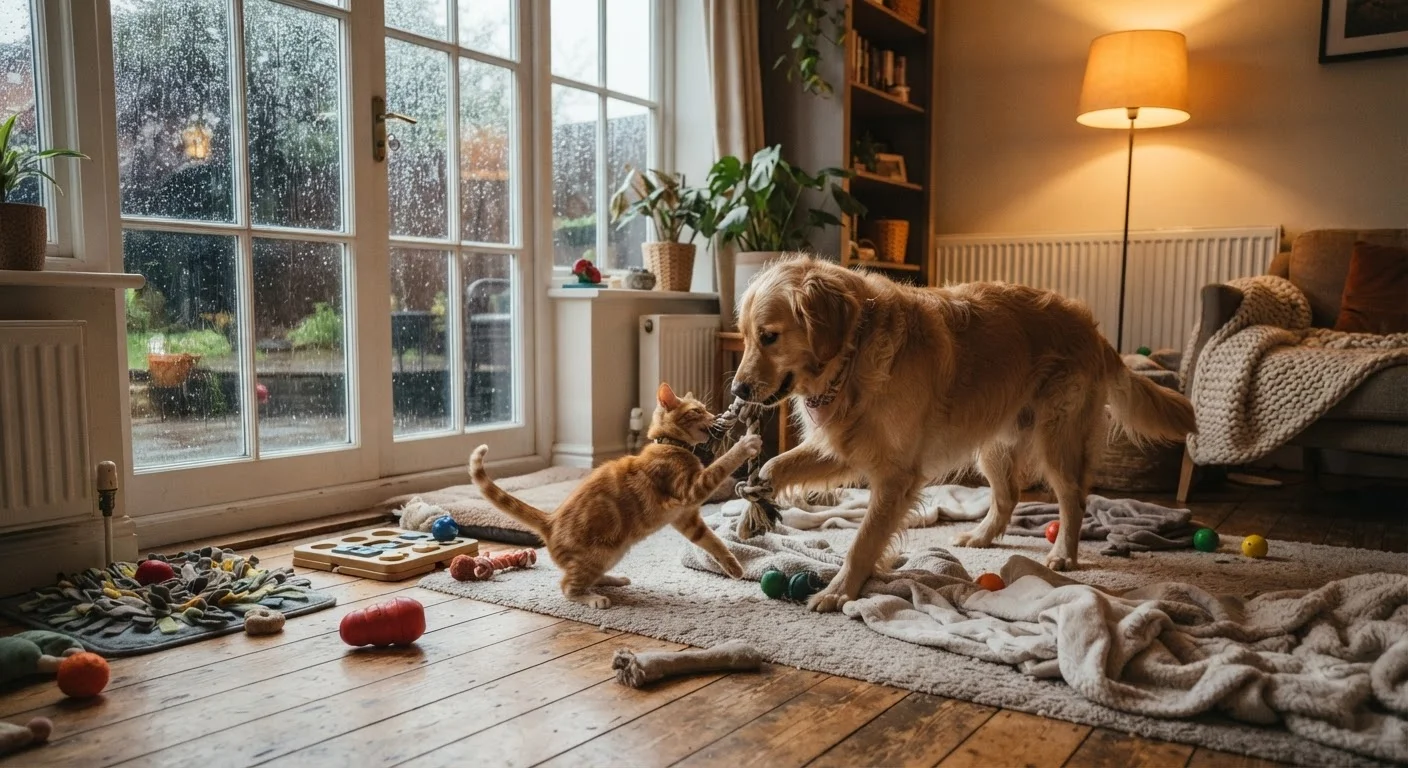
Photo: InfoAlly.net | Finding Info Made Easy editorial
Key Takeaways
- Mental stimulation is just as important as physical exercise for indoor pets' well-being.
- Simple household items can be repurposed into effective enrichment tools for dogs, cats, and small animals.
- Short, varied activity sessions prevent boredom and reduce stress-related behaviors in pets.
- Rainy days offer a natural window to strengthen your bond through interactive play and training.
- Rotating activities keeps novelty high, which sustains your pet's curiosity and engagement over time.
Why Mental Enrichment Matters on Rainy Days
When a downpour cancels the afternoon walk, it's tempting to let your pet nap through the day. But boredom can quietly build into destructive behavior, excessive vocalization, or anxious pacing - especially for high-energy dogs, curious cats, and small mammals with sharp, active minds.
Animal behaviorists widely agree that mental stimulation addresses a different layer of a pet's needs than physical exercise alone. Problem-solving, scent work, and novelty all activate different neural pathways, helping pets feel genuinely satisfied rather than simply tired. Think of it this way: a rainy afternoon isn't a setback - it's an invitation to enrich your pet's inner world.
If you're looking to build on these moments more consistently, our guide to building a daily routine shows how to weave enrichment into your pet's natural rhythms every day of the week.
Scatter Feeding and Foraging Puzzles
Rather than serving meals in a bowl, scatter your dog's or small animal's kibble across a snuffle mat, inside a muffin tin covered with tennis balls, or simply spread across a textured rug. For cats, hiding small portions of food around the room mimics the hunt-catch-consume cycle they're wired for.
Foraging taps into deeply ingrained instincts and can turn a five-minute meal into a fifteen-minute mental workout. For rabbits, guinea pigs, and other small mammals, hiding leafy greens among hay provides similar engagement.
Turning mealtime into a foraging challenge can satisfy your pet's instincts more than a full play session.
Indoor Nose Work and Scent Trails
A dog's nose is extraordinarily powerful - estimates suggest their sense of smell is tens of thousands of times more sensitive than a human's. Nose work channels that ability into structured sniffing games. Hide a favorite treat or a scented toy under cups, inside cardboard boxes, or behind furniture and let your dog search it out.
Cats and ferrets also respond well to scent-based games. Rotating the hiding spots each round keeps the challenge fresh and prevents the game from becoming predictable.
A ten-minute nose work session can be more satisfying for a dog than a half-hour game of fetch.
Short Training Sessions with New Tricks
Rain days are ideal for brushing up on existing commands or introducing a brand-new skill. Keep sessions to five or ten minutes to maintain your pet's focus and enthusiasm. Dogs, cats, and even some birds can learn a surprising range of behaviors through positive reinforcement - spin, touch, stay, or even fetch a named object.
Short, rewarding sessions build confidence as much as they build skill. For a framework on pacing and structure, explore consistent training routine principles that help pets learn faster and retain more.
Brief, reward-focused training sessions build your pet's confidence just as much as their skill set.
DIY Obstacle Courses and Exploration Zones
Cushions, cardboard boxes, laundry baskets, and low step stools can be arranged into an indoor obstacle course for dogs. Guide your dog through tunnels made from blankets draped over chairs, or set up a simple weave using water bottles. For cats, a cardboard box city with cut-out doors and windows satisfies their drive to explore, hide, and perch.
Small animals like rabbits or guinea pigs benefit from safe tunnels and rearranged enclosure furniture that gives them something new to investigate. Novelty in the environment itself is a form of enrichment.
Rearranging your pet's space with everyday objects can be as stimulating as any purchased toy.
Calm Bonding Activities Like Gentle Grooming or Massage
Not every enrichment activity has to be high-energy. Slow, intentional grooming - gentle brushing, examining paws, or light massage - provides sensory stimulation and reinforces trust. Many animals find structured handling deeply calming, especially during thunderstorms when the sound of rain may cause mild anxiety.
For general pet health and care, regular gentle handling also helps you notice any changes in your pet's skin, coat, or body condition early - a quiet but meaningful benefit of these calm indoor sessions.
Gentle grooming sessions during storms can turn a stressful sound into a cue for calm connection.
Interactive Play with Rotation and Surprise
Wand toys for cats, tug ropes for dogs, and willow balls for small animals all remain engaging - but only when used with intention. Vary the speed, direction, and rhythm of play to mimic the unpredictability of real prey or a real playmate. Let your pet occasionally 'win' to sustain their motivation.
Rotating toys in and out of a storage bin so your pet doesn't see the same ones every day preserves their novelty. A toy that's been out of sight for two weeks often feels brand new - a simple trick that makes a real difference in sustained engagement. For a deeper look at pet behavior and training, understanding what drives your pet's play instincts helps you design sessions that genuinely satisfy them.
Rotating toys in and out of storage can make familiar items feel brand new to your pet.
Making the Most of Every Indoor Moment
You don't need expensive gear or a perfectly curated activity kit. The most effective enrichment often comes from your creativity and presence. Rotating through a handful of these activities - rather than defaulting to the same one each time - keeps novelty working in your favor. Novelty itself is enriching; it signals to your pet that their environment is alive and responsive.
Keep Sessions Short and Sweet
For a broader look at whether your current play routine is genuinely stimulating your pet, discover common gaps in pet play and how to close them. And if you'd like a structured weekly check-in that covers enrichment alongside your pet's comfort and social needs, our weekend reset checklist is a great companion resource.
This article is for general informational purposes only and is not a substitute for professional veterinary or behavioral guidance. If your pet shows signs of persistent anxiety or behavioral changes, consult a licensed veterinarian or certified animal behaviorist.
The content on this site is for informational purposes only and is not a substitute for professional advice. Always consult a qualified professional for guidance specific to your situation.