
Pantry Staples That Consistently Outperform Their Premium Alternatives

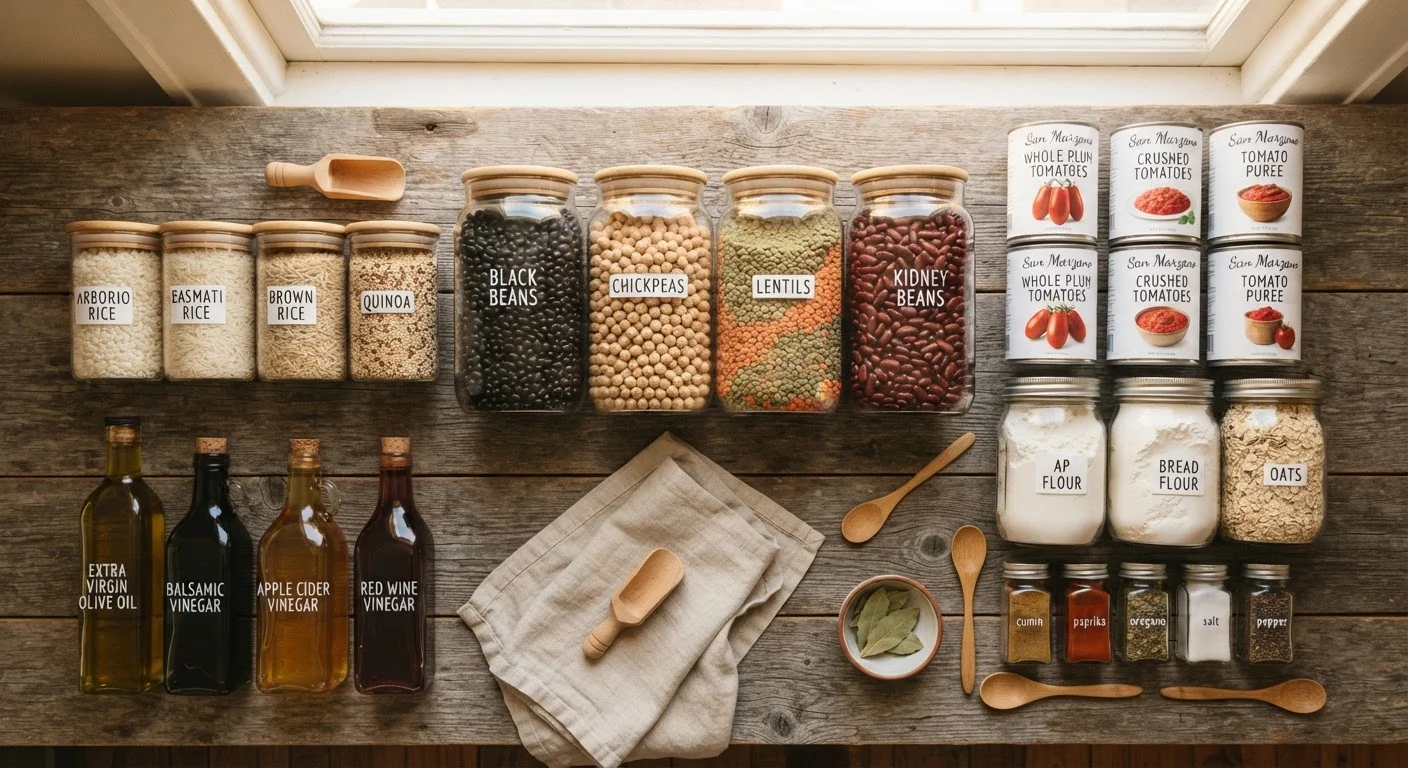
Photo: InfoAlly.net | Finding Info Made Easy editorial
Key Takeaways
- Store-brand canned tomatoes often match or exceed name-brand quality due to identical sourcing and processing.
- Dried legumes consistently deliver more nutrition per dollar than most packaged protein alternatives.
- Generic white vinegar and neutral oils perform identically to premium versions in most everyday cooking applications.
- Price alone is a poor indicator of pantry quality - ingredient lists and format matter more.
- Several affordable staples have stronger culinary track records than their marketed premium counterparts.
Why the Affordable Option Sometimes Wins
Grocery marketing is engineered to equate price with quality. Premium packaging, artisanal labels, and "small-batch" claims create the impression that paying more is simply the smarter choice. For certain categories - specialty spices, aged vinegars, single-origin oils - that may hold true. But for a meaningful slice of everyday pantry staples, the evidence and culinary consensus tell a different story.
Understanding where affordable options genuinely hold their own is a useful skill. It frees up budget for purchases where quality differences are real, and it reduces the mental overhead of grocery shopping. This connects to a broader point explored in our guide to price versus value: cost and quality are related, but not synonymous - and knowing when they diverge is what separates a confident shopper from one who simply defaults to the expensive option.
The items below represent categories where culinary professionals, food scientists, and experienced home cooks broadly agree: the affordable version reliably gets the job done.
Canned whole tomatoes
Canned tomatoes are among the most studied and discussed items in the "store brand vs. name brand" conversation - and the verdict is consistently unsurprising. Many retailers source their private-label canned tomatoes from the same processors that fill name-brand cans. The tomatoes are grown in the same regions, harvested at the same stage, and packed under the same food-safety standards.
In cooking applications - sauces, braises, soups - the differences that do exist (slight variation in salt content or liquid ratio) are easily adjusted. Checking the ingredient label for minimal additives (tomatoes, tomato juice, salt, or citric acid) is a more reliable quality signal than the brand name on the front.
Many store-brand canned tomatoes come from the same processors as name-brand versions.
Dried beans and lentils
Dried legumes represent one of the strongest value propositions in any pantry. They are nutritionally dense, shelf-stable for years when stored properly, and versatile across cuisines. Compared to canned varieties, they are significantly cheaper per serving. Compared to packaged protein powders or specialty "superfood" beans marketed at a premium, the nutritional gap rarely justifies the price difference.
Lentils in particular require no soaking and cook quickly, making them one of the most practical protein sources available at any price point. For a fuller picture of how legumes compare nutritionally to other plant proteins, the plant-based protein comparison provides useful context.
Dried lentils require no soaking, cook quickly, and rival far more expensive protein sources.
White distilled vinegar
For cleaning, pickling, and many baking applications, white distilled vinegar is chemically indistinguishable regardless of brand. Acidity levels are standardized (typically 5% for culinary use), and the source grain doesn't affect performance in most applications. Premium branding here primarily reflects marketing, not meaningful ingredient variation.
Where vinegar quality does matter - in salad dressings or finishing applications - the relevant distinction is type (apple cider, red wine, balsamic), not brand tier within the same type.
For pickling and baking, white vinegar performs identically across brands - acidity is standardized.
All-purpose flour
For everyday baking - muffins, pancakes, bread, roux - standard all-purpose flour from a store brand performs the same as premium alternatives because the relevant variable is protein content, which is regulated and labeled. Most all-purpose flours land between 10-12% protein, which is what matters for gluten development and texture.
Specialty flours (bread flour, cake flour, whole wheat) are worth seeking for specific applications, but within the all-purpose category, paying a premium for brand recognition yields no measurable baking improvement for most home cooks.
Protein content, not brand name, determines flour performance - and it's right there on the label.
Neutral cooking oils
Canola, vegetable, and generic sunflower oils perform identically in high-heat cooking regardless of brand. Their smoke points, fatty acid compositions, and flavor profiles (intentionally neutral) don't vary meaningfully between a store brand and a premium label when used for sautéing, roasting, or frying.
Where oil quality genuinely matters - for cold applications like dressings or finishing - the relevant choice is extra-virgin olive oil, and even there, freshness and acidity are better quality indicators than price tier or brand prestige.
For high-heat cooking, generic neutral oils perform identically to their premium-labeled counterparts.
Rolled oats
Old-fashioned rolled oats are a commodity grain product with very little variation between manufacturers at the same grade. A store-brand container of rolled oats contains the same product as a premium-branded one at twice the price: oat groats that have been steamed and flattened. Fiber content, cooking behavior, and flavor are effectively identical.
The exception: flavored or instant oat packets often include added sugars and sodium, where comparing ingredient labels across brands does matter. For plain rolled oats used in overnight oats, granola, or porridge, brand premium carries no functional benefit.
Plain rolled oats are a commodity - store-brand and premium versions are functionally the same product.
Building a Smarter Pantry Over Time
The goal isn't to buy the cheapest version of everything - it's to spend deliberately. Some ingredients genuinely reward investment: good-quality whole spices, a reliable extra-virgin olive oil for finishing dishes, or dry goods you'll use in large quantities. But for the staples listed here, trading down rarely means trading off.
Use the ingredient list, not the label
If you're also thinking about how protein-rich pantry staples like legumes and grains stack up nutritionally, our comparison of plant-based protein sources covers amino acid profiles and everyday usability in useful detail. And for a consistent decision-making framework across routine purchases more broadly, the habits that keep spending aligned with your values is worth a read.
The pantry is one of the easiest places to build genuine value into daily life - not by cutting corners, but by knowing where quality lives regardless of price.
The content on this site is for informational purposes only and is not a substitute for professional advice. Always consult a qualified professional for guidance specific to your situation.