
Why Buyer's Remorse Happens - and How to Reduce It

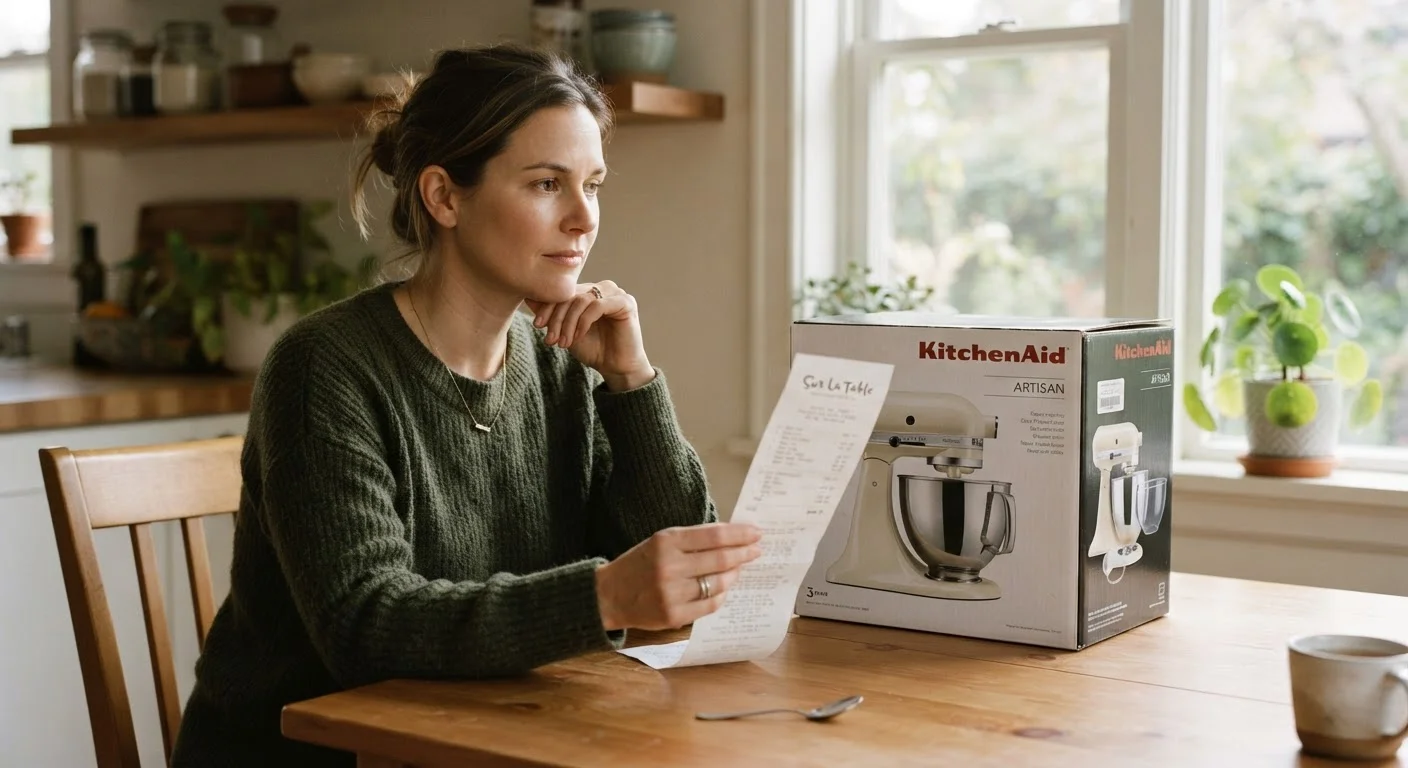
Photo: InfoAlly.net | Finding Info Made Easy editorial
Key Takeaways
- Buyer's remorse is driven by predictable cognitive patterns, not personal weakness.
- High-pressure retail environments are specifically designed to accelerate decisions and increase post-purchase doubt.
- Slowing down before a purchase is the single most effective way to reduce regret afterward.
- Understanding your emotional state at purchase time is key to recognizing regret-prone decisions.
- Return policies provide a practical safety net - knowing them before you buy reduces anxiety after.
The Cognitive Loop Behind Post-Purchase Regret
Buyer's remorse rarely appears out of nowhere. It follows a predictable arc: anticipation before the purchase, a brief high at the moment of buying, and then a growing unease once the decision becomes fixed. What drives that unease is primarily cognitive dissonance - the discomfort your brain experiences when a new reality (you spent the money) conflicts with an older belief (you value financial caution, or you weren't sure you needed it).
Your brain doesn't simply accept new decisions. It immediately begins stress-testing them - comparing what you chose against the alternatives you passed on. This process, sometimes called the "post-decision evaluation," is amplified when the stakes are high, the decision was fast, or the alternatives were genuinely attractive. The result is a mental loop that replays the decision and inflates the appeal of what you didn't choose.
Understanding this loop matters because it reframes buyer's remorse as a structural feature of decision-making - not a signal that you're careless or impulsive. See our overview of impulse buying psychology for a deeper look at the emotional triggers that shape these decisions before you even reach the register.
“The pain of making decisions comes largely from the conflict between what we want in the moment and what we value over time. Understanding that tension doesn't make the conflict disappear, but it does make the outcome easier to own.”
— Dan Ariely, Behavioral economist and author of 'Predictably Irrational'
What Makes Some Purchases Higher-Risk for Remorse
Not every purchase carries equal remorse risk. Several factors reliably increase the likelihood that you'll second-guess a decision:
- Speed: Decisions made quickly - especially under sales pressure or time constraints - leave less room for the kind of deliberation that produces durable confidence.
- Emotional state at purchase: Buying while stressed, bored, or unusually excited increases the probability of regret. Your emotional state quietly steers spending decisions in ways that aren't always obvious in the moment.
- Mismatch between want and need: Purchases that satisfy an immediate desire but don't align with a genuine, ongoing need tend to feel hollow once the novelty wears off.
- Retail environment design: High-ticket retail spaces are deliberately structured to reduce hesitation. Impulse buying traps in high-ticket retail are real and worth recognizing before you walk into them.
~52%
U.S. adults who report regular buyer's remorse
A survey by CreditCards.com found roughly half of American adults say they experience buyer's remorse on a regular basis, with clothing and electronics among the most common categories.
5x
Higher remorse risk for impulse vs. planned purchases
Consumer behavior research consistently shows that unplanned purchases generate significantly higher rates of post-purchase regret than purchases made after deliberate consideration.
Practical Ways to Reduce Remorse Before and After a Purchase
The most effective interventions happen before you commit, not after. Here's what consistently helps:
Before the purchase
Build a waiting period into any significant buying decision. Even 24 to 48 hours of deliberate pause gives your brain time to shift from impulse-mode to evaluation-mode. Use that window to ask a simple set of grounding questions: Does this serve a real, ongoing need? Does it fit my budget without strain? Would I regret not buying it in a week? Our pre-purchase reflection checklist walks through exactly this process.
At the point of sale
Understand what you're agreeing to beyond the price. Knowing the return window, restocking fee policy, and condition requirements before you finalize the transaction gives you a genuine fallback - and that knowledge reduces post-purchase anxiety. How return policies work is worth reading before any major purchase.
After the purchase
If remorse does surface, give it 72 hours before acting on it. Many cases of post-purchase regret fade once the item is used or integrated into daily life. If doubt persists, revisiting your original reasoning - rather than replaying what you didn't choose - can provide useful perspective.
Use the "Future You" Test Before Buying
When Remorse Is Telling You Something Real
Not all buyer's remorse deserves to be reasoned away. Sometimes regret is a useful signal that a purchase genuinely didn't align with your values, financial situation, or actual needs - and acting on that signal quickly (via return or resale) is entirely appropriate.
The distinction worth making: regret driven by normal post-decision doubt feels vague and tends to fade. Regret driven by a real mismatch tends to be specific and persistent - you can articulate exactly what's wrong. Learning to tell the difference is a skill that makes future spending decisions sharper.
Frequently Asked Questions
The content on this site is for informational purposes only and is not a substitute for professional advice. Always consult a qualified professional for guidance specific to your situation.