
Chasing Trends vs. Dressing with Intention: What Each Approach Costs You

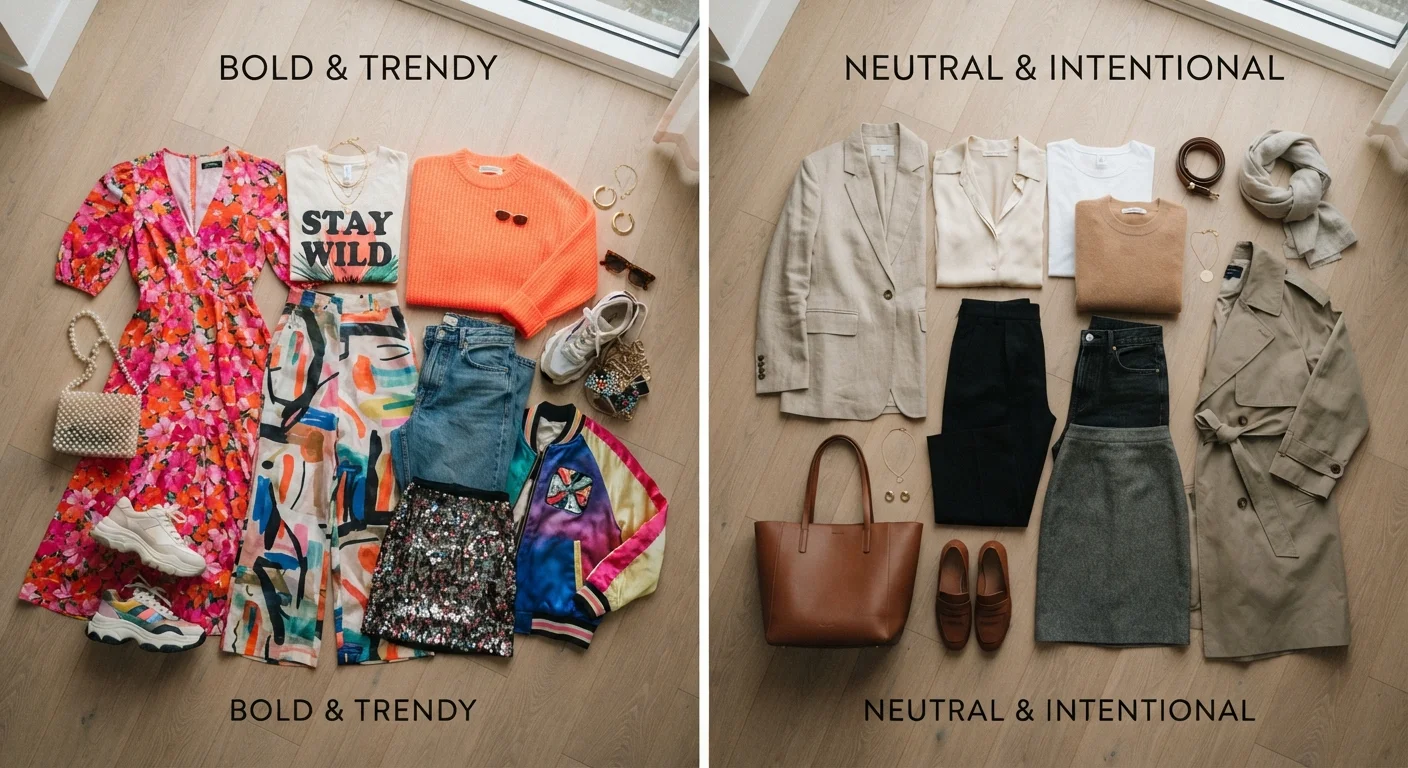
Photo: InfoAlly.net | Finding Info Made Easy editorial
Key Takeaways
- Trend-chasing can fuel creativity but often comes with higher financial and emotional costs.
- Dressing with intention builds long-term style confidence but requires upfront self-reflection.
- Neither approach is universally superior - the right balance depends on your lifestyle and values.
- Wardrobe decisions have measurable environmental and financial consequences worth factoring in.
- You can borrow selectively from trends without overhauling your entire closet each season.
Keeps your wardrobe culturally current and fresh
Engaging with trends connects your style to broader cultural moments, which can feel socially energizing and relevant, especially in image-conscious environments.
Fuels creative experimentation and self-expression
Trying new silhouettes, color palettes, or styling techniques - even temporarily - can expand your sense of what works for you and spark genuine discovery.
Offers a shared language with fashion-interested communities
Trend awareness gives you common ground in conversations about style and culture, from workplaces to social circles to online communities.
Intentional dressing reduces decision fatigue over time
A wardrobe built around your actual preferences means fewer "I have nothing to wear" mornings because nearly everything works together and suits you.
Better cost-per-wear on considered purchases
Items chosen deliberately for fit, lifestyle alignment, and personal resonance tend to be worn far more often, spreading the cost across many uses.
Builds lasting style confidence independent of external validation
When your choices reflect who you are rather than what's trending, your sense of style becomes self-sustaining - less vulnerable to seasonal shifts or social pressure.
Trend-chasing carries significant ongoing financial cost
Purchasing items that are only relevant for one or two seasons drives up total wardrobe spending while reducing cost-per-wear on individual pieces.
Fast-turnover buying contributes to textile waste
Garments purchased for short-term trend cycles are more likely to be discarded quickly, adding to the substantial environmental footprint of fashion consumption.
Can erode a stable sense of personal identity
Constantly recalibrating your look based on external cues may leave you uncertain about what you actually like, making getting dressed feel stressful rather than expressive.
Intentional dressing requires significant upfront self-reflection
Clarifying your values, lifestyle needs, and aesthetic preferences takes time and honest self-assessment - it's a process, not an instant wardrobe fix.
Risk of rigidity or resistance to healthy style evolution
An overly strict intentional approach can make you resistant to change, potentially tipping from a signature look into a style rut if not revisited periodically.
Trend fatigue can leave you feeling behind or excluded
Social media accelerates trend cycles, and the pressure to keep up can generate anxiety or a persistent sense that your wardrobe is never quite right.
What We Mean by Each Approach
Trend-chasing means actively tracking what's current - adjusting your wardrobe seasonally based on what's showing up on runways, social feeds, and storefronts. It's participatory, culturally engaged, and genuinely fun for many people. The fashion trends landscape shifts rapidly, and followers of this approach treat that movement as part of the appeal.
Dressing with intention, by contrast, starts with self-knowledge. It asks: Who am I, what do I actually wear, and what do I want my clothes to communicate? Rather than external cues driving purchases, internal values guide them. As personal style research suggests, this approach often produces stronger style confidence over time - but it's not the easier path upfront.
The Real Costs of Following Trends
Keeps your wardrobe culturally current and fresh
Engaging with trends connects your style to broader cultural moments, which can feel socially energizing and relevant, especially in image-conscious environments.
Fuels creative experimentation and self-expression
Trying new silhouettes, color palettes, or styling techniques - even temporarily - can expand your sense of what works for you and spark genuine discovery.
Offers a shared language with fashion-interested communities
Trend awareness gives you common ground in conversations about style and culture, from workplaces to social circles to online communities.
Intentional dressing reduces decision fatigue over time
A wardrobe built around your actual preferences means fewer "I have nothing to wear" mornings because nearly everything works together and suits you.
Better cost-per-wear on considered purchases
Items chosen deliberately for fit, lifestyle alignment, and personal resonance tend to be worn far more often, spreading the cost across many uses.
Builds lasting style confidence independent of external validation
When your choices reflect who you are rather than what's trending, your sense of style becomes self-sustaining - less vulnerable to seasonal shifts or social pressure.
Trend-chasing carries significant ongoing financial cost
Purchasing items that are only relevant for one or two seasons drives up total wardrobe spending while reducing cost-per-wear on individual pieces.
Fast-turnover buying contributes to textile waste
Garments purchased for short-term trend cycles are more likely to be discarded quickly, adding to the substantial environmental footprint of fashion consumption.
Can erode a stable sense of personal identity
Constantly recalibrating your look based on external cues may leave you uncertain about what you actually like, making getting dressed feel stressful rather than expressive.
Intentional dressing requires significant upfront self-reflection
Clarifying your values, lifestyle needs, and aesthetic preferences takes time and honest self-assessment - it's a process, not an instant wardrobe fix.
Risk of rigidity or resistance to healthy style evolution
An overly strict intentional approach can make you resistant to change, potentially tipping from a signature look into a style rut if not revisited periodically.
Trend fatigue can leave you feeling behind or excluded
Social media accelerates trend cycles, and the pressure to keep up can generate anxiety or a persistent sense that your wardrobe is never quite right.
Trend-driven dressing isn't inherently shallow - it can be a genuine creative outlet and a way to participate in cultural conversation. But the costs accumulate quietly. Financially, keeping pace with seasonal cycles means purchasing items with short utility windows. A micro-trend piece bought in spring may feel dated by fall, contributing to both closet clutter and waste.
Emotionally, always chasing the next look can erode a sense of personal identity. When your wardrobe is built around external validation rather than internal resonance, getting dressed can become a source of anxiety rather than pleasure. That said, selectively incorporating trends into a grounded wardrobe - rather than rebuilding from scratch each season - lets you enjoy the energy of fashion without the full cost. See how capsule and trend-driven approaches compare for a deeper look at balancing both philosophies.
What Intentional Dressing Actually Demands
Intentional dressing sounds liberating - and eventually it is - but the process requires real work. Before you can shop with purpose, you need clarity: on your lifestyle, your color comfort zone, the silhouettes that feel authentic, and the gap between clothes you own and clothes you actually reach for.
Intentional Doesn't Mean Minimalist
One practical starting point is a wardrobe audit: pull everything out, keep only what you genuinely wear, and identify the gaps rather than the wants. This process often reveals that intentional dressing is as much about subtraction as it is about thoughtful addition.
The financial case for intentionality is compelling. Fewer, more considered purchases typically mean better cost-per-wear ratios. But the upfront investment - both in time and sometimes in price per item - can feel steep. It helps to recognize that this is a long-term approach, not a single shopping trip. For guidance on building habits that support this mindset, intentional spending resources offer useful frameworks.
Finding Your Honest Balance
Most people don't live at either extreme. The most sustainable approach tends to be a personal foundation - a set of pieces that reliably express who you are - with room for selective trend engagement when something genuinely resonates. The key distinction is whether you're drawn to a trend because it fits your life, or because you feel pressure to keep up.
It's also worth checking whether your wardrobe reflects intentional choices or a style rut. Understanding the difference between a signature look and a style rut can clarify whether your consistency is a strength or a sign that you've stopped engaging thoughtfully with how you dress.
~$1,700
Average annual US clothing spend per person
According to U.S. Bureau of Labor Statistics consumer expenditure data, American households spend significantly on apparel each year - making wardrobe philosophy a genuine financial decision.
~70%
Wardrobe items rarely or never worn
Style research and closet-audit studies consistently find that most people regularly wear only a fraction of the clothes they own, regardless of how much they've spent.
Ultimately, neither approach is a moral statement. Style choices are personal, contextual, and allowed to evolve. The goal isn't purity - it's dressing in a way that costs you less energy, money, and regret over time.
The content on this site is for informational purposes only and is not a substitute for professional advice. Always consult a qualified professional for guidance specific to your situation.