
Capsule Wardrobe vs. Trend-Driven Closet: Two Philosophies of Getting Dressed

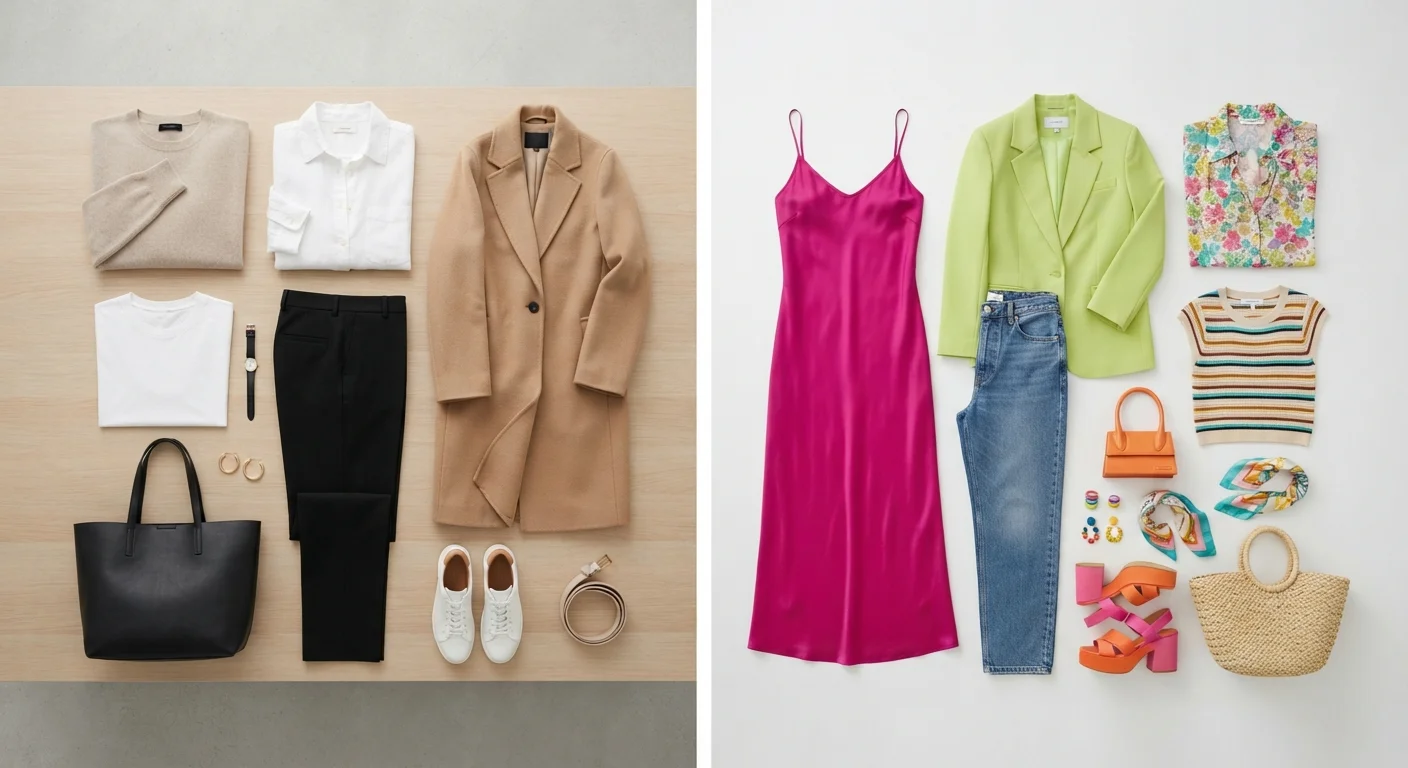
Photo: InfoAlly.net | Finding Info Made Easy editorial
Key Takeaways
- Capsule wardrobes prioritize versatility and longevity over seasonal novelty.
- Trend-driven closets offer creative expression but require more active curation and spending.
- Neither approach is universally superior - lifestyle, budget, and personality all factor in.
- Hybrid strategies let you anchor a wardrobe in classics while selectively adding trend pieces.
- Cost-per-wear is a useful mental model for evaluating any wardrobe philosophy.
What Each Philosophy Actually Means
The term capsule wardrobe - popularized in the 1970s by London boutique owner Susie Faux and later amplified by Donna Karan's iconic "Seven Easy Pieces" collection - refers to a deliberately small set of interchangeable garments that form a cohesive, long-wearing wardrobe. Think neutral-toned basics: tailored trousers, a well-fitting blazer, quality denim, a white button-down. Every item works with nearly everything else.
A trend-driven closet, by contrast, evolves with the fashion calendar. It reflects what's resonating culturally right now - a particular silhouette, a color palette, a micro-trend that surfaced on social media. This approach treats clothes as a living, rotating collection rather than a stable foundation. For more on how the industry shapes what hits racks each season, see how the fashion calendar actually works.
Both philosophies are valid responses to the same question: What do I want clothes to do for me? The answers just differ radically.
Head-to-Head: Core Trade-Offs
The most honest way to compare these approaches is through their real-world implications - not just aesthetics, but practicality, cost, and the kind of relationship you want with your wardrobe.
| Criterion | Capsule Wardrobe | Trend-Driven Closet |
|---|---|---|
| Item count | Typically 20-40 pieces | Varies widely; often 60+ |
| Cost-per-wear | Generally lower over time | Higher if items worn rarely |
| Style longevity | High - classics recur | Lower - trends expire |
| Creative expression | Moderate; relies on styling | High; newness drives variety |
| Daily decision-making | Low effort - pieces mix easily | Higher - more options to navigate |
| Environmental impact | Lower consumption overall | Higher turnover, more waste risk |
| Cultural relevance | Timeless but less reactive | Seasonally current |
Cost-per-wear is worth lingering on. A capsule piece worn 150 times over three years almost always outperforms a trend item worn five times before it feels dated. That said, trend pieces don't have to break the bank - sourcing them secondhand or through clothing swaps can significantly shift the equation. See our companion piece on what trend-chasing and intentional dressing each cost you for a fuller financial breakdown.
The Case for Capsule Dressing
A capsule wardrobe's greatest strength is cognitive ease. When every item pairs with multiple others, getting dressed stops being a puzzle. Research in behavioral psychology consistently suggests that reducing daily low-stakes decisions preserves mental energy for higher-priority thinking - a concept often called decision fatigue.
Capsule wardrobes also tend to age well stylistically. Classic silhouettes - a trench coat, a straight-leg trouser, a simple knit - resurface across trend cycles rather than disappearing from them. This is part of why the quiet luxury aesthetic resonated so strongly: it essentially codified capsule principles for a fashion-aware audience.
The limitation? A strict capsule approach can feel restrictive if fashion is part of how you process creativity or connect socially. Dressing without any trend awareness can also read as out-of-touch in certain professional or social contexts.
~$1,700
Average annual US clothing spend per person
According to the U.S. Bureau of Labor Statistics Consumer Expenditure Survey, apparel spending varies significantly by household income and lifestyle.
30-40%
Estimated share of wardrobe items rarely worn
Wardrobe audits conducted by various sustainable fashion researchers suggest a significant portion of owned clothing goes unworn in a given year.
The Case for a Trend-Forward Wardrobe
Trend engagement isn't shallow - it's cultural participation. Fashion trends often reflect broader shifts in aesthetics, politics, and collective mood. Following them can be a way of staying connected to the cultural conversation happening around you. As streetwear's mainstream evolution demonstrated, what starts as subcultural identity often becomes fashion's most influential language.
A trend-driven closet also allows for more expressive, context-specific dressing. If your life involves events, client meetings, date nights, and casual weekends in quick succession, a broader wardrobe gives you more intentional options for each register. For navigating those varied demands, bridging occasion dressing with everyday style offers useful strategies.
The real risk is cost creep and clutter. Without a guiding framework, trend-driven closets can balloon into unwieldy collections where items get lost - and forgotten - quickly. Understanding why fast fashion keeps recycling the same trends can help you shop more skeptically within this approach.
A Hybrid Path Worth Considering
The most practical approach for many people sits between both extremes: a classic foundation with selective trend accents. Anchor your wardrobe in four to eight versatile core pieces that you reach for constantly, then layer in one or two trend-forward items each season - a statement bag, a textured outerwear piece, or a color-saturated accessory.
This model respects both the appeal of longevity and the joy of newness. Statement pieces are especially well-suited to this hybrid strategy: one bold item can refresh an entire capsule without requiring a wardrobe overhaul.
Whatever direction you lean, the goal is a wardrobe that functions for your actual life - not a curated ideal. For a practical framework to get there, our guide to building a wardrobe that works for your real life walks through the process step by step.
Secondhand and Rental Options Shift the Math
The content on this site is for informational purposes only and is not a substitute for professional advice. Always consult a qualified professional for guidance specific to your situation.