
Statement Pieces: The Case For and Against Anchoring an Outfit Around One Item

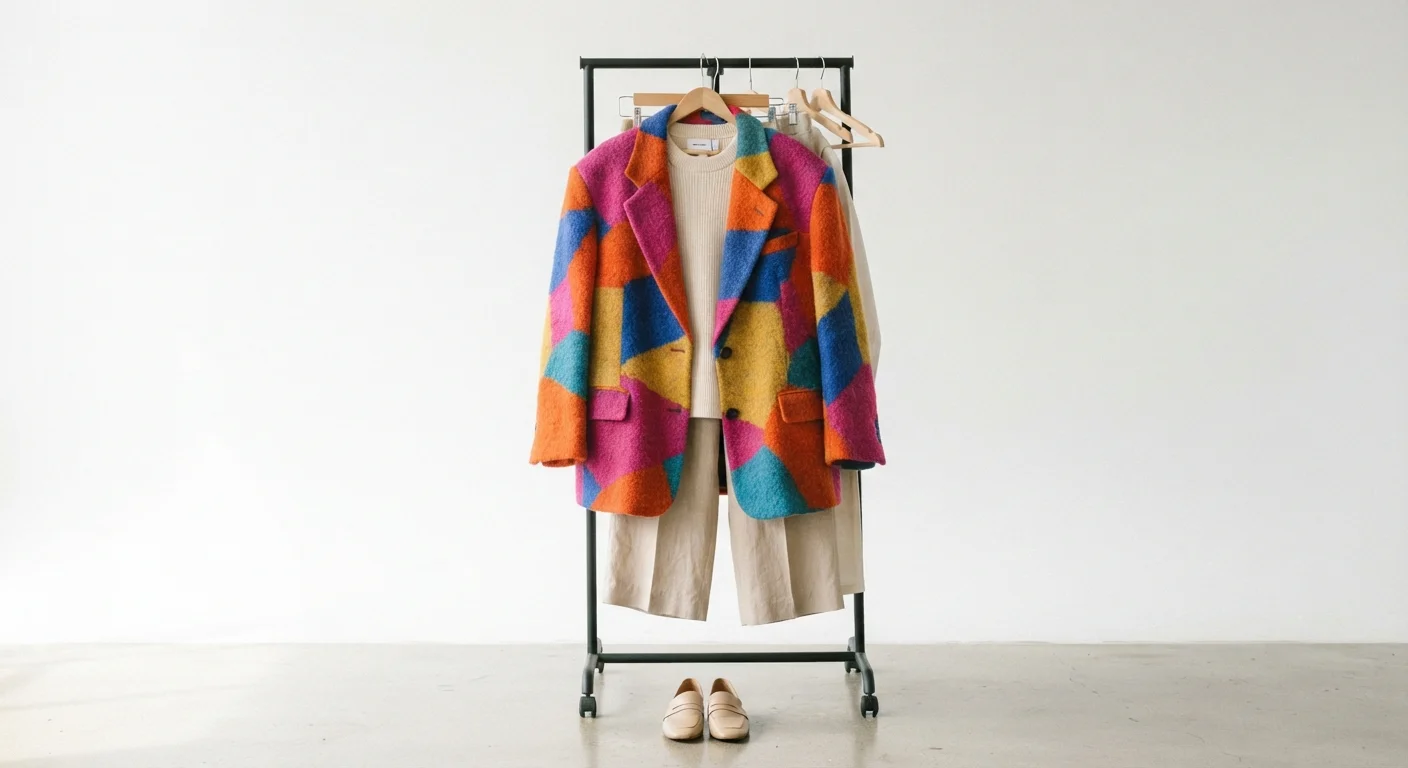
Photo: InfoAlly.net | Finding Info Made Easy editorial
Key Takeaways
- Statement dressing works best when one piece leads and everything else supports it.
- A statement piece can simplify morning decisions by giving your outfit a built-in focal point.
- Proportions, color relationships, and occasion context all affect whether a bold item lands or overwhelms.
- Not every wardrobe or lifestyle is a natural fit for statement-led dressing.
- Understanding your personal style framework helps you use statement pieces more intentionally.
Creates a clear, memorable focal point instantly
Outfits built around one dominant piece tend to read as more intentional and cohesive than those with competing visual elements. A single bold item gives the eye somewhere to land.
Simplifies outfit decisions around one anchor
When a statement piece is doing the expressive work, supporting items almost select themselves - neutral basics that don't compete. This can dramatically cut down on morning styling time.
Elevates simple, inexpensive basics
A plain white tee and straight-leg trousers become a considered outfit when paired with a striking structured bag or a boldly colored blazer. The statement piece does the elevation work.
Expresses personality without head-to-toe effort
For people who find maximalist dressing exhausting, one expressive item allows for clear self-expression while keeping the rest of the outfit low-maintenance and easy to wear.
Bridges casual and elevated occasion dressing
A strong jacket or interesting footwear can transition a neutral everyday base into a look that reads as polished or occasion-appropriate without requiring a full outfit change.
Standout pieces get noticed - and remembered
Memorable items are also frequently repeated items. If you wear the same bold coat or statement shoe regularly, it becomes your identifier, which can feel limiting depending on your social or professional context.
Can overwhelm the wearer's overall aesthetic
A piece that is proportionally, chromatically, or stylistically mismatched to the rest of the outfit can read as costume rather than style. The statement ends up wearing you instead of the other way around.
Narrows pairing options in the wardrobe
Highly distinctive pieces often have limited compatibility with the rest of your closet. An architectural sculptural bag or maximally printed coat may only pair cleanly with a small number of outfits.
Can conflict with professional or formal dress norms
Some work environments, cultural occasions, or formal settings have implicit or explicit dress expectations that leave little room for bold, expressive fashion choices without drawing unintended attention.
Trend-driven statement pieces date quickly
Items purchased because they reflect a specific micro-trend often have a short window of relevance. A statement piece that feels fresh one season can read as dated within a year or two.
What Statement Dressing Actually Means
A statement piece is any single item - a coat, bag, shoe, or accessory - that commands immediate visual attention and defines the character of an outfit. The idea is simple: one item leads, everything else follows. Neutral basics step back. The bold piece steps forward.
This isn't the same as wearing something loud for shock value. Done well, statement dressing is a deliberate choice to build an outfit around a focal point rather than layering equal-weight elements. It's a styling strategy with real advantages - and some genuine limitations worth examining honestly.
For a deeper look at how individual choices communicate personal identity, accessories and identity explores how even smaller items carry significant expressive weight.
The Case For: Why Statement Pieces Work
Statement dressing has stayed relevant across decades of trend cycles for good reason - it solves real problems and delivers consistent visual impact.
Creates a clear, memorable focal point instantly
Outfits built around one dominant piece tend to read as more intentional and cohesive than those with competing visual elements. A single bold item gives the eye somewhere to land.
Simplifies outfit decisions around one anchor
When a statement piece is doing the expressive work, supporting items almost select themselves - neutral basics that don't compete. This can dramatically cut down on morning styling time.
Elevates simple, inexpensive basics
A plain white tee and straight-leg trousers become a considered outfit when paired with a striking structured bag or a boldly colored blazer. The statement piece does the elevation work.
Expresses personality without head-to-toe effort
For people who find maximalist dressing exhausting, one expressive item allows for clear self-expression while keeping the rest of the outfit low-maintenance and easy to wear.
Bridges casual and elevated occasion dressing
A strong jacket or interesting footwear can transition a neutral everyday base into a look that reads as polished or occasion-appropriate without requiring a full outfit change.
One underappreciated advantage is decision fatigue reduction. When your outfit has a clear focal point, you don't have to agonize over every other element - the rest of your choices essentially answer to that one piece. This is especially useful for people who want to look intentional without spending a lot of time getting dressed.
Statement pieces also travel well across occasions. A structured jacket in an unexpected color or pattern can shift a basic daytime outfit into something suitable for an evening event - a dynamic bridging of everyday and occasion dressing that a neutral-only wardrobe can struggle to achieve.
The Case Against: Real Limitations to Consider
Statement pieces aren't magic, and they come with trade-offs that are worth naming directly.
Standout pieces get noticed - and remembered
Memorable items are also frequently repeated items. If you wear the same bold coat or statement shoe regularly, it becomes your identifier, which can feel limiting depending on your social or professional context.
Can overwhelm the wearer's overall aesthetic
A piece that is proportionally, chromatically, or stylistically mismatched to the rest of the outfit can read as costume rather than style. The statement ends up wearing you instead of the other way around.
Narrows pairing options in the wardrobe
Highly distinctive pieces often have limited compatibility with the rest of your closet. An architectural sculptural bag or maximally printed coat may only pair cleanly with a small number of outfits.
Can conflict with professional or formal dress norms
Some work environments, cultural occasions, or formal settings have implicit or explicit dress expectations that leave little room for bold, expressive fashion choices without drawing unintended attention.
Trend-driven statement pieces date quickly
Items purchased because they reflect a specific micro-trend often have a short window of relevance. A statement piece that feels fresh one season can read as dated within a year or two.
There's also a versatility ceiling worth acknowledging. A highly distinctive piece - say, a maximalist printed coat or architectural sculptural bag - tends to have a narrow pairing range. Over time, this can make it feel more like a costume element than a wardrobe workhorse. If you're drawn to capsule wardrobe principles, you may find that statement pieces require more planning than they save.
Statement Pieces vs. Trend Chasing
Making Statement Dressing Work for Your Style
If you want to experiment with statement-led outfits, a few guiding principles make the difference between a look that feels polished and one that feels chaotic.
Proportion matters. A voluminous statement item - a wide-lapel coat, an oversized printed shirt - generally needs streamlined, fitted basics to balance it. The same is true of color: if your statement piece is doing the heavy lifting visually, the supporting pieces should stay in a low-contrast, neutral zone. Color blocking principles can help you understand when contrast supports a look versus when it competes with it.
Consider frequency. If you wear the same striking item repeatedly, it starts to define how people recognize you. That can be an asset - the foundation of a signature look - or a limitation, depending on how you feel about it. It's worth checking whether you're building intentional style identity or drifting toward a rut; the line between a signature look and a style rut is thinner than most people expect.
Match the statement to the moment. Some contexts reward visual boldness; others work against it. Knowing your environment - professional, social, casual - gives you the framework to deploy statement pieces when they'll actually land. Explore the broader personal style hub for more guidance on aligning your wardrobe choices with your lifestyle.
~70%
Outfits remembered for one standout element
Fashion psychology research consistently suggests that observers tend to recall a single dominant visual element from an outfit rather than the ensemble as a whole.
1 in 3
Wearers report underusing bold wardrobe items
Consumer wardrobe studies have found that distinctive, statement-level pieces are among the least-worn items in most closets despite being among the most intentionally purchased.
The content on this site is for informational purposes only and is not a substitute for professional advice. Always consult a qualified professional for guidance specific to your situation.