
Accessories as Identity: How Small Choices Make a Big Statement

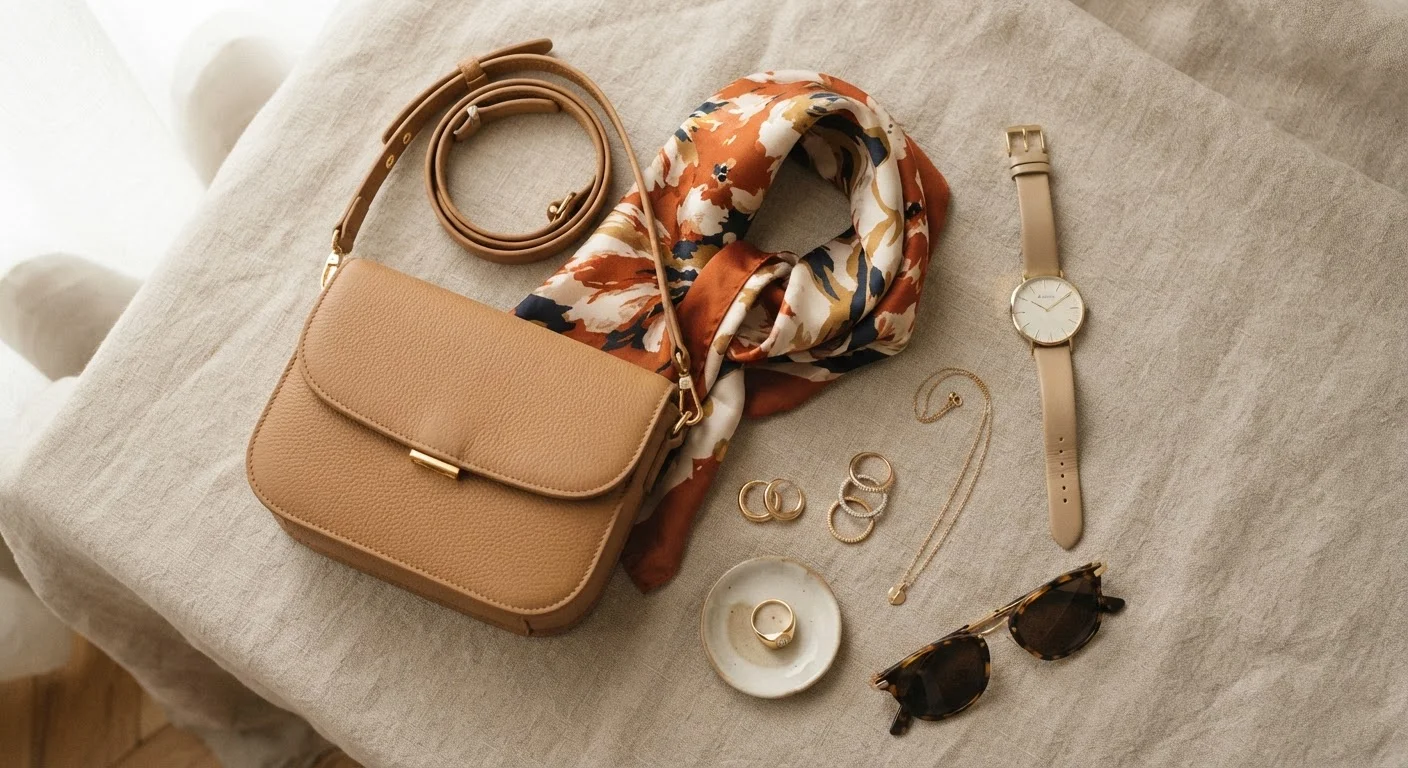
Photo: InfoAlly.net | Finding Info Made Easy editorial
Key Takeaways
- Accessories communicate personality and values in ways that clothing alone often cannot.
- A few consistent, intentional accessory choices create a cohesive, recognizable personal style.
- Accessories can adapt a single outfit for different contexts without requiring new clothing.
- Anchoring your choices in what resonates with you - not just trends - builds lasting style confidence.
- Budget is not the primary factor; thoughtfulness and consistency matter more.
Why Accessories Carry More Weight Than We Think
Clothing sets the stage, but accessories deliver the subtext. When someone walks into a room, the eye catches the glint of a ring, the graphic strap of a bag, the way a scarf is tied at the neck. These small details communicate something - taste, mood, context - in the split second before any other impression forms.
This isn't superficial. Social researchers have long noted that personal adornment is one of the oldest and most universal forms of nonverbal communication. Accessories have marked tribal belonging, professional rank, cultural heritage, and individual expression across virtually every documented society. What's changed in modern dressing is how consciously - or unconsciously - we wield that power.
If you're working on building a personal style from scratch, accessories are often the most accessible entry point. They can be swapped without a full wardrobe overhaul, layered experimentally, and refined over time without significant financial commitment.
67%
Adults who say accessories express personality better than clothing
According to a consumer sentiment survey cited in fashion industry research on personal style and self-expression.
3x
Outfit variations one versatile bag can enable
Style editors and wardrobe consultants commonly note that a single quality bag can meaningfully reframe multiple outfit contexts.
The Language Each Accessory Speaks
Different accessory categories carry distinct communicative weight. Understanding what each one tends to signal - while knowing those signals are always filtered through personal context - helps you make more intentional choices.
- Earrings: Among the most expressive accessories, earrings frame the face and are seen in nearly every social interaction. Scale and material shift meaning dramatically: a sculptural architectural hoop reads very differently than a single diamond stud, even at the same price point.
- Bags: A bag is both a functional object and a highly visible style statement. Structured versus slouchy, minimal hardware versus embellished - these choices communicate whether your style leans toward precision or ease. As statement pieces go, a bag is among the most versatile anchors because it sits at the intersection of utility and identity.
- Scarves: Scarves carry strong cultural and historical associations and are remarkably adaptable - worn around the neck, tied to a bag handle, used as a headband, or draped over the shoulders for layering.
- Watches: A watch signals relationship with time, precision, and sometimes tradition. Analog and mechanical watches often communicate a different value system than a digital smartwatch - neither is superior, but both send a message.
“Accessories are the exclamation point of a woman's outfit - but they're also the ellipsis, the question mark, and sometimes the whole sentence.”
— Michael Kors, American fashion designer and longtime industry commentator
Building Cohesion Without Losing Spontaneity
One of the most common style challenges is assembling pieces that feel individually appealing but don't quite add up to a coherent look. Accessories are often the culprit - and the cure. The key is identifying your personal throughline: a recurring metal tone (gold, silver, oxidized brass), a consistent scale preference (minimal and delicate versus bold and sculptural), or a material affinity (leather, fabric, resin).
This throughline doesn't require uniformity. It's the common thread that makes diverse pieces feel like a collection rather than a random accumulation. Think of it the way fabric, fit, and finish work together to create a polished outfit - each element distinct, but working toward the same impression.
Importantly, this cohesion shouldn't come at the cost of evolution. There's a real difference between a deliberate signature style and a style rut, as explored in our piece on the difference between a signature look and a style rut. Accessories are an ideal testing ground: experimenting with a new silhouette in earrings or a different bag shape introduces novelty without disrupting the core of your wardrobe.
Audit What You Actually Reach For
Dressing With Intention Across Contexts
One of the practical powers of accessories is their ability to shift a single outfit across multiple contexts without requiring a clothing change. A structured blazer-and-trouser combination reads corporate with a minimal watch and classic leather bag - and shifts toward creative-professional when you swap in a silk neck scarf and mixed-metal jewelry. The clothes stayed the same; the accessories did the contextual work.
This is especially relevant in transitional dressing, where layering and adaptability are paramount. A lightweight scarf can serve as both a style element and a practical layer when temperatures fluctuate - the kind of dual-function thinking that makes a wardrobe genuinely efficient.
Ultimately, developing an accessories identity is about paying attention to what resonates with you - not just what's trending. Trends can inform choices without dictating them. The most compelling personal styles, whether rooted in minimalism, maximalism, or anything in between, are those that feel like an extension of the person wearing them rather than a costume assembled from a mood board.
This article is for general informational and educational purposes only. Style guidance reflects editorial perspective and is not a substitute for personalized professional advice.
Frequently Asked Questions
The content on this site is for informational purposes only and is not a substitute for professional advice. Always consult a qualified professional for guidance specific to your situation.