
Everyday Problems That a Portable Power Bank Actually Solves

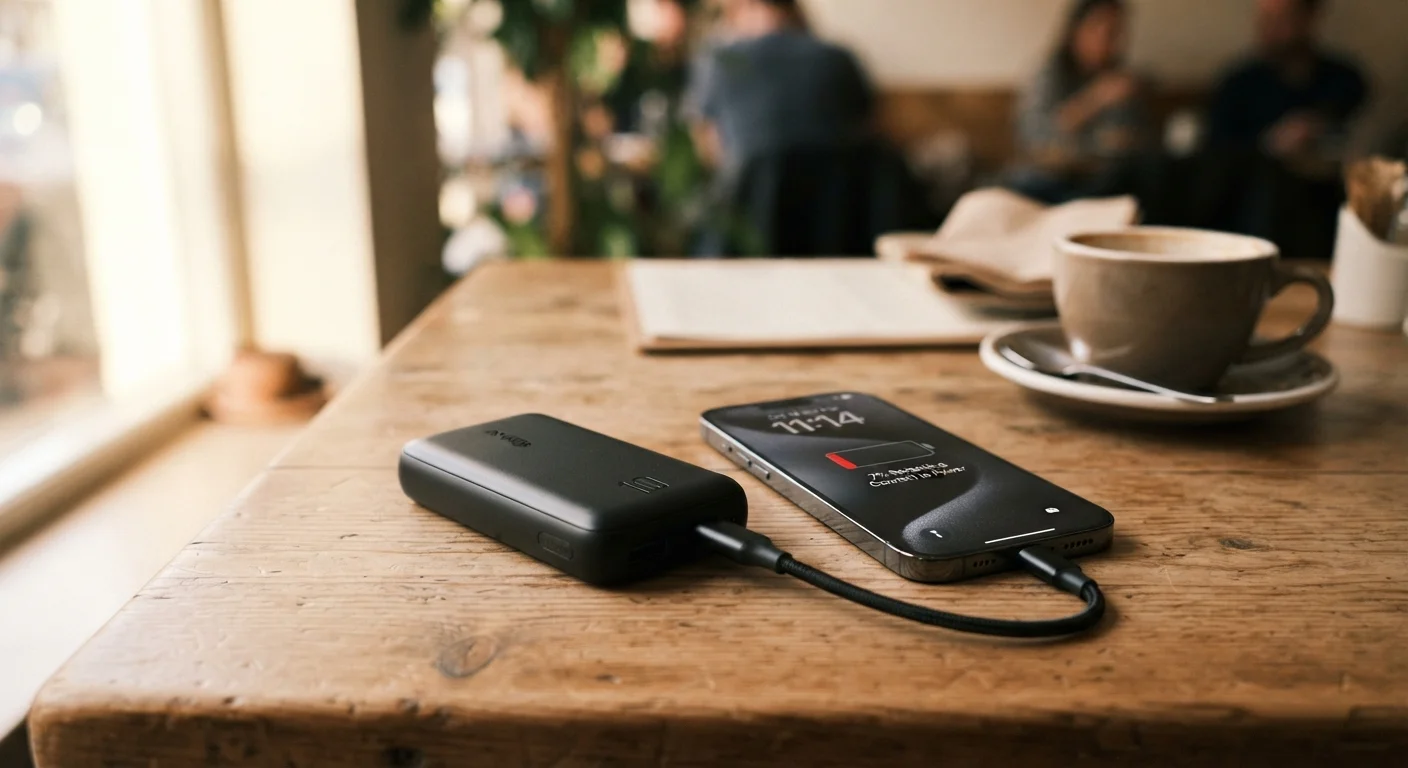
Photo: InfoAlly.net | Finding Info Made Easy editorial
Key Takeaways
- Power banks genuinely solve the dead-battery problem during long commutes, travel, and outdoor days.
- They work well for phones and earbuds but struggle to meaningfully power laptops without high-capacity, high-wattage models.
- Capacity (mAh) and output wattage determine what a power bank can realistically charge - not just the price.
- Weight and size trade-offs mean the most capable units aren't always the most portable.
- They offer limited but real value during brief home power outages for keeping devices alive.
Keeps phones alive through long days away from outlets
A mid-range power bank can fully recharge most modern smartphones one to three times, covering a full workday commute, travel day, or outdoor excursion without anxiety.
Works with nearly any USB-charged device
Phones, wireless earbuds, smartwatches, Bluetooth speakers, and small tablets all charge via standard USB connections, making one power bank useful across multiple devices.
Provides backup power during brief home outages
While not a substitute for a home battery system, a power bank can keep a phone operational for communication and light use during short outages lasting several hours.
No ongoing cost or subscription required
Unlike cloud services or app-based tools, a power bank is a one-time hardware purchase with no recurring fees and a useful lifespan of several years with reasonable care.
Reduces reliance on public charging stations
Public USB charging ports carry a small but real risk of data exposure through compromised hardware; using your own power bank sidesteps that concern entirely.
Limited laptop charging for most consumer models
Charging a laptop meaningfully requires both high capacity (20,000+ mAh) and high-wattage USB-PD output (45W or more). Most compact, affordable banks don't meet both requirements.
Adds weight and bulk to carry every day
A capable 20,000 mAh power bank weighs roughly 400-500 grams - comparable to a mid-size hardcover book. That trade-off discourages consistent daily carry for some users.
The bank itself needs regular recharging
Forgetting to recharge the power bank after use defeats its purpose. It introduces a second charging habit that some users find easy to overlook.
Battery cell capacity degrades over time
Like all lithium batteries, power bank cells lose capacity over hundreds of charge cycles. A unit that fully charged your phone twice when new may only manage one charge after two or three years of regular use. See battery myths that affect longevity for related context.
Not all ports and cables deliver fast charging
Plugging into a standard USB-A port with a basic cable often charges much slower than your phone's wall adapter. Getting full charging speed requires matching cables and compatible ports.
The Core Problem: Outlets Aren't Always There
Modern smartphones, earbuds, and smartwatches are genuinely useful tools - but only when they have charge. The gap between when you leave home and when you find an available outlet can stretch across an entire workday, a long flight, a hiking trail, or an afternoon of errands. That gap is exactly what a portable power bank is designed to close.
Unlike a lot of consumer tech marketed on impressive-sounding specs, a power bank has a straightforward job: store electrical energy and transfer it to your device when you need it. For that specific problem, they work reliably well - making them a rare example of a gadget that does what it promises. See how they compare to technology that doesn't always deliver in our look at smartphone features that rarely change daily life.
Keeps phones alive through long days away from outlets
A mid-range power bank can fully recharge most modern smartphones one to three times, covering a full workday commute, travel day, or outdoor excursion without anxiety.
Works with nearly any USB-charged device
Phones, wireless earbuds, smartwatches, Bluetooth speakers, and small tablets all charge via standard USB connections, making one power bank useful across multiple devices.
Provides backup power during brief home outages
While not a substitute for a home battery system, a power bank can keep a phone operational for communication and light use during short outages lasting several hours.
No ongoing cost or subscription required
Unlike cloud services or app-based tools, a power bank is a one-time hardware purchase with no recurring fees and a useful lifespan of several years with reasonable care.
Reduces reliance on public charging stations
Public USB charging ports carry a small but real risk of data exposure through compromised hardware; using your own power bank sidesteps that concern entirely.
What Power Banks Don't Do Well
The honest version of this story includes real limitations. Understanding them before you rely on a power bank saves frustration.
Limited laptop charging for most consumer models
Charging a laptop meaningfully requires both high capacity (20,000+ mAh) and high-wattage USB-PD output (45W or more). Most compact, affordable banks don't meet both requirements.
Adds weight and bulk to carry every day
A capable 20,000 mAh power bank weighs roughly 400-500 grams - comparable to a mid-size hardcover book. That trade-off discourages consistent daily carry for some users.
The bank itself needs regular recharging
Forgetting to recharge the power bank after use defeats its purpose. It introduces a second charging habit that some users find easy to overlook.
Battery cell capacity degrades over time
Like all lithium batteries, power bank cells lose capacity over hundreds of charge cycles. A unit that fully charged your phone twice when new may only manage one charge after two or three years of regular use. See battery myths that affect longevity for related context.
Not all ports and cables deliver fast charging
Plugging into a standard USB-A port with a basic cable often charges much slower than your phone's wall adapter. Getting full charging speed requires matching cables and compatible ports.
Understanding mAh: Rated vs. Usable Capacity
Capacity figures (milliamp-hours, or mAh) printed on packaging describe the energy stored in the battery cells - not the energy delivered to your device. Conversion losses during charging typically mean you'll get 60-70% of that rated capacity into your phone. A 10,000 mAh bank realistically delivers around 6,000-7,000 mAh of usable charge.
Matching the Right Power Bank to Your Actual Life
The single most common mismatch is buying a high-capacity power bank that's too heavy to carry daily, or a slim, lightweight unit that runs out mid-afternoon. Before purchasing, it's worth asking honest questions about your habits - a checklist approach like the one in Before You Buy a Gadget can help structure that thinking.
~3,500 mAh
Typical modern smartphone battery capacity
Most flagship and mid-range Android and iPhone models carry batteries in the 3,000-5,000 mAh range, a useful baseline for estimating how many charges a bank can provide.
60-70%
Usable energy from rated capacity
Energy conversion losses during charging mean a power bank labeled 10,000 mAh typically delivers around 6,000-7,000 mAh to a connected device in real-world use.
For most people, a bank in the 10,000-20,000 mAh range with at least one USB-PD (Power Delivery) port strikes a workable balance between capacity, weight, and device compatibility. Those who only need top-up charges for a single daily phone can get away with a slim 5,000 mAh unit that fits in a jacket pocket.
Also consider how you'll charge the bank itself. Slow input charging means a large bank can take 10+ hours to refill from empty, so checking the input wattage - not just output - matters for real-world usability. For broader habits that affect how long all your devices last, extending the life of everyday gadgets covers practical steps worth pairing with this purchase.
The content on this site is for informational purposes only and is not a substitute for professional advice. Always consult a qualified professional for guidance specific to your situation.