
eSIM vs. Physical SIM: How the Shift Affects Everyday Phone Users

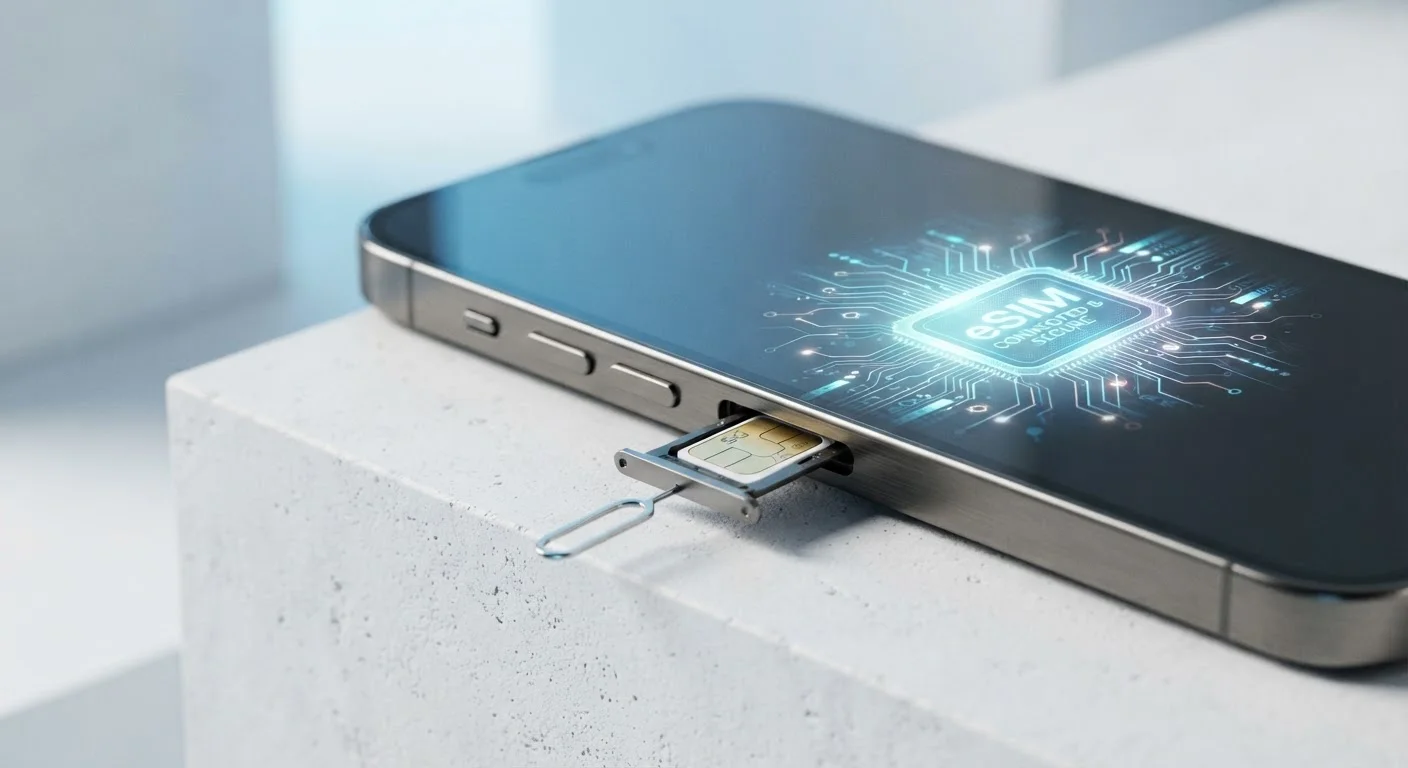
Photo: InfoAlly.net | Finding Info Made Easy editorial
Key Takeaways
- eSIM is embedded in the device and activated digitally, eliminating the need for a physical card.
- Physical SIMs are still widely supported and remain the easiest option for carrier switching by swapping cards.
- eSIM makes adding a second line or a travel plan simpler, but depends on carrier support.
- Some newer phones are eSIM-only, which can limit options in areas with less carrier eSIM adoption.
- Both formats deliver the same call, text, and data quality once activated.
What Each Format Actually Is
A physical SIM (Subscriber Identity Module) is the small removable chip you insert into a tray on your phone. It stores your carrier account information and connects your device to a cellular network. Most people have handled one - they come in standard, micro, and nano sizes depending on the phone.
An eSIM (embedded SIM) performs the same function but is soldered directly into the phone's hardware. There's no card to insert or remove. Instead, your carrier information is loaded digitally - either by scanning a QR code, using a carrier app, or activating over a phone call. The eSIM can store multiple carrier profiles and switch between them in software.
Both formats deliver identical call quality, text messaging, and data speeds. The difference is entirely in how you manage and access your account - not in how the network performs. As this overview of phones in modern life explains, the most impactful phone changes are often the ones happening beneath the surface.
Side-by-Side: Key Differences at a Glance
The practical differences between eSIM and physical SIM show up most clearly in specific scenarios - switching carriers, traveling, or managing multiple numbers. The table below breaks down how each format compares across the dimensions that matter most to everyday users.
| Criterion | Physical SIM | eSIM |
|---|---|---|
| Activation method | Insert card into phone tray | Digital setup via QR code or app |
| Switching carriers | Swap physical card | Activate new profile digitally |
| International travel | Requires sourcing a local SIM | Add travel plan remotely before arrival |
| Dual-number support | Needs second SIM slot | Software-managed, no extra slot needed |
| Carrier compatibility | Near-universal support | Depends on carrier eSIM adoption |
| Device transferability | Move card between any compatible phone | Re-activation required on each new device |
| Physical vulnerability | Card can be lost or damaged | No removable part to lose |
One nuance worth noting: many current phones support both formats simultaneously. A device might have one physical SIM slot and one eSIM, giving you the flexibility of both - a useful middle ground while the industry transitions.
Travel: Where eSIM Has a Clear Edge
For international travelers, eSIM's biggest advantage is convenience. With a physical SIM, adding local coverage abroad typically means finding a carrier store, purchasing a SIM, cutting or adapting it to fit, and manually configuring APN settings. It works, but it takes time - often at the worst possible moment, like arriving in an unfamiliar airport.
With eSIM, you can purchase and activate a travel data plan digitally before you even board the plane. Several carriers and third-party services offer regional eSIM plans that activate instantly via QR code. Your home number stays active on the same device, and you simply switch between profiles as needed.
eSIM Travel Plans: What to Verify First
That said, eSIM availability varies significantly by country and carrier. In some regions, eSIM infrastructure is still limited, and local carriers may only offer physical SIMs. Checking coverage before relying on eSIM abroad is worth doing.
Switching Carriers and Daily Management
Switching carriers with a physical SIM is straightforward: get a new SIM from the new carrier, insert it, and you're done. No account credentials, no app, no Wi-Fi required. This simplicity is genuinely useful - particularly for people who switch providers often or share phones between family members.
eSIM switching is more digital but slightly more involved. Most major US carriers now support eSIM activation, and the process has become more streamlined. However, it typically requires Wi-Fi or a data connection, a compatible device, and sometimes a call to customer support. Carrier lock policies also apply - some carriers lock eSIM profiles for a period after activation, limiting how quickly you can switch.
For users who've built routines around their smartphones - as explored in how smartphones shape the modern morning - any friction in carrier switching can feel surprisingly disruptive. Physical SIM wins on raw simplicity here.
The eSIM-Only Trend and What It Means
Some newer phone models have removed the physical SIM slot entirely, shipping as eSIM-only devices. This allows manufacturers to use the reclaimed space for other components - larger batteries, improved waterproofing, or additional antennas - while also pushing the industry toward an all-digital standard.
For most users in areas with strong major-carrier support, eSIM-only phones work without issue. The concern arises in edge cases: traveling to regions with limited eSIM support, using prepaid services from smaller carriers, or needing to quickly transfer service during a phone repair. These aren't dealbreakers, but they're real considerations worth knowing before choosing a device.
Features like these - genuinely impactful but easy to overlook - are exactly the kind discussed in features that rarely change daily life. The SIM format is one where the choice actually does matter for some users.
~50%
US phones shipped with eSIM support
Industry analyst estimates suggest roughly half of smartphones sold in the US include eSIM capability, a share that has grown steadily as major manufacturers adopt the standard.
200+
Carriers globally supporting eSIM
The GSMA, the trade body representing mobile network operators, tracks eSIM adoption across networks worldwide, with supported carriers expanding each year.
The content on this site is for informational purposes only and is not a substitute for professional advice. Always consult a qualified professional for guidance specific to your situation.