
Comprehensive vs. Third-Party Car Insurance: What the Difference Means in Practice

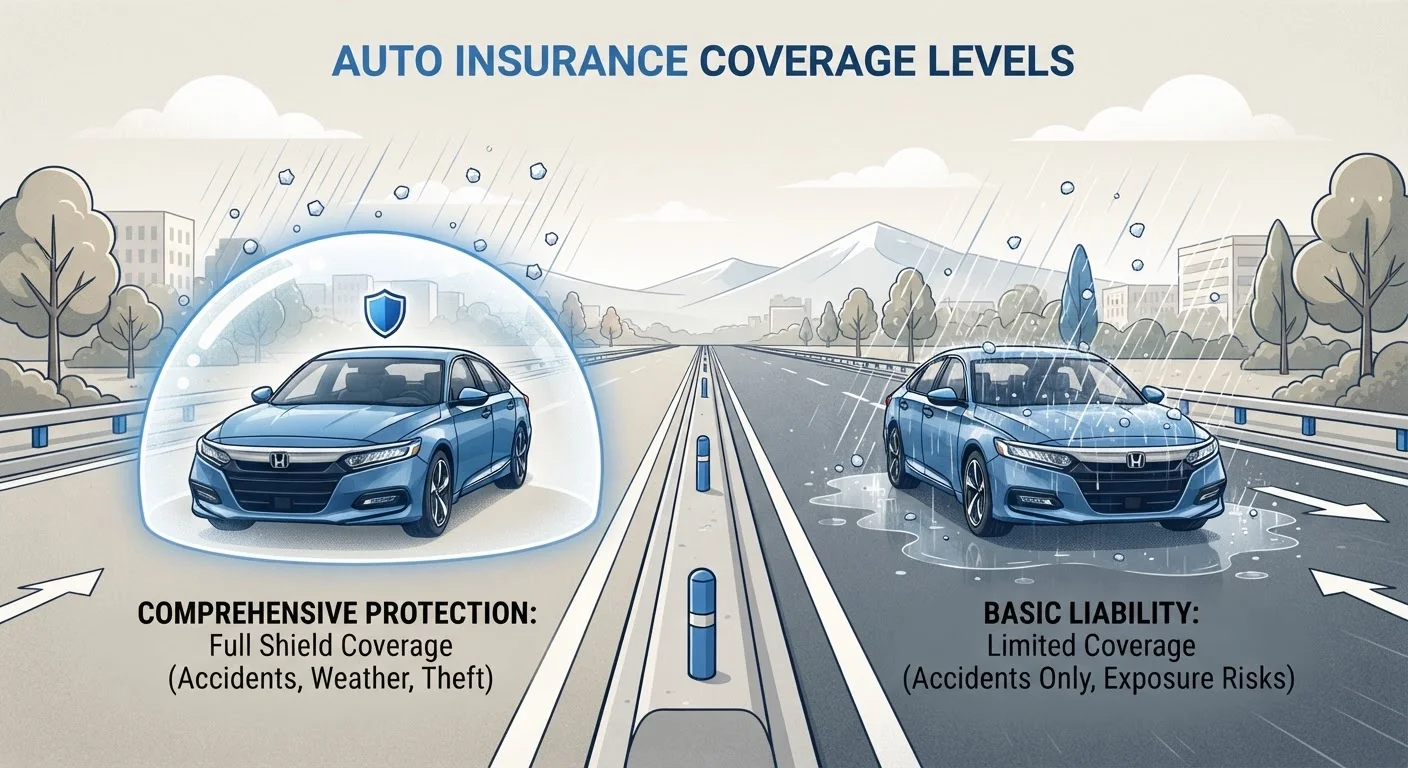
Photo: InfoAlly.net | Finding Info Made Easy editorial
Key Takeaways
- Third-party insurance covers damage or injury you cause to others but does not protect your own vehicle.
- Comprehensive insurance covers third-party liability plus damage to your own car from accidents, theft, weather, and more.
- Neither policy type covers routine maintenance, mechanical breakdown, or wear and tear.
- The right choice depends on your vehicle's value, your financial situation, and your personal risk tolerance.
- State minimum insurance requirements in the US typically mandate liability coverage, not comprehensive.
Defining Each Policy: What They Actually Cover
Third-party car insurance is the baseline. It pays for bodily injury and property damage that you cause to other people - the "third parties" in any accident. If you rear-end another driver and damage their vehicle, your third-party policy covers their repair bill and any associated medical costs up to your policy limits. It does not pay a cent toward repairing your own car.
Comprehensive car insurance bundles third-party liability coverage with protection for your own vehicle. It typically covers collision damage (regardless of fault), theft, vandalism, fire, falling objects, and weather-related events such as hail or flooding. The term "comprehensive" can be slightly misleading - it does not mean unlimited coverage. Exclusions still apply, and your deductible (the amount you pay before insurance kicks in) affects every claim.
For a broader look at how insurance fits into the full cost of owning a vehicle, see The Complete Picture of Car Ownership.
| Criterion | Comprehensive Insurance | Third-Party Insurance |
|---|---|---|
| Damage to other vehicles/property | Covered | Covered |
| Bodily injury to others | Covered | Covered |
| Damage to your own vehicle (collision) | Covered | Not covered |
| Theft of your vehicle | Covered | Not covered |
| Weather / natural event damage | Covered | Not covered |
| Vandalism | Covered | Not covered |
| Routine maintenance | Not covered | Not covered |
| Mechanical breakdown | Not covered | Not covered |
| Typical premium level | Higher | Lower |
Where Coverage Ends: The Gaps Both Policies Share
Regardless of which policy you hold, certain costs are almost never covered. Mechanical breakdowns, routine maintenance (oil changes, tire rotations, brake pads), and general wear and tear fall outside the scope of both policy types. These are the domain of manufacturer warranties or vehicle service contracts - and even those have significant fine print, as explored in What a Warranty Actually Covers (And What It Doesn't).
Neither policy automatically includes roadside assistance - towing, flat-tire changes, or lockout service. That coverage is usually an optional add-on or a separate membership plan. Understanding exactly what roadside plans include is worth your time before you need them; What Roadside Assistance Actually Covers walks through the common limitations.
US State Minimum Requirements Vary
Key Factors That Should Inform Your Decision
Choosing between these two policy types is ultimately a financial and risk-management decision. Several factors are worth weighing:
- Vehicle age and market value: A general rule of thumb is that if your annual comprehensive premium plus deductible approaches or exceeds the vehicle's actual cash value, comprehensive coverage delivers diminishing returns. That calculation changes regularly as vehicle values fluctuate.
- Loan or lease status: If you don't own your vehicle outright, your lender almost certainly mandates comprehensive coverage. Dropping to third-party only on a financed car typically violates your loan agreement.
- Your local risk environment: High rates of vehicle theft, frequent hailstorms, or flood-prone geography increase the practical value of comprehensive protection. Third-party insurance offers no recovery if your unoccupied car is stolen or destroyed in a weather event.
- Your out-of-pocket capacity: If you could absorb a total vehicle loss without serious financial hardship, accepting that risk in exchange for lower premiums is a legitimate choice. If that scenario would be financially devastating, comprehensive coverage transfers that risk to the insurer.
~13%
US drivers estimated to be uninsured
The Insurance Research Council has estimated that roughly one in eight drivers on US roads carries no auto insurance, underscoring why third-party coverage protects others even when at-fault drivers lack it.
$1,000+
Typical comprehensive deductible range
Policyholders commonly choose deductibles between $500 and $1,500; a higher deductible lowers the annual premium but increases what you pay out of pocket at claim time.
This article is for general informational purposes only and does not constitute insurance advice. Coverage terms, exclusions, and state requirements vary. Consult a licensed insurance professional for guidance specific to your circumstances.
The content on this site is for informational purposes only and is not a substitute for professional advice. Always consult a qualified professional for guidance specific to your situation.