
What a Warranty Actually Covers (And What It Doesn't)

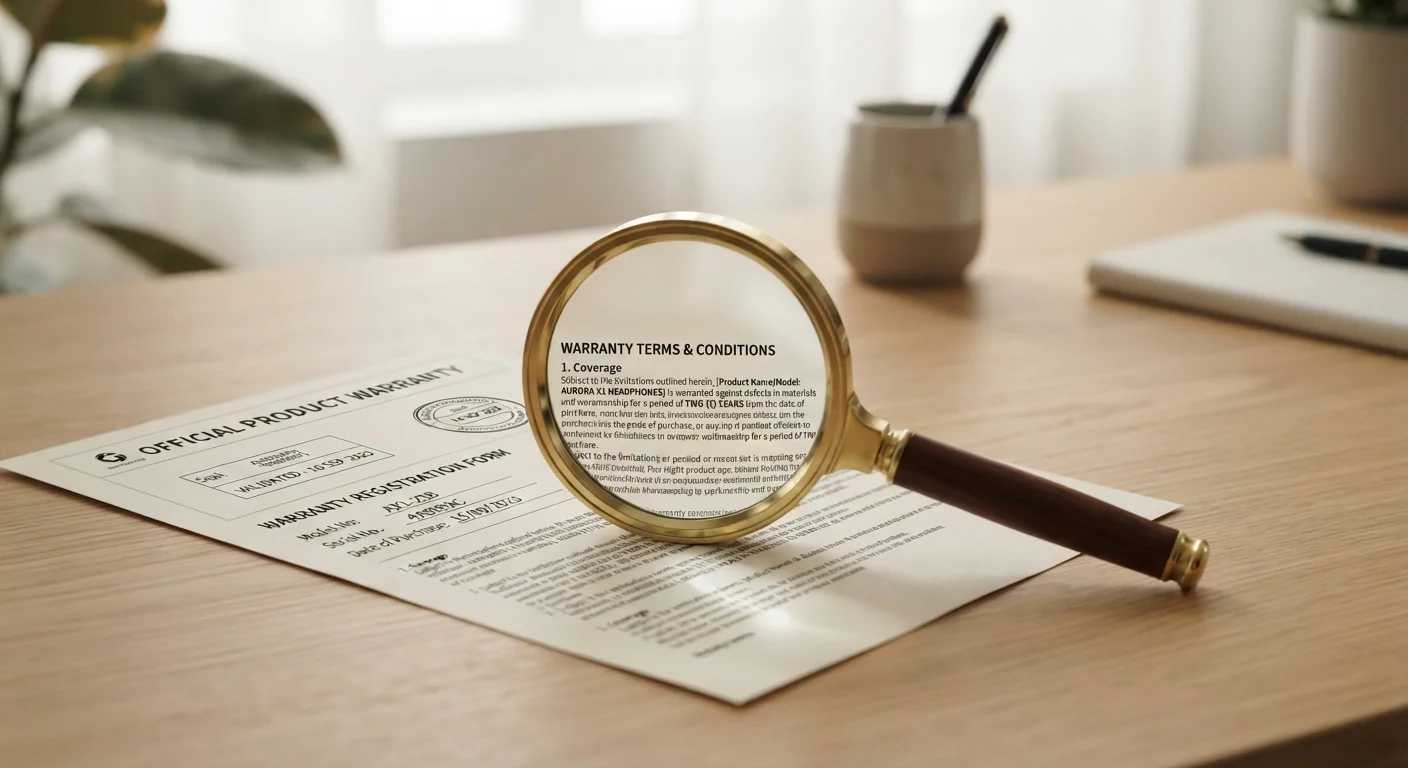
Photo: InfoAlly.net | Finding Info Made Easy editorial
The Basics: What a Warranty Is (and Isn't)
A warranty is a formal promise about a product's condition or performance - but the scope of that promise varies enormously. Most products come with a manufacturer's warranty, which covers defects in materials or workmanship for a defined period. What it does not cover is often just as important as what it does.
Warranties are frequently mistaken for comprehensive protection plans. In reality, most are limited warranties - they apply only to specific failure types, specific parts, or specific usage conditions. Reading the exclusion clauses before assuming coverage is the single most practical step a buyer can take.
Beyond written warranties, US law provides a baseline through implied warranties. The implied warranty of merchantability means a product must work as an ordinary consumer would reasonably expect - even when no written warranty exists. However, implied warranties can be limited in duration and may be waived in some states.
Manufacturer's Warranty
A guarantee provided by the maker of a product, promising to repair or replace defects in materials or workmanship within a specified period. It is included in the purchase price and does not require a separate purchase.
Limited Warranty
A warranty that restricts coverage to specific components, failure types, or time periods. Most consumer product warranties are limited, meaning not every defect or damage type qualifies for a claim.
Implied Warranty of Merchantability
A legal baseline under US law stating that a product must function as reasonably expected for its ordinary purpose. This protection exists even when no written warranty is provided.
Voided Warranty
A warranty that has been made invalid, typically because the owner modified the product, used it improperly, or had it serviced by an unauthorized repair provider.
Exclusion Clause
A specific section of a warranty that lists what is not covered. Exclusion clauses commonly include cosmetic damage, consumable parts, and damage from misuse or environmental factors.
Proof of Purchase
Documentation - usually a receipt, invoice, or order confirmation - required to make a warranty claim. Without it, a manufacturer may refuse to honor coverage even within the warranty period.
For a detailed look at what happens when retailers push add-on coverage at checkout, see our article on extended warranties and protection plans.
Common Exclusions and Coverage Gaps
Knowing what a warranty excludes is often more useful than knowing what it includes. Most manufacturer warranties will not cover:
- Accidental damage - drops, spills, and impacts are almost universally excluded
- Cosmetic wear - scratches, dents, and fading that don't affect function
- Consumable parts - batteries, filters, and blades that degrade with normal use
- Environmental damage - humidity, power surges, and extreme temperatures
- Unauthorized modifications or repairs - work done outside approved service channels
| Typical manufacturer warranty length | 1 year (parts and labor) for most consumer electronics and appliances |
| Common exclusions | Accidental damage, water damage, cosmetic wear, unauthorized repairs |
| US consumer protection baseline | Implied warranty of merchantability applies in most states, even without a written warranty |
| Warranty registration | Often optional but sometimes required to activate coverage - check your documentation |
| Magnuson-Moss Warranty Act | Federal law requiring warranties on consumer products to be available in writing and disclosed before purchase (US Federal Trade Commission) |
| Voiding risk | Third-party repairs do not automatically void a warranty under Magnuson-Moss rules, but manufacturers may dispute coverage (US Federal Trade Commission) |
One widely misunderstood area: third-party repairs. Under the federal Magnuson-Moss Warranty Act, manufacturers generally cannot void a warranty solely because a consumer used a third-party repair provider - but they can deny a claim if that repair caused the defect in question. The distinction matters, and documentation is your ally.
Your State's Laws May Offer More Protection
Understanding exclusions also helps when budgeting for ownership costs. Our article on the hidden costs that follow a big purchase covers what to plan for beyond the warranty's reach.
What to Verify Before You Need a Warranty
Most warranty disputes arise not from bad faith but from buyers discovering terms they never read. A few checks at the time of purchase prevent most problems:
- Locate the warranty document before buying. Under the Magnuson-Moss Warranty Act, written warranties on products priced over $15 must be made available before purchase. Ask for it, or find it on the manufacturer's website.
- Note the exact coverage period - and whether different components have different windows. A refrigerator might carry a one-year parts-and-labor warranty but a separate five-year compressor warranty.
- Check registration requirements. Some warranties require registration within a set window to activate. Missing this step can result in a denied claim.
- Keep proof of purchase. A receipt, confirmation email, or invoice is typically required. Store it somewhere accessible for the life of the product.
- Understand the claims process. Some manufacturers require an authorized service center; others allow mail-in claims. Knowing this in advance avoids delays when something fails.
The same due-diligence mindset applies to vehicle coverage. Our guide on what roadside assistance actually covers and our overview of how return policies work are useful companions for any major purchase decision.
This article provides general consumer information only and is not legal advice. For disputes involving denied warranty claims or potential violations of consumer protection law, consult a qualified legal professional or your state's consumer protection office.
The content on this site is for informational purposes only and is not a substitute for professional advice. Always consult a qualified professional for guidance specific to your situation.