
Keeping a Logbook: The Maintenance Record Habit That Protects Your Car's Value

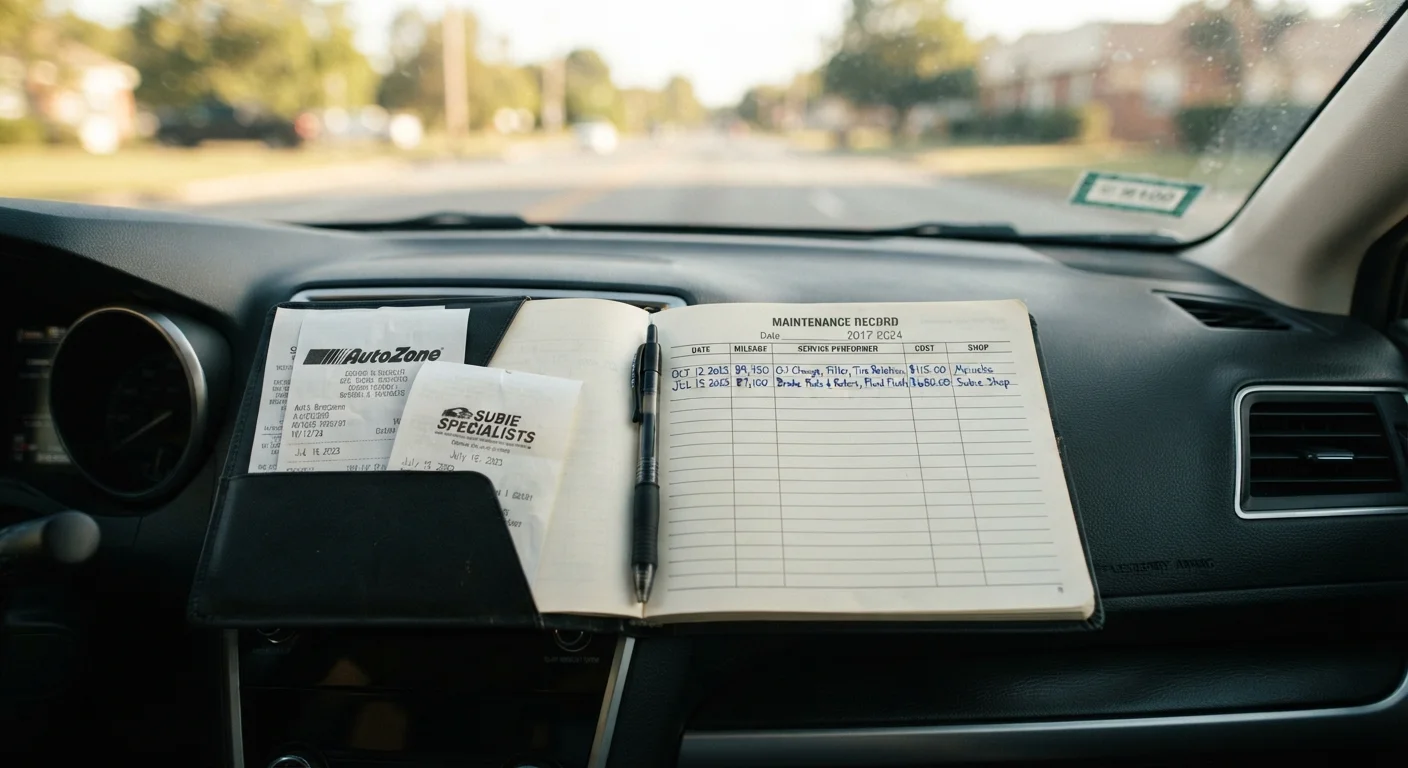
Photo: InfoAlly.net | Finding Info Made Easy editorial
Key Takeaways
- A documented service history can meaningfully strengthen your car's resale appeal to private buyers and dealers.
- Logbooks work for any vehicle - paper notebooks, digital apps, or spreadsheets all serve the same purpose.
- Recording dates, mileage, parts, and costs turns scattered receipts into a clear ownership story.
- Consistent records help you spot maintenance patterns and avoid costly repeat repairs.
- Buyers and mechanics trust cars with verifiable histories more than those without documentation.
Why a Logbook Is Worth the Two Minutes It Takes
Most drivers rely on memory to track their car's maintenance - and memory is unreliable. A service logbook eliminates guesswork by creating a written record of everything done to the vehicle: oil changes, tyre rotations, brake work, fluid top-ups, and any repairs large or small.
The payoff goes beyond personal convenience. When you sell the car, a complete service history gives prospective buyers tangible evidence of responsible ownership. That confidence often translates to stronger offers and a faster sale. As part of the complete picture of car ownership, recordkeeping is one of the lowest-effort habits with some of the highest long-term returns.
Logbooks also protect you in warranty disputes. If a manufacturer or dealer questions whether a service interval was met, a dated and mileage-stamped entry is far more persuasive than a verbal claim.
What to Record in Every Entry
A useful logbook entry doesn't need to be elaborate. At minimum, capture these details each time work is performed:
- Date of the service or repair
- Odometer reading at the time
- Work performed - be specific (e.g., "replaced front brake pads and resurfaced rotors" rather than "brake work")
- Parts used, including any part numbers if available
- Cost and who did the work (dealership, independent shop, or DIY)
- Next service due, if indicated (e.g., oil change at 8,000 miles or in six months)
Staple or tape receipts to the relevant page, or photograph them and store them in a dedicated folder. Physical receipts fade; digital backups last indefinitely.
Include Oil Grade and Filter Details
For tasks like oil changes - arguably the most time-sensitive routine service - recording the grade of oil used and the filter brand adds an extra layer of traceability. See why oil change intervals matter for context on how these intervals affect engine health.
Choosing Your Format: Paper, App, or Spreadsheet
There is no single correct format - the best logbook is the one you will actually use consistently.
Any Format Works - Pick One and Stick With It
Paper logbooks are inexpensive, require no technology, and are immediately presentable to a buyer. A simple spiral notebook kept in the glovebox works perfectly well. Spreadsheets (stored in cloud services) allow easy searching and can auto-calculate intervals between services. Mobile apps designed for vehicle maintenance offer built-in reminder features and can store photos of receipts. Some also integrate with GPS data to estimate mileage automatically.
Whichever format you choose, keep a backup. If your only record is a paper book in the car, a theft or accident wipes the history. Photograph each page periodically as insurance.
Best Practices for Keeping Records Consistently
Log every service within 24 hours of it being performed.
Record both scheduled and unscheduled work, no matter how minor.
Store the logbook in the glovebox or a consistent location in the vehicle.
Review the logbook annually to plan upcoming maintenance.
Keep a digital backup of all physical records.
Beyond individual entries, a few habits turn sporadic note-taking into a genuine ownership asset. Tyre-related services - rotations, pressure checks, and replacements - deserve their own section in your log. Understanding what tyre pressure and tread depth checks involve makes it easier to record them accurately.
When you acquire a used vehicle, the logbook you inherit is just as valuable as the one you build going forward. Cross-check entries against a vehicle history report to confirm key claims - discrepancies between the two are worth investigating before purchase.
Presenting Your Logbook When You Sell
A logbook handed over at point of sale tells a story no ad copy can replicate. Organize entries chronologically, highlight major services (timing belt, transmission service, major brake work), and make sure receipts are attached or digitally accessible.
Be transparent if there are gaps. A brief written note explaining a missed entry - "oil change performed but receipt lost" - is more reassuring than an unexplained blank period, because it shows you noticed. Buyers respond well to honesty paired with otherwise thorough documentation.
Ultimately, a logbook is a form of respect for the vehicle and for whoever owns it next. It costs almost nothing to maintain, and it represents one of the clearest demonstrations of diligent car ownership available to any driver.
Up to 10%
Potential resale value uplift with full service history
Industry observers and automotive valuation professionals have noted that verifiable full-service histories can strengthen private sale prices, though exact figures vary by vehicle age, type, and market conditions.
1 in 3
Used car buyers who cite service history as a key factor
Consumer surveys in the automotive sector consistently identify documented maintenance history among the top factors influencing used car purchase confidence.
The content on this site is for informational purposes only and is not a substitute for professional advice. Always consult a qualified professional for guidance specific to your situation.