
Servicing Your Car at a Dealership vs. an Independent Garage

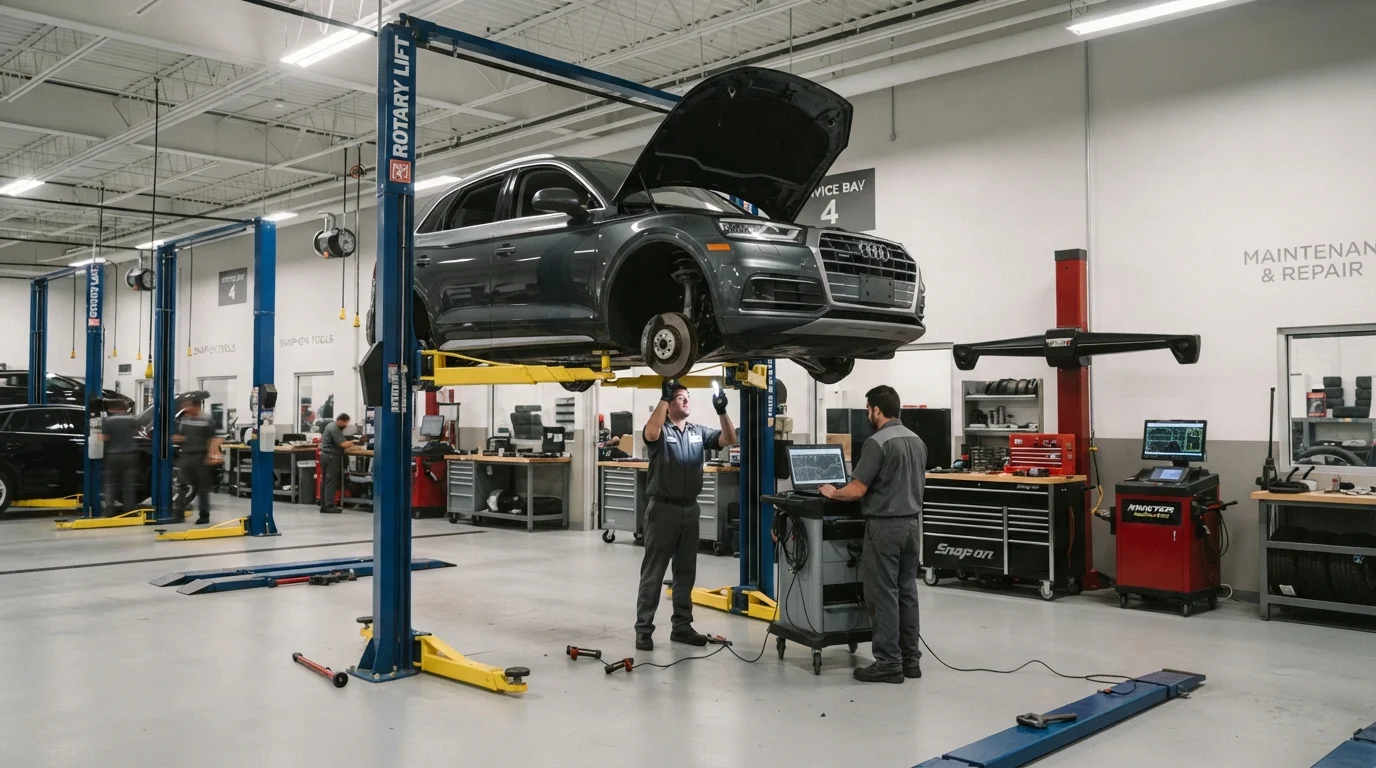
Photo: InfoAlly.net | Finding Info Made Easy editorial
Key Takeaways
- Dealerships use manufacturer-trained technicians and OEM parts, which matters most for newer or warranty-covered vehicles.
- Independent garages often charge less for routine maintenance and can offer more personalized service.
- Federal law protects your right to use independent shops without voiding a manufacturer warranty.
- Complex diagnostics on newer vehicles may favor dealership-level tools and software.
- The right choice depends on your vehicle's age, warranty status, and the specific service needed.
The Core Differences Between Dealerships and Independent Garages
When your car needs servicing, you essentially have two categories of provider: franchised dealerships affiliated with a specific manufacturer, and independent repair shops that work across multiple makes and models. Both are staffed by trained technicians, but they operate under very different structures.
Dealerships employ technicians who receive factory training specific to the brand, use Original Equipment Manufacturer (OEM) parts, and have access to proprietary diagnostic software updated directly by the automaker. Independent garages typically employ ASE-certified (Automotive Service Excellence) technicians who work across brands and source parts from aftermarket or third-party OEM suppliers.
Understanding these structural differences helps you match the service provider to the job at hand - rather than defaulting to one out of habit.
| Criterion | Dealership | Independent Garage | |
|---|---|---|---|
| Technician training | Brand-specific factory training | ASE-certified, multi-brand experience | |
| Parts used | OEM (manufacturer original) | OEM or quality aftermarket | |
| Diagnostic tools | Proprietary brand software | Universal and aftermarket tools | |
| Labor cost | Typically higher | Often lower | |
| Warranty suitability | Ideal for in-warranty vehicles | Fine if documented properly | |
| Scheduling flexibility | Can be limited at busy locations | Generally more flexible | |
| Recall repairs | Yes, at no charge | Not authorized for recalls |
Warranty Concerns: What the Law Actually Says
A common misconception is that using an independent garage automatically voids your vehicle's manufacturer warranty. Under the Magnuson-Moss Warranty Act - a federal consumer protection law - a manufacturer generally cannot void your warranty simply because you had maintenance or repairs performed at an independent shop, provided the work was done correctly and appropriate parts were used.
There are exceptions. If an independent technician performs work incorrectly and that specific work causes a subsequent failure, a manufacturer may deny a related warranty claim. The key is documentation: keep all service records, receipts, and part specifications from every independent shop visit.
Don't Assume Warranty Protection Automatically
For vehicles still under a complimentary maintenance plan offered by the manufacturer - separate from the powertrain warranty - returning to the dealership may be required to keep those free services active. Review your ownership documentation carefully.
Cost, Convenience, and Expertise: A Practical Breakdown
Cost: Independent garages generally charge lower labor rates than dealerships, sometimes significantly so. Dealership overhead - facilities, manufacturer certifications, specialized tools - contributes to higher hourly rates. For straightforward maintenance like oil changes, brake pad replacement, or tire rotation, an independent shop can represent meaningful savings over time.
Expertise for complex jobs: Modern vehicles, particularly those with advanced driver-assistance systems (ADAS), hybrid powertrains, or sophisticated electronics, may genuinely require dealership-level diagnostic tools. Calibrating a forward-collision radar or reprogramming a transmission control module often requires software that only franchised dealers can access.
Convenience: Independent garages frequently offer more flexible scheduling, faster turnaround for routine jobs, and a more direct relationship with the technician working on your vehicle. Dealership service departments, particularly at busy franchises, can involve longer wait times and less direct communication.
For a broader perspective on weighing new versus established service choices, see our guide to evaluating real trade-offs in purchasing decisions.
Keep a Service Paper Trail
How to Decide for Your Specific Situation
A practical framework: consider your vehicle's age, warranty status, and the nature of the service needed.
- Under 3 years old or under warranty: Dealership servicing provides peace of mind and ensures you're using the exact parts and procedures the manufacturer specifies.
- 3-8 years old, out of warranty: Either option can work well. Compare labor rates and verify the independent shop has experience with your make.
- Older vehicles or high-mileage cars: An established independent garage with strong reviews often delivers equivalent quality at lower cost for most maintenance tasks.
- Specialized or recall-related work: Always go to the dealership. Recall repairs are performed at no charge and require manufacturer-approved procedures.
If you're curious about where DIY fits into this picture, our honest look at DIY car repairs outlines when doing it yourself makes sense and when it doesn't.
This article is for general informational purposes only. For advice specific to your vehicle, warranty terms, or a complex repair situation, consult a qualified automotive professional and review your owner's manual and warranty documentation.
The content on this site is for informational purposes only and is not a substitute for professional advice. Always consult a qualified professional for guidance specific to your situation.