
New vs. Refurbished: Weighing the Real Trade-Offs

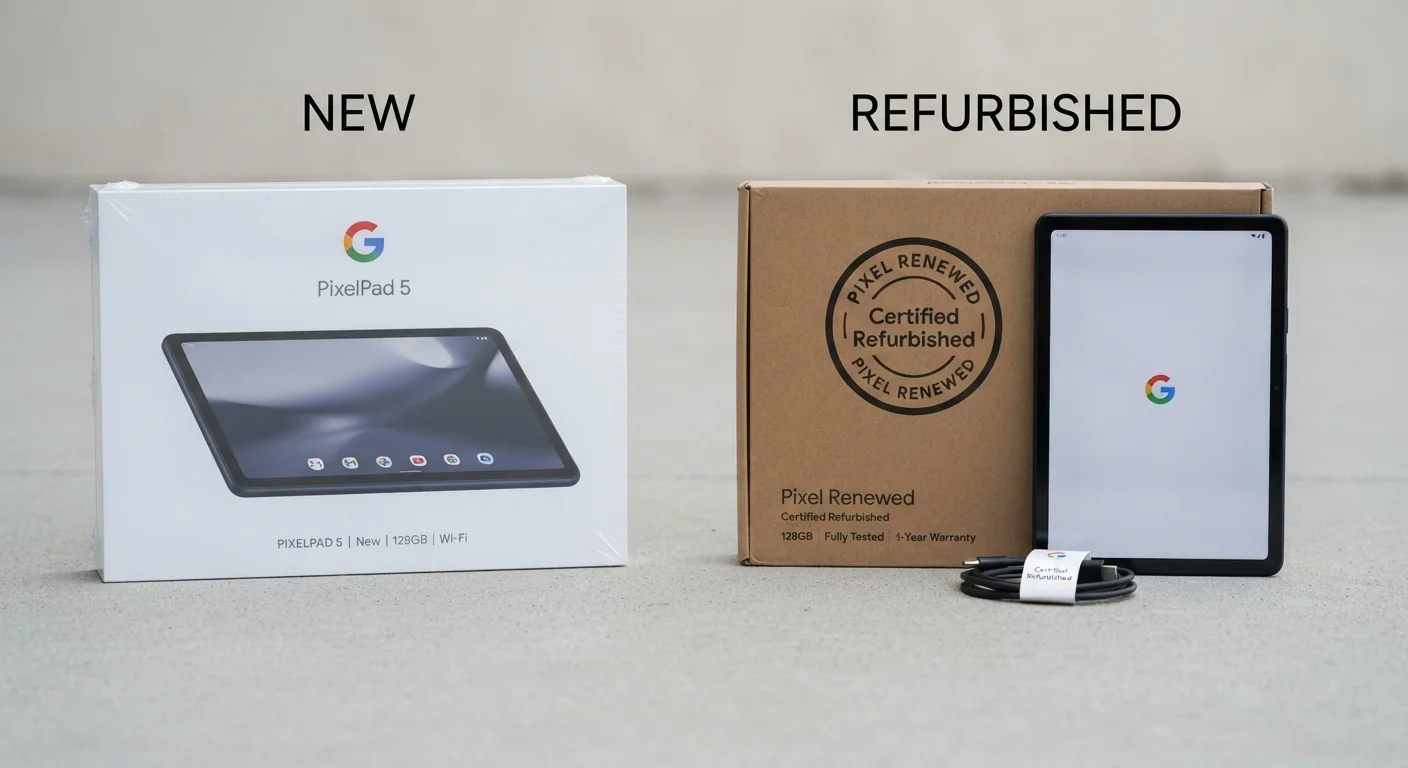
Photo: InfoAlly.net | Finding Info Made Easy editorial
Key Takeaways
- Refurbished products are not simply used goods - many are tested and certified to manufacturer standards.
- Buying new guarantees full warranty coverage and the latest specs, but carries a significant price premium.
- The right choice depends on the product category, seller reliability, and how long you plan to use the item.
- Always verify what warranty or return policy applies to a refurbished purchase before committing.
Full manufacturer warranty with clear terms
New products typically include the strongest warranty protection available, with straightforward claims processes. This coverage can be significant for high-value or complex items.
Latest hardware and software support lifecycle
Newer generations usually receive longer software update windows, which matters most for smartphones, laptops, and connected devices you plan to use for several years.
Predictable condition with no prior wear
You know exactly what you are getting. There is no uncertainty about prior use, hidden damage, or component fatigue.
Easier return and exchange process
Most new purchases come with standard retail return policies, which are typically more straightforward than those attached to refurbished sales through third parties.
Significant price premium over refurbished alternatives
New devices in popular categories can cost 20-40% more than comparable certified refurbished units, a gap that adds up quickly on high-ticket purchases.
Warranty quality varies widely by seller
Refurbished warranties range from 90-day limited coverage to none at all, depending on the source. Without solid coverage, repair costs fall entirely on the buyer.
Refurbishing quality is inconsistent across sellers
Without direct visibility into the inspection and testing process, buyers must rely on seller reputation and documentation - neither of which is standardized across the market.
Older-generation specs in fast-moving categories
Refurbished units are often one or more product cycles behind, which can mean shorter software support windows and features that newer models have since improved upon.
What "Refurbished" Actually Means
The word refurbished covers a wide spectrum, and that range matters. At one end, a manufacturer-refurbished unit has been returned, inspected, repaired to original specifications, tested, and repackaged - often with a fresh warranty. At the other end, a third-party seller may slap a "refurbished" label on something that received only a factory reset and a quick wipe-down.
Understanding the source is the single most important variable. Manufacturer-certified refurbished programs tend to follow defined quality standards. Third-party refurbishers vary considerably. Before reading any price tag, confirm who did the refurbishing, what the testing process involved, and what warranty - if any - accompanies the sale.
Not All Refurbished Labels Are Equal
This distinction also applies to product categories. Consumer electronics have well-established refurb ecosystems with meaningful quality controls. Other categories - certain appliances, safety-critical equipment - have thinner track records in the refurb market, which shifts the risk calculus.
The Real Advantages of Buying New
Buying new is not just about getting something fresh out of the box. It provides a set of concrete protections that are worth naming plainly.
Full manufacturer warranty with clear terms
New products typically include the strongest warranty protection available, with straightforward claims processes. This coverage can be significant for high-value or complex items.
Latest hardware and software support lifecycle
Newer generations usually receive longer software update windows, which matters most for smartphones, laptops, and connected devices you plan to use for several years.
Predictable condition with no prior wear
You know exactly what you are getting. There is no uncertainty about prior use, hidden damage, or component fatigue.
Easier return and exchange process
Most new purchases come with standard retail return policies, which are typically more straightforward than those attached to refurbished sales through third parties.
The warranty that ships with a new product is typically the strongest consumer protection available for that item. If something fails within the coverage period, the path to resolution is clear. With refurbished goods, warranty terms vary widely - sometimes 90 days, occasionally a full year, sometimes nothing meaningful at all.
New also means the latest hardware revision. In fast-moving categories like smartphones or laptops, a one- or two-generation gap can translate to noticeably reduced software support windows - something worth weighing if you plan to keep the device for several years. For a deeper look at evaluating long-term worth, understanding price versus value can help frame the decision.
Where Refurbished Holds Its Own
The case for refurbished is strongest when the price gap is significant, the refurbishing process is documented and credible, and the product category is one where quality control is well-established.
Significant price premium over refurbished alternatives
New devices in popular categories can cost 20-40% more than comparable certified refurbished units, a gap that adds up quickly on high-ticket purchases.
Warranty quality varies widely by seller
Refurbished warranties range from 90-day limited coverage to none at all, depending on the source. Without solid coverage, repair costs fall entirely on the buyer.
Refurbishing quality is inconsistent across sellers
Without direct visibility into the inspection and testing process, buyers must rely on seller reputation and documentation - neither of which is standardized across the market.
Older-generation specs in fast-moving categories
Refurbished units are often one or more product cycles behind, which can mean shorter software support windows and features that newer models have since improved upon.
Consumer electronics - laptops, phones, tablets - have some of the most developed refurb markets. Devices in these categories are routinely returned not because of defects but because of buyer regret or carrier upgrades, which means many refurbished units have seen minimal real-world use. If you are considering a phone specifically, knowing what to check before buying a used smartphone is a practical next step.
~20-40%
Typical savings on certified refurbished electronics
Consumer electronics resale market analyses generally place certified refurbished pricing 20-40% below equivalent new retail pricing, though this varies by category and seller.
~15%
Share of new electronics returned by consumers
Industry estimates suggest roughly 15% of consumer electronics are returned, many of which enter refurbished inventory without ever having a functional defect.
Refurbished is a weaker fit for complex mechanical appliances, items that are difficult to inspect remotely, or any product where a failure would pose a safety issue. In those categories, the savings rarely justify the uncertainty.
How to Make the Call
Running through a consistent set of questions before committing removes most of the guesswork. Questions worth asking before any major purchase offers a broader framework, but for the new-versus-refurbished decision specifically, focus on four things:
- Who refurbished it? Manufacturer programs and reputable specialist refurbishers are meaningfully different from anonymous marketplace listings.
- What does the warranty actually cover? Read the terms, not just the duration. A 90-day parts-only warranty is not the same as a 90-day replacement guarantee.
- How long do you plan to keep it? A two-year ownership horizon changes the math compared to a five-year one, especially for products where software support windows vary by generation.
- What is the realistic failure cost? For low-cost items, the savings from refurbished may not offset the inconvenience of a failure. For high-cost items, the savings can be substantial and worth the added diligence.
The same critical thinking applies in adjacent purchase decisions - evaluating generic versus store-brand products follows a similar logic of looking past labels to actual quality signals.
The content on this site is for informational purposes only and is not a substitute for professional advice. Always consult a qualified professional for guidance specific to your situation.