
How American Commuting Habits Are Changing - and What's Driving the Shift

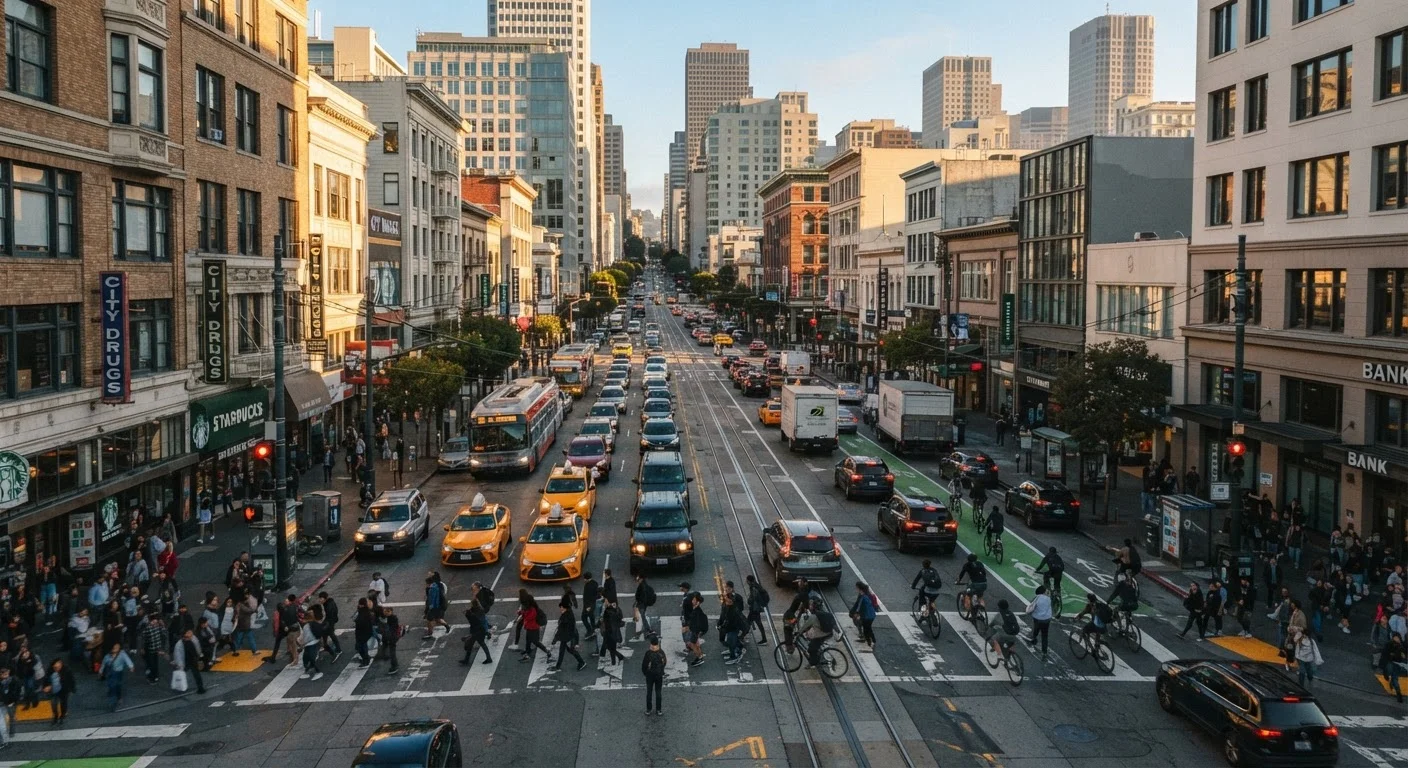
Photo: InfoAlly.net | Finding Info Made Easy editorial
Key Takeaways
- Remote and hybrid work arrangements have significantly reduced traditional weekday commuting for many Americans.
- Fuel price volatility has pushed some drivers toward public transit, carpooling, or electric vehicles.
- Micromobility options like e-bikes and scooters are filling short-trip gaps in dense urban areas.
- Rural and suburban commuters face fewer alternatives to personal vehicle ownership than urban residents.
- Digital trip-planning tools are making multimodal commuting more accessible and practical.
The Forces Behind a Shifting Commute
For decades, the American commute followed a predictable script: drive alone, sit in traffic, repeat five days a week. That script is being rewritten - not by a single policy or invention, but by a cluster of overlapping pressures arriving at once.
Remote and hybrid work arrangements, accelerated by the pandemic, removed the daily commute entirely for millions of office workers - at least some days of the week. A worker who previously drove 45 minutes each way, five days a week, may now make that trip just twice. Multiplied across metropolitan areas, this has reshaped peak-hour traffic patterns and transit ridership in ways planners are still measuring.
At the same time, fuel price volatility has pushed cost-conscious drivers to scrutinize their transportation spending. When gas prices spike, commuters with viable transit options are more likely to shift - if only temporarily. Longer term, rising operating costs have also influenced what vehicles people choose, with electric vehicles attracting more attention from high-mileage commuters.
~27%
U.S. workers in hybrid arrangements
Gallup's 2023 workplace survey found roughly 27% of U.S. employees worked hybrid schedules, reducing their regular commute frequency.
5x
Growth in U.S. e-bike sales since 2019
Industry trade group data indicates U.S. e-bike imports and sales grew dramatically between 2019 and 2023, outpacing traditional bicycle growth.
~75%
Americans who drive alone to work
According to U.S. Census American Community Survey data, solo car commuting remains the dominant mode for most employed Americans.
Urban infrastructure has also evolved. Expanded bike lanes, e-scooter programs, and improved bus rapid transit corridors have given city residents practical alternatives for shorter trips that previously defaulted to a car.
Micromobility, Transit, and the Rise of the Mixed Commute
One of the clearest trends in urban transportation is the growth of the mixed commute - combining two or more modes of travel in a single trip. A worker might ride an e-bike to a subway station, take the train downtown, and walk the final half mile to the office. Each leg of the journey serves a specific function that another mode handles poorly.
E-bikes in particular have expanded the practical range of non-car travel. Unlike conventional bicycles, they make hills and longer distances manageable without arriving sweaty or exhausted. Their adoption has grown steadily in cities with protected bike infrastructure, and they are beginning to appear in suburban contexts where distances between destinations are greater.
“The question is no longer whether Americans will change how they commute, but how quickly infrastructure and habit catch up with the choices that are already available in the most connected cities.”
— David Zipper, Visiting Fellow, Harvard Kennedy School (urban mobility policy researcher)
Transit systems, for their part, are investing in frequency and reliability improvements after pandemic-era ridership losses. Bus rapid transit - dedicated bus lanes that run more like rail - has gained ground in several mid-sized American cities as a cost-effective alternative to light rail expansion.
For those navigating these options, digital tools have become essential. Transit apps and trip-planning platforms now allow commuters to compare walking, transit, rideshare, and bike-share options side by side in real time, reducing the planning friction that once made multimodal travel feel impractical.
What This Means for Everyday Transportation Decisions
The commuting shift is not uniform. Residents of dense metro areas with mature transit networks have genuine choices that most rural and lower-density suburban commuters simply do not. For many Americans, the personal vehicle remains the only realistic option for reaching work, school, and essential services - and that reality is unlikely to change quickly.
Within cities, however, the question of how much car access you actually need is worth revisiting. Some households that once assumed two cars were non-negotiable have found that one car plus transit passes, occasional rideshare, and a bike-share membership covers their needs adequately. Weighing car ownership against car-free alternatives involves trade-offs that depend heavily on where you live, your income, and your schedule.
Audit Your Actual Trip Patterns First
Rideshare plays a supporting role in many commuting strategies but carries real limitations when used as a primary transportation mode. Costs can escalate quickly with frequent use, and surge pricing during peak hours can undercut the savings relative to driving. Our coverage of the trade-offs of relying on rideshare explores these dynamics in depth.
Ultimately, understanding the landscape of available options - and being honest about the constraints of your specific location - puts you in a better position to make transportation decisions that fit your life rather than defaulting to habit.
Frequently Asked Questions
The content on this site is for informational purposes only and is not a substitute for professional advice. Always consult a qualified professional for guidance specific to your situation.