
Owning a Car vs. Living Car-Free in an American City

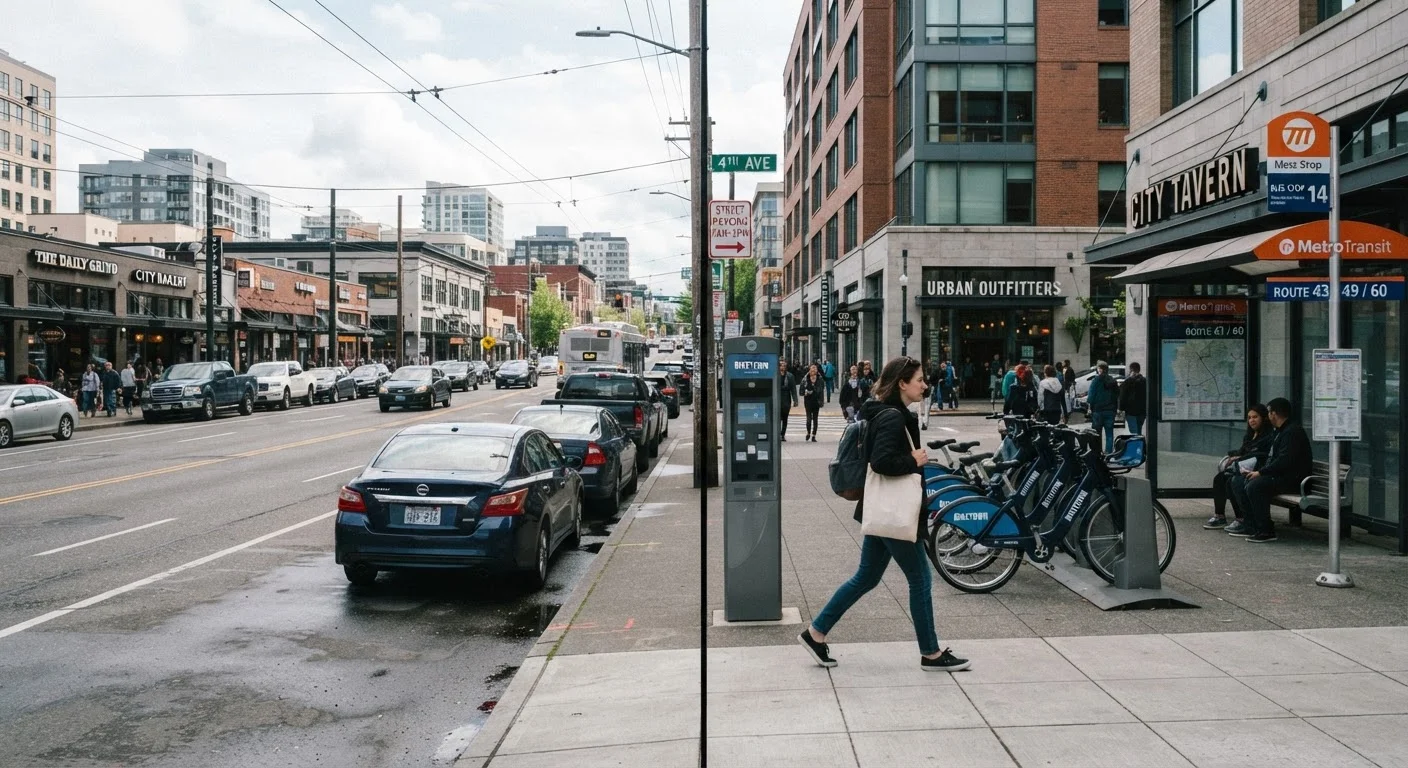
Photo: InfoAlly.net | Finding Info Made Easy editorial
Key Takeaways
- Car ownership carries significant recurring costs well beyond the sticker price, including insurance, fuel, maintenance, and parking.
- Going car-free is increasingly viable in dense US cities with strong transit networks, but remains impractical in many suburban and rural areas.
- Car-free living often involves combining transit, cycling, walking, and occasional rideshare - not a single alternative.
- The right choice depends heavily on your city's infrastructure, your household needs, and your financial priorities.
- Neither option is universally superior - both involve real trade-offs in cost, convenience, and lifestyle.
The Real Cost of Each Option
Comparing these two lifestyles starts with an honest look at money. Car ownership involves a layered set of recurring expenses that extend far beyond a monthly loan payment. Insurance premiums, fuel, routine maintenance, registration fees, and parking - in urban areas especially - add up quickly. Our related guide on car ownership costs that catch new drivers off guard breaks down many of these overlooked line items.
Living car-free doesn't mean free transportation, but the spending profile looks very different. Monthly transit passes, bike-share memberships, and occasional rideshare rides typically total considerably less than the full cost of vehicle ownership. That said, in cities where transit is limited and rideshare becomes the dominant alternative, costs can climb unexpectedly - a dynamic explored in depth in our piece on the hidden trade-offs of relying on rideshare.
| Criterion | Owning a Car | Living Car-Free |
|---|---|---|
| Estimated annual cost (urban) | $10,000-$13,000+ | $1,500-$5,000 |
| On-demand flexibility | High - leave anytime | Variable - schedule-dependent |
| Practicality in low-density areas | High | Low to moderate |
| Practicality in dense metros | Moderate (parking costs) | High in transit-rich cities |
| Environmental footprint | Higher (gas); lower with EV | Generally lower |
| Built-in daily movement | Minimal | Often higher (walking, cycling) |
| Family/cargo convenience | High | Limited |
Flexibility, Convenience, and Daily Reality
One of the most cited reasons people keep a car is on-demand flexibility - the ability to leave when you want, carry what you need, and adapt to changing plans without consulting a schedule. This advantage is real, but it carries a price in time as well as money: traffic, parking searches, and maintenance appointments all consume hours that transit riders and cyclists often sidestep.
Car-free living in practice usually means combining multiple modes rather than relying on one. Transit handles commutes, cycling covers short local trips, and rideshare fills in the gaps. For residents in transit-rich cities, this patchwork can feel seamless. For those in cities with irregular or infrequent service, it can feel like a constant negotiation. Our practical guide on getting around without a car offers a grounded starting point for anyone evaluating the shift.
~$12,000
Average annual cost of car ownership (AAA estimate)
AAA's annual "Your Driving Costs" study has consistently placed the total annual cost of owning and operating a new vehicle in the $10,000-$13,000 range when accounting for depreciation, insurance, fuel, and maintenance.
45%
US households in areas with limited transit access
Research from the Brookings Institution has found that a large share of US jobs and residents remain in areas where transit service is infrequent or unavailable, limiting the practicality of car-free living for many Americans.
9 of 10
US workers who commute by personal vehicle
US Census Bureau American Community Survey data shows that personal vehicle commuting remains the dominant mode of travel to work across most of the country.
Health, Environment, and the Bigger Picture
Beyond personal finances and logistics, both choices carry broader implications. Car-free commuters who walk or cycle as part of their daily routine often accumulate physical activity in a way that car-dependent lifestyles don't naturally support - though this benefit depends heavily on individual circumstances and should not be treated as a guaranteed health outcome. Anyone with specific health considerations should consult a qualified professional before making activity-level decisions.
On the environmental side, personal vehicle use remains a significant source of urban emissions. Transitioning to transit, cycling, or a mix of alternatives can reduce an individual's transportation-related carbon footprint, though the actual impact varies by city, transit type, and energy source. The shift to electric vehicles is changing part of this calculation - see our overview of the American EV landscape for context on how electrification is reshaping transportation choices across the US.
Middle-Ground Options Are Growing
This article is for general informational purposes only and does not constitute financial, legal, or medical advice. Transportation needs vary significantly by location, household, and personal circumstance. Consult qualified professionals for guidance tailored to your situation.
The content on this site is for informational purposes only and is not a substitute for professional advice. Always consult a qualified professional for guidance specific to your situation.