
Blind Spots: Where They Are and How to Manage Them

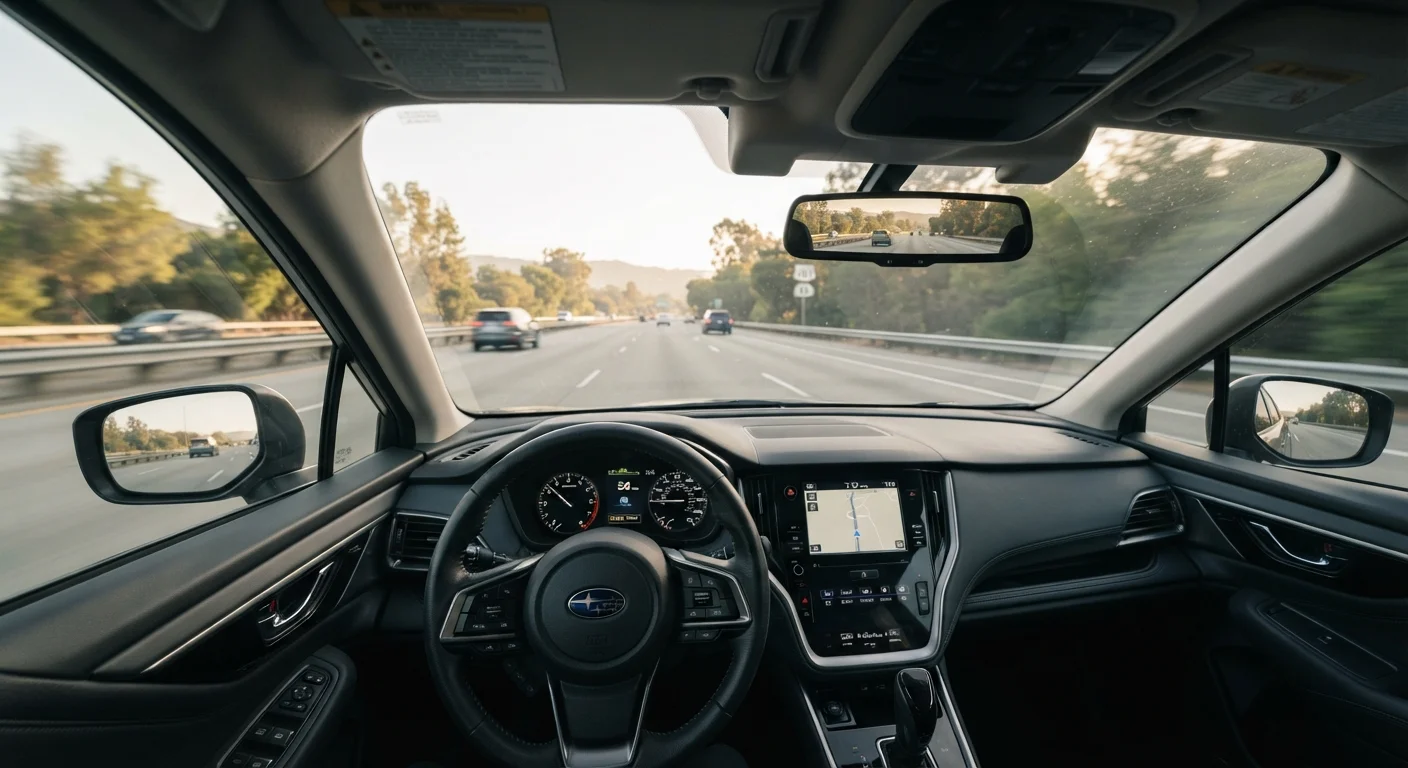
Photo: InfoAlly.net | Finding Info Made Easy editorial
Key Takeaways
- Every vehicle has blind spots that mirrors alone cannot fully eliminate.
- Correct mirror positioning significantly reduces - but does not completely remove - blind spot risk.
- A physical head check before lane changes remains essential regardless of mirror setup.
- Modern blind spot monitoring systems assist but should not replace active driver awareness.
- Consistent habits like shoulder checks and signaling early are the most reliable safety tools.
Why Blind Spots Exist on Every Vehicle
No mirror arrangement, however well set up, can eliminate all dead zones around a moving vehicle. Blind spots are structural: they arise from the pillars, body panels, and geometry of the car itself. The A-pillars (the vertical supports beside the windshield), B-pillars (between front and rear doors), and C-pillars (at the rear corners) each block a slice of the surrounding environment that mirrors simply cannot capture.
Vehicle design has changed over time - taller rooflines, thicker safety pillars, and smaller rear windows in some modern models have made certain blind zones larger, even as camera and sensor technology has advanced to help compensate. Understanding that blind spots are an inherent design constraint - not a failure of attention - is the starting point for managing them systematically. This article is part of our comprehensive safe driving guide covering practical habits for everyday roads.
Side mirrors (both)
Primary tools for monitoring adjacent lanes and rearward lateral zones.
Rearview mirror
Provides a centered view of the road directly behind the vehicle.
Blind spot monitoring system
Electronic sensor that alerts the driver to vehicles detected in adjacent blind zones.
Wide-angle convex mirror attachment
Small clip-on mirror that broadens the side mirror's field of view to reduce dead zones.
How to Set Up Your Mirrors and Check Your Blind Spots
The steps below will help you configure your mirrors correctly and build a reliable pre-maneuver check routine. Complete steps 1 through 4 once every time your vehicle's seating position has been adjusted. Steps 5 and 6 apply on every single drive.
What you will need
Set your seat height and position correctly
Before adjusting any mirrors, establish a consistent, repeatable seating position. Sit upright with your back against the seat, eyes roughly level with the top third of the windshield. Your knees should have a slight bend when the pedals are fully depressed. Mirror adjustments made from the wrong seat position will fail the moment your posture shifts.
Adjust your side mirrors outward
A common mistake is setting side mirrors so the edge of your own vehicle is visible in them. This wastes mirror real estate on information you already have. Instead, adjust each side mirror outward until the rear quarter panel of your car just disappears from view. This expands coverage into the adjacent lane and reduces the classic side blind zone. The goal is a slight overlap between what your rearview mirror shows and where each side mirror begins.
Set your rearview mirror for maximum rear coverage
The rearview mirror should frame the entire rear window, centered horizontally and vertically. Tilt it upward slightly if headlights from following vehicles create glare at night - most rearview mirrors have a manual anti-glare flip tab or an automatic dimming setting. This mirror handles the direct rear zone, working in tandem with your side mirrors to provide coverage across three angles.
Identify where your vehicle's blind spots actually are
Blind spots are not universal - they vary by vehicle body style. For a typical sedan, the main blind zones sit roughly at the 8 o'clock and 4 o'clock positions (rear-left and rear-right diagonals). Larger vehicles like SUVs, vans, and trucks have more extensive rear blind zones and additional front blind spots directly ahead of the hood. Spend a few minutes stationary in a parking lot asking a companion to walk slowly around the vehicle while you use only mirrors - note exactly where they disappear.
Perform a shoulder check before every lane change
After checking all three mirrors, briefly turn your head to look over the appropriate shoulder - left for a left lane change, right for a right lane change. This quick glance covers the residual blind zone that even a correctly adjusted mirror setup cannot eliminate. The movement takes under a second and is the single most reliable step in the entire process. Signal your intention before checking, giving surrounding drivers advance notice.
Maintain safe following distances to expand your visual field
Tailgating not only reduces your stopping distance - it also shrinks your ability to anticipate hazards that require a lane change. The further back you are from the vehicle ahead, the more of the surrounding road environment you can see, including vehicles that may be entering your blind zone from other lanes. A gap of at least two to three seconds in normal conditions provides meaningful reaction buffer. In poor weather or low light, increase that gap further. See our guide to driving on wet roads for how rain affects these calculations.
Test Your Mirror Setup Before Every Trip
Technology Does Not Replace Awareness
For a broader perspective on anticipation-based road safety, the principles in defensive driving complement everything covered here - both approaches share the same foundation of active awareness over passive reaction.
Common Mistakes That Undermine Blind Spot Management
Even drivers who know the theory make recurring errors that reduce the effectiveness of their mirror setup:
- Skipping the shoulder check when in a hurry - the moments when drivers are most pressed for time are often the moments when proper checks are most important.
- Not re-adjusting mirrors after other drivers use the vehicle - a side mirror moved even slightly can create a meaningful blind zone.
- Assuming blind spot alerts mean it is safe to move - sensor-based systems have detection limits, particularly for fast-approaching vehicles or narrow objects like motorcycles.
- Neglecting the front blind zone - especially relevant in parking situations and slow urban traffic where pedestrians and cyclists can appear very close to the front bumper.
Avoid Over-Relying on a Single Mirror
Visibility challenges intensify in low-light conditions. If night driving is a concern, night driving habits that reduce fatigue and improve visibility covers additional techniques specifically for after-dark situations.
This article is for general informational purposes only. Always follow the road rules and safety guidance applicable in your state or jurisdiction, and consult a qualified driving instructor for personalised guidance.
The content on this site is for informational purposes only and is not a substitute for professional advice. Always consult a qualified professional for guidance specific to your situation.