
Motorway Merging Done Right

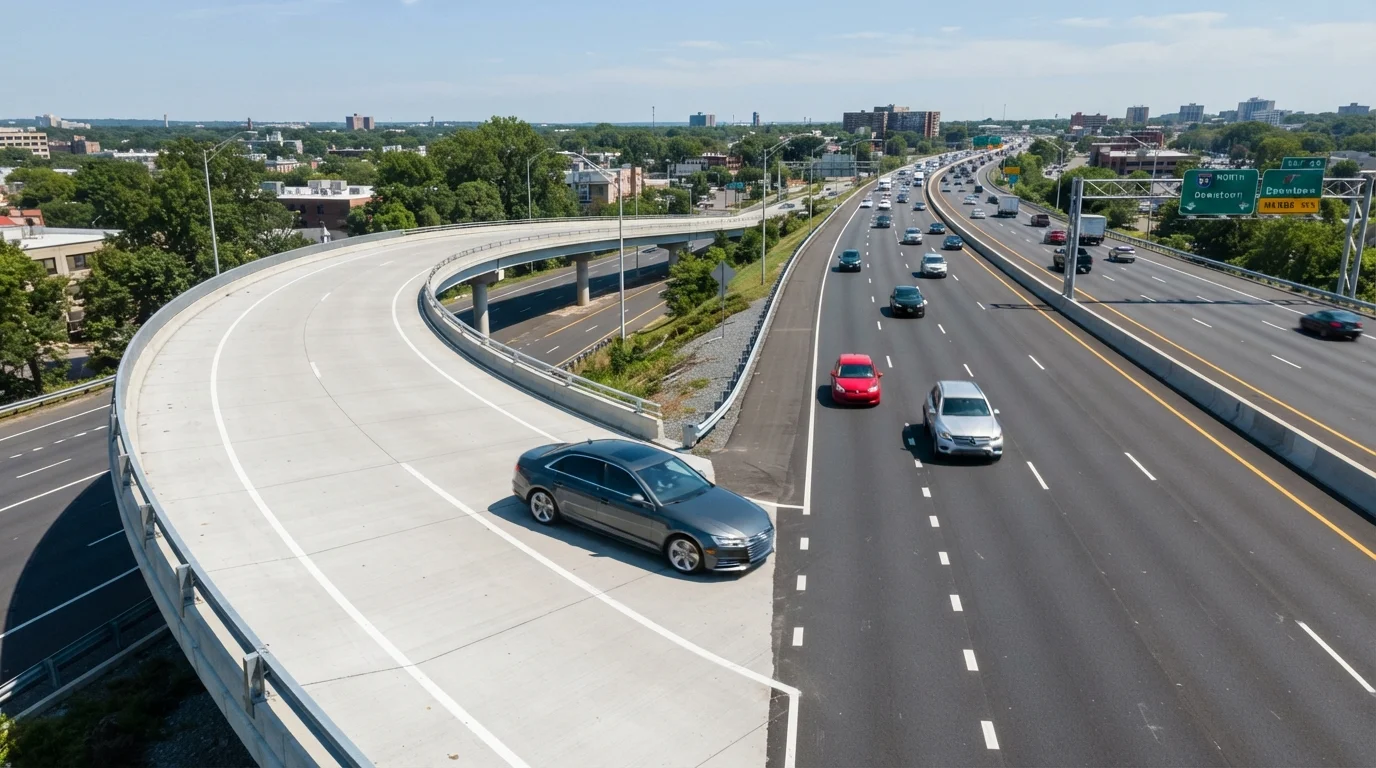
Photo: InfoAlly.net | Finding Info Made Easy editorial
Key Takeaways
- Match motorway traffic speed on the acceleration lane before attempting to merge.
- Signal early and check mirrors and blind spots before moving into the live lane.
- Never stop or slow dramatically at the end of an on-ramp - it creates serious rear-end collision risk.
- Give way to existing motorway traffic; you do not have right of way when merging.
- Smooth, decisive steering inputs make merging safer for you and drivers around you.
Why Motorway Merging Trips Up Experienced Drivers
Joining a motorway is deceptively simple in theory - accelerate, signal, move over - yet it's consistently one of the manoeuvres where drivers of all experience levels make errors. The core challenge is that it compresses several simultaneous demands: speed management, gap identification, signalling, and mirror use, all while the clock on your acceleration lane counts down.
Many drivers approach on-ramps too cautiously, under-using the available run-up distance, then arriving at the merge point travelling significantly slower than motorway traffic. Others focus so intently on the lane ahead that they fail to fully scan for vehicles approaching in their blind spot. Both patterns create risk - not just for the merging driver, but for everyone around them.
Motorway driving also demands a different skill set than urban environments. Highway driving calls for anticipation over reaction - reading traffic flow hundreds of metres ahead rather than responding to immediate obstacles. Merging is where that shift in mindset must kick in. For a broader look at motorway confidence alongside other everyday driving skills, the end-to-end safe driving guide offers useful context.
What you will need
What to Do When Conditions Make Merging Harder
Heavy traffic, poor visibility, wet roads, and short acceleration lanes all raise the difficulty level. In congested conditions, gaps in motorway traffic are smaller and close faster, so your timing must be sharper. If traffic is stop-start, match that rhythm rather than forcing a gap - patience and composure matter more than speed here.
In wet conditions, extend your intended following distance after merging and be aware that your braking distance increases significantly. Drivers ahead may brake more sharply than expected, and the reduced traction demands earlier, gentler inputs from you. If the acceleration lane is unusually short - as found on some older interchange designs - prioritise speed-building even more aggressively from the earliest point of the ramp.
Practice Makes Merging Feel Natural
Above all, avoid the impulse to force your way into a gap that isn't there. Cutting across will require another driver to brake suddenly, and at motorway speeds that carries serious consequences. A brief wait for a genuine gap is always the better outcome.
The content on this site is for informational purposes only and is not a substitute for professional advice. Always consult a qualified professional for guidance specific to your situation.