
Highway Driving vs. City Driving: How Each Demands Different Skills

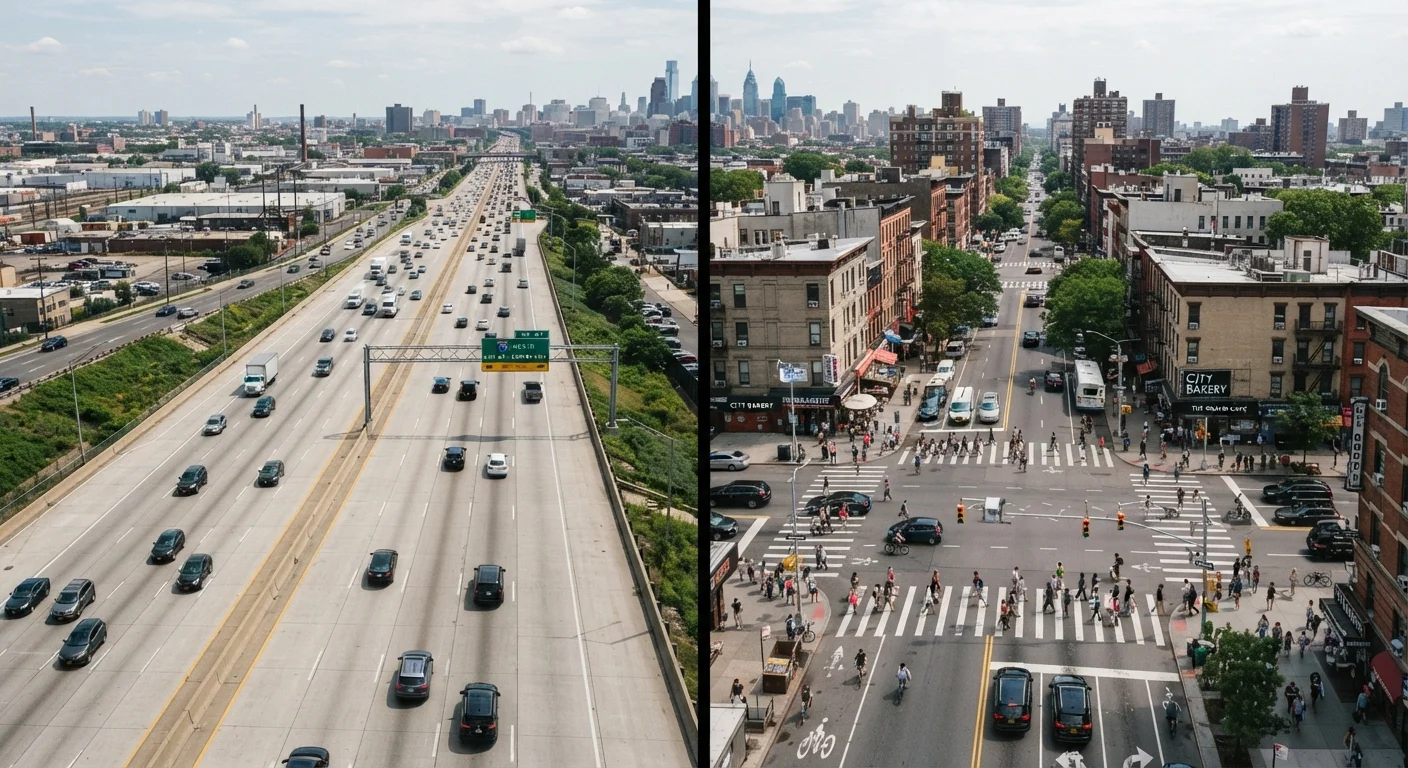
Photo: InfoAlly.net | Finding Info Made Easy editorial
Key Takeaways
- Highway driving prioritizes speed management, following distance, and sustained attention over long stretches.
- City driving demands rapid hazard recognition, smooth braking, and awareness of pedestrians and cyclists.
- Both environments reward smooth throttle and brake inputs, which also improves fuel efficiency.
- Merging onto a highway is one of the most misjudged manoeuvres - matching traffic speed before joining is essential.
- Urban stop-and-go patterns cause significantly more fuel consumption than steady highway cruising.
- Switching between environments requires a conscious mental reset of speed expectations and scanning habits.
Two Environments, Two Completely Different Demands
Most drivers think of themselves as simply "good drivers" - but the skills that keep you safe at 70 mph on an interstate are not the same ones that prevent you from clipping a cyclist at a city intersection. Highway and city driving each create distinct cognitive and physical demands that are worth understanding separately.
On the highway, the primary challenge is sustained attention at speed. There are fewer decisions per mile, but each one carries higher consequences. A lane change at 65 mph with insufficient following distance can turn catastrophic. In the city, the challenge flips: there are more decisions per minute, but at lower speeds that allow slightly more reaction time - offset by the sheer volume of unpredictable actors like pedestrians, cyclists, delivery vehicles, and turning cars.
For a broader look at how driving conditions interact, see our end-to-end guide for everyday drivers.
| Criterion | Highway Driving | City Driving |
|---|---|---|
| Speed range | 55-80 mph typical | 15-45 mph typical |
| Hazard frequency | Low per mile, high impact | High per mile, varied impact |
| Key skill | Following distance & merging | Hazard scanning & patience |
| Fuel efficiency | Generally more efficient | Less efficient due to stop-and-go |
| Fatigue pattern | Monotony-induced inattention | Decision fatigue from complexity |
| Reaction time needed | Less frequent, but higher stakes | More frequent, shorter windows |
| Primary hazard types | High-speed merging, tailgating | Pedestrians, cyclists, intersections |
Highway Skills: Speed, Space, and Sustained Focus
Highway driving rewards drivers who manage space, not just speed. The recommended following distance at highway speeds is at least three to four seconds behind the vehicle ahead - more in poor conditions. This buffer gives you time to respond to sudden braking without relying on reflexes alone.
Merging is one of the most commonly mishandled highway manoeuvres. The correct approach is to match the flow of traffic speed on the on-ramp before joining - not to slow or stop at the merge point. For a detailed breakdown of timing and positioning, our guide on motorway merging done right covers the critical steps.
Highway monotony is a genuine safety risk. Extended driving at constant speed can induce a state sometimes called highway hypnosis - a reduction in active awareness without falling asleep. Counter this by adjusting your scanning pattern regularly: check mirrors every five to eight seconds, and vary your gaze distance to stay cognitively engaged. Also consider how darkness compounds these challenges - our piece on night driving habits addresses fatigue strategies directly.
3-4 sec
Recommended following distance at highway speed
The National Safety Council recommends a minimum three-second following distance, increasing in adverse conditions.
~40%
More fuel used in city vs. highway driving
The US Department of Energy notes that frequent acceleration and braking in urban traffic significantly reduces fuel economy compared to steady highway cruising.
52%
Of fatal crashes occurring on non-interstate roads
NHTSA data consistently shows that urban and rural non-highway roads account for a majority of fatal crash locations, partly due to intersection complexity.
City Skills: Hazard Scanning, Smooth Control, and Patience
Urban driving compresses hazards into a much smaller space. At any given intersection, you may need to track traffic signals, turning vehicles, pedestrians mid-crossing, cyclists filtering through lanes, and double-parked delivery trucks simultaneously. The key skill is proactive scanning - looking ahead and to the sides well before you reach a potential conflict point, not reacting to it as it arrives.
Smooth braking and gradual acceleration are especially valuable in city traffic. Aggressive stop-and-go driving not only increases fuel consumption but also shortens brake pad life and increases the likelihood of rear-end incidents. Anticipate signal changes and allow your vehicle to coast toward a red light rather than braking hard at the last moment.
Wet urban roads intensify all of these hazards - painted crosswalk lines and metal manhole covers become particularly slippery in rain. For a detailed explanation of how rain alters grip and stopping distances, see wet roads and vehicle handling.
Transitioning Between Environments
The content on this site is for informational purposes only and is not a substitute for professional advice. Always consult a qualified professional for guidance specific to your situation.