
Wet Roads, Hidden Risks: How Rain Changes Vehicle Handling

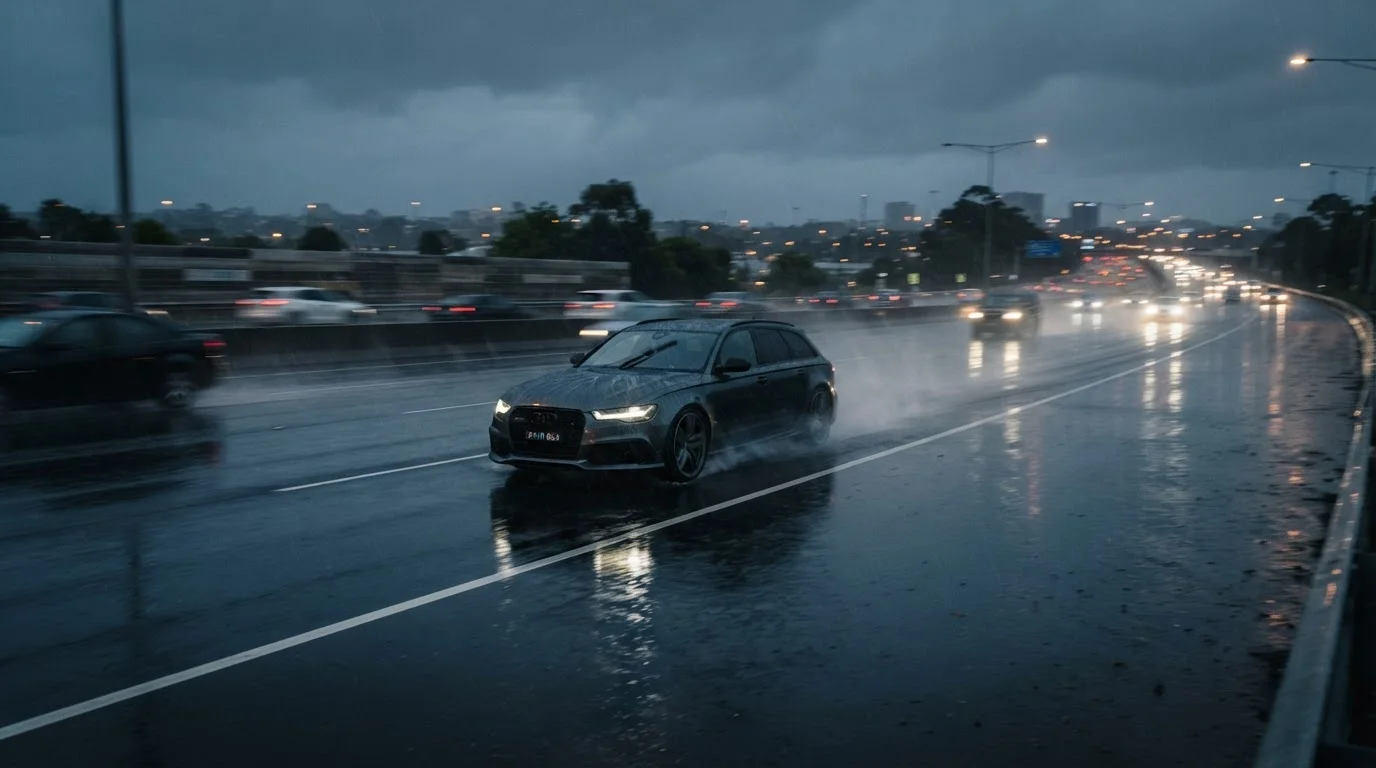
Photo: InfoAlly.net | Finding Info Made Easy editorial
Key Takeaways
- Wet roads can increase stopping distances by up to double compared to dry conditions.
- Aquaplaning can occur at speeds as low as 30 mph on standing water with worn tires.
- Reducing speed is the single most effective adjustment when driving in rain.
- Tire tread depth directly determines how well your vehicle handles wet surfaces.
- Smooth, gradual inputs - braking, steering, and acceleration - help maintain control on slippery roads.
- Increasing following distance gives you the reaction time wet conditions demand.
Why Rain Fundamentally Changes the Road
A dry road surface offers significant friction between tire rubber and asphalt - the grip that lets you steer, accelerate, and stop with confidence. Rain strips much of that friction away. Water acts as a lubricant between tire and pavement, and even a thin film is enough to meaningfully reduce the traction your vehicle depends on for every maneuver.
The effect is not uniform. The first 10-20 minutes of rainfall are often the most hazardous, because water mixes with accumulated road oil and dust to create an especially slippery surface before it washes clear. High-traffic areas, intersections, and corners where oil deposits concentrate are particularly treacherous during this early phase.
Understanding these dynamics is the first step toward adapting your driving. For a broader framework of safe driving principles, see the end-to-end guide for everyday drivers.
The First Rain After a Dry Spell Is Especially Risky
Aquaplaning: When Tires Lose the Road
Aquaplaning is the most dramatic consequence of wet-road driving, and it can happen with very little warning. As speed increases, tires must disperse water through their tread channels fast enough to maintain contact with the pavement beneath. When water accumulates faster than it can be cleared - due to speed, worn tread, or standing water - the tire rides up onto the water film and grip disappears entirely.
The physical sensation is a sudden lightness in the steering combined with a slight drift or yaw. Drivers often instinctively steer harder or brake sharply, which is exactly the wrong response. The correct technique is to ease off the accelerator gently, hold the wheel steady, and allow speed to reduce naturally until the tires regain contact.
~2×
Increase in stopping distance on wet roads
Road safety research consistently shows wet pavement can roughly double braking distances compared to dry conditions at equivalent speeds.
75%
Of weather-related crashes involve wet pavement
According to the U.S. Federal Highway Administration, wet pavement accounts for approximately 75% of weather-related vehicle crashes annually.
30 mph
Speed at which aquaplaning can begin
With significantly worn tires or significant standing water, aquaplaning can occur at speeds as low as 30 mph, well below highway velocities.
Tire condition is a critical variable. Tread channels are specifically designed to evacuate water; as tread wears down, that capacity decreases. Keeping tires at the correct inflation pressure also matters - underinflated tires deform and reduce the effective contact patch with the road. For a seasonal checklist that covers tire readiness, see what to check before winter and summer.
Adjusting Your Driving Technique in Wet Conditions
Speed reduction is the most impactful single adjustment. Lower speeds give tires more time to clear water, reduce aquaplaning risk, and shorten the gap between wet and dry stopping distances. This is not about creeping - it is about matching pace to the actual conditions rather than the posted limit alone.
Following distance becomes equally important. On dry roads, a two-second gap is a common minimum guideline; in rain, that should extend to four seconds or more. Stopping distances roughly double on wet pavement, and any rear-end collision that might have been avoided on a dry road becomes unavoidable without that extra space. Tailgating is already risky in dry conditions - rain makes it genuinely dangerous.
Smooth inputs matter throughout. Abrupt braking, sharp steering, and aggressive acceleration all transfer weight suddenly, unloading tires at the worst moments. In wet conditions, every input should be progressive and deliberate. This approach mirrors the core principles outlined in defensive driving.
Avoid Cruise Control in Wet Conditions
Visibility, Lights, and Road Surface Awareness
Rain affects more than grip - it degrades visibility for both you and other road users. Headlights should be on in rain, even during daylight hours, to make your vehicle more visible. Windshield wipers in poor condition streak and smear rather than clear, so blades should be replaced at least annually or whenever they begin to deteriorate.
Road surface awareness becomes a distinct skill in wet conditions. Standing water often collects in ruts, dips near lane markings, and camber changes - areas that can be hard to read at speed. Lanes near storm drains may channel water across the road. Painted road markings - white lines, crosswalks, hatching - become noticeably more slippery when wet than bare asphalt.
Different driving environments present different wet-weather challenges. Highways carry higher speeds that amplify aquaplaning risk, while urban roads bring pedestrian splash zones and tight turns. Highway and city driving each demand different techniques - understanding both helps you adapt as conditions change.
This article provides general vehicle safety information for educational purposes and does not constitute professional driving instruction or mechanical advice. Consult a qualified instructor or mechanic for guidance specific to your vehicle and situation.
Frequently Asked Questions
The content on this site is for informational purposes only and is not a substitute for professional advice. Always consult a qualified professional for guidance specific to your situation.