
The Real Cost of Aggressive Driving on Your Fuel Tank

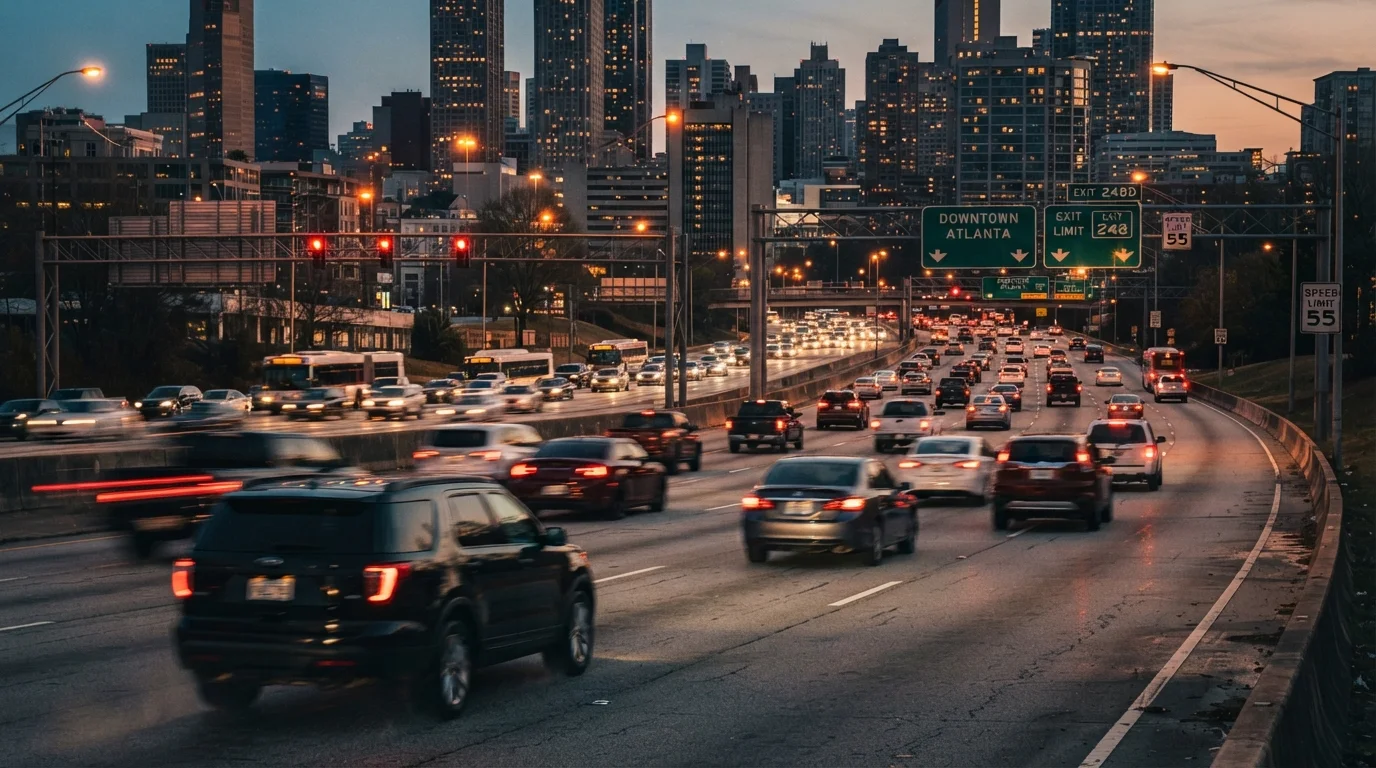
Photo: InfoAlly.net | Finding Info Made Easy editorial
Key Takeaways
- Rapid acceleration is the single biggest fuel-wasting habit most drivers have.
- Hard braking converts forward momentum - paid for with fuel - directly into heat and wear.
- Maintaining a following distance reduces how often you need to brake and re-accelerate.
- Smoother driving can meaningfully lower fuel costs without adding significant time to your trip.
- The relationship between speed and fuel consumption is not linear - higher speeds burn disproportionately more fuel.
Why Your Right Foot Is Your Biggest Fuel Variable
Every time you press the accelerator hard, you're asking your engine to produce a surge of power - and that power comes directly from burning fuel. The throttle doesn't just determine speed; it determines the rate at which your engine consumes energy. A light, progressive press asks for a controlled burn. A heavy stomp demands a flood.
The U.S. Department of Energy estimates that aggressive acceleration and braking can reduce fuel economy by 15-40% depending on conditions. That's not a rounding error - on a tank that costs $60, it could represent $9-$24 in avoidable spending, trip after trip.
What makes this particularly important is that many drivers don't think of themselves as aggressive - they think of it as keeping up with traffic or making progress. But the cumulative effect of dozens of hard accelerations per commute adds up faster than most people realize.
15-40%
Fuel economy reduction from aggressive driving
According to U.S. Department of Energy fuel economy guidance, aggressive acceleration and braking can cut efficiency by this range depending on road conditions.
~25%
Extra fuel used driving at 80 mph vs. 60 mph
Fuel economy research consistently shows that aerodynamic drag at higher speeds creates a steep, non-linear increase in fuel consumption.
40%
Potential fuel savings in stop-and-go conditions
The DOE notes the highest savings potential from smooth driving occurs in city and stop-and-go traffic, where acceleration cycles are most frequent.
The Physics of Hard Braking - Turning Money Into Heat
Braking late and hard isn't just a fuel problem - it's a waste problem. When you accelerate, you convert fuel energy into kinetic energy (forward momentum). When you brake hard, most of that energy is dissipated as heat through your brake pads and rotors. Essentially, you paid to go forward and then paid again to stop - without getting the benefit of smooth, efficient motion in between.
Smooth deceleration - easing off the throttle early and allowing engine braking to slow you gradually - recovers some of that momentum, reducing how hard your brakes need to work and how soon you'll need to re-accelerate. In vehicles with regenerative braking (such as hybrids and EVs), gentle deceleration actively recaptures energy rather than discarding it as heat.
Following too closely is one of the primary reasons drivers brake hard unnecessarily. Without adequate following distance, every slowdown in traffic ahead becomes a sudden reaction rather than a gradual response - locking you into a cycle of hard braking and re-acceleration that drains your tank.
The 'Two-Second Lift' Habit
Speed, Aerodynamics, and the Compounding Cost
Aggressive driving often involves sustained high speeds, and this creates a separate but compounding fuel penalty. Aerodynamic drag - the resistance the air exerts on your vehicle - increases with the square of your speed. This means that doubling your speed doesn't double the drag; it quadruples it. Your engine must work proportionally harder just to maintain velocity.
The practical consequence: most passenger vehicles reach their optimal fuel-efficiency range somewhere between 45 and 55 mph on flat roads. Beyond that, each additional 10 mph typically costs a measurable increase in fuel consumption. High-speed aggressive driving stacks aerodynamic drag on top of hard-acceleration penalties - a combination that can push real-world fuel economy far below the window sticker estimate.
It's worth separating fact from fiction here. Many drivers believe that small speed differences don't matter, or that warming up the engine at idle is more efficient than gentle driving. For a clear-eyed look at which fuel-saving beliefs hold up, see our guide to fuel economy myths.
Practical Habits That Flatten Your Fuel Bill
The good news is that smoother driving doesn't require special equipment or significant effort - just deliberate habit shifts. A few principles that consistently show results:
- Accelerate gradually: Aim for the speed limit over 10-15 seconds rather than reaching it in 3-4. Your engine load stays manageable and fuel flow stays controlled.
- Read the road ahead: Anticipating a red light or slowing traffic 300-400 feet ahead lets you coast rather than brake. This keeps your momentum working for you instead of against you.
- Maintain following distance: A two-second gap (or more) gives you time to respond with light inputs rather than hard reactions.
- Use higher gears earlier in manual vehicles: Lower RPMs at a given speed generally mean lower fuel consumption, within reason.
- Limit unnecessary high-speed driving: On a highway, choosing 65 mph over 80 mph may add a few minutes but can noticeably improve fuel efficiency over a long journey.
These habits align directly with defensive driving principles - which means the same approach that saves fuel also reduces your collision risk. For a comprehensive look at how these habits fit into overall driving safety, the end-to-end safe driving guide covers everything from vehicle checks to motorway confidence.
Frequently Asked Questions
The content on this site is for informational purposes only and is not a substitute for professional advice. Always consult a qualified professional for guidance specific to your situation.