
What Your Tyre Pressure Is Actually Telling You

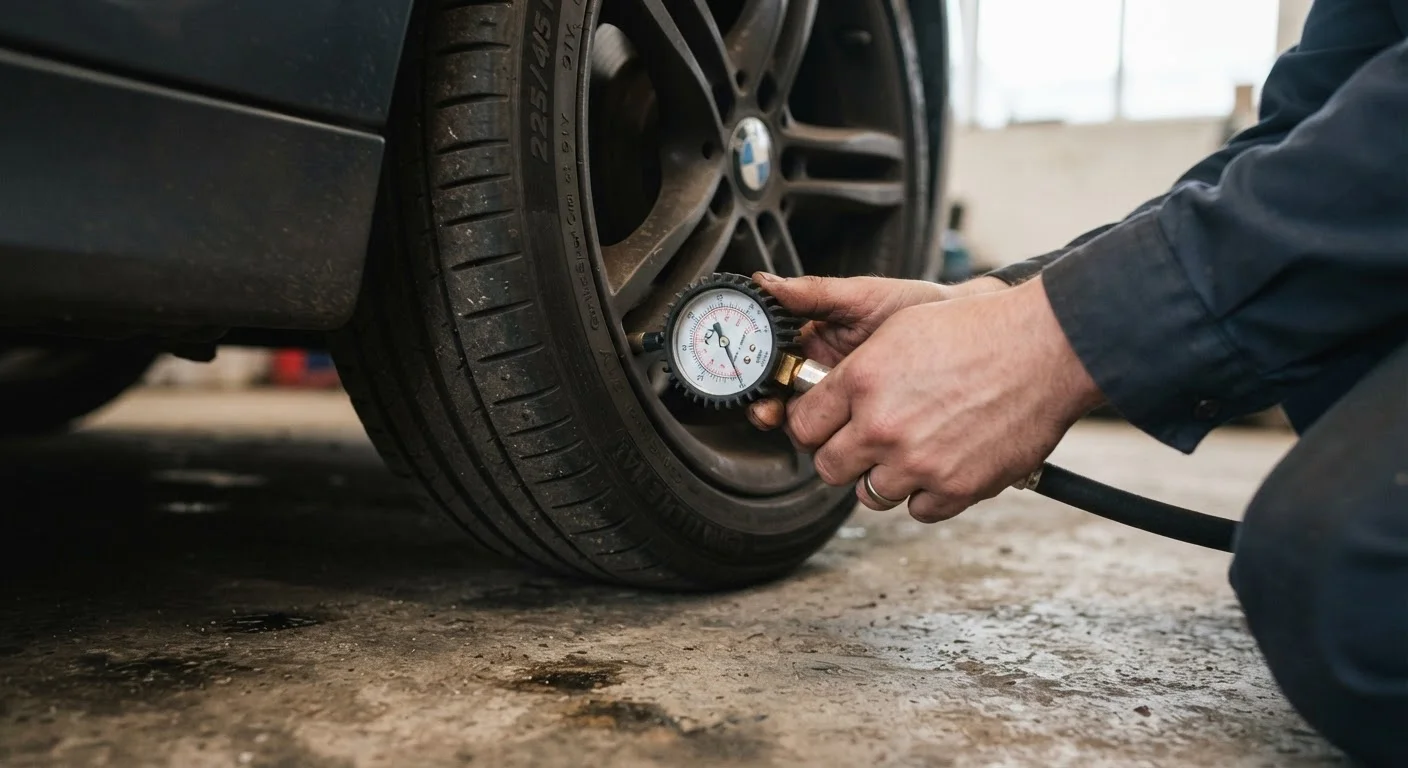
Photo: InfoAlly.net | Finding Info Made Easy editorial
Key Takeaways
- Incorrect tyre pressure affects braking distance, fuel economy, and tyre lifespan simultaneously.
- Check tyre pressure at least once a month and before long road trips.
- Temperature drops of 10°F can reduce tyre pressure by roughly 1 PSI.
- Both underinflation and overinflation are hazardous - the risks are different but equally real.
- A TPMS warning light signals pressure has dropped 25% or more below recommended levels.
More Than Just a Number
Most drivers glance at the TPMS light on their dashboard only when it's already lit. But tyre pressure is a continuous variable - not a pass/fail switch - and small deviations from the recommended range compound into real consequences over time. Understanding what your PSI reading actually means gives you far more useful information than simply knowing whether a warning light is on or off.
Tyre pressure influences three separate systems at once: safety (braking and cornering), efficiency (fuel consumption), and durability (how quickly your tyres wear). That's why automotive engineers treat it as a fundamental maintenance metric rather than a minor housekeeping detail.
~1 PSI
Pressure lost per 10°F temperature drop
A commonly cited rule of thumb in automotive engineering, reflecting the behaviour of air volume under temperature change.
1 PSI
Approximate monthly natural pressure loss
Tyres are permeable; even without punctures, they gradually lose air through the rubber and valve stems over time.
25%
Below-recommended threshold that triggers TPMS alert
U.S. federal regulations require TPMS systems to alert drivers when pressure falls 25% below the vehicle placard specification.
What Underinflation and Overinflation Actually Do
Underinflation - running below the recommended PSI - causes the tyre's sidewalls to flex more than designed. This generates excess heat, accelerates wear on the outer edges of the tread, and increases the risk of a structural failure or blowout. Understuffed tyres also require more energy to roll, which reduces fuel efficiency. Braking distances can increase meaningfully even at moderate speed.
Overinflation - running above the recommended PSI - stiffens the tyre and shrinks the contact patch (the area of tread touching the road). Less rubber in contact with the asphalt means reduced grip, longer stopping distances, and a harsher ride that transfers more road shock to suspension components. Overinflated tyres are also more vulnerable to blowouts on sharp impacts like potholes.
Check Pressure Before You Drive, Not After
For a deeper look at how pressure interacts with tread depth and overall tyre health, see our guide on tyre pressure and tread depth safety checks.
Reading the Signs Your Tyres Are Giving You
Tyres communicate their condition through wear patterns that are visible on the tread surface:
- Wear on both outer edges, centre fine: Classic sign of chronic underinflation. The tyre is bowing outward and carrying weight on its edges rather than its full tread face.
- Wear concentrated in the centre strip: Consistent overinflation. The inflated centre bulges and contacts the road more than the edges.
- Uneven wear on one side only: More likely an alignment or suspension issue than a pressure problem, but low pressure can worsen it.
These patterns develop over thousands of miles, so catching pressure problems early - before visible wear appears - is always preferable. If your TPMS light activates, that signals a drop of 25% or more below recommended levels, which is already a meaningful safety concern. Learn how this light fits alongside other dashboard signals in our guide to dashboard warning lights.
Building a Simple Pressure-Check Habit
Checking tyre pressure requires a basic gauge - digital or analog - available at most auto parts stores and service stations. Check when tyres are cold for an accurate reading. Here's a practical approach:
- Find your vehicle's recommended PSI on the door jamb sticker or owner's manual.
- Remove the valve cap from each tyre and press the gauge firmly onto the valve stem.
- Compare the reading to the recommended PSI. Add air if low; release air using the valve pin if over.
- Don't forget the spare - a flat spare is useless in an emergency.
Seasonal timing matters. Check pressure when temperatures shift significantly - particularly when moving into colder months. A car that was properly inflated in August may be noticeably low by November without a single slow leak.
TPMS Is a Backup, Not a Substitute
This article is for general informational purposes only. For maintenance concerns beyond routine checks, consult a qualified mechanic or tyre professional.
Frequently Asked Questions
The content on this site is for informational purposes only and is not a substitute for professional advice. Always consult a qualified professional for guidance specific to your situation.