
What Your Car's Dashboard Warning Lights Are Actually Telling You

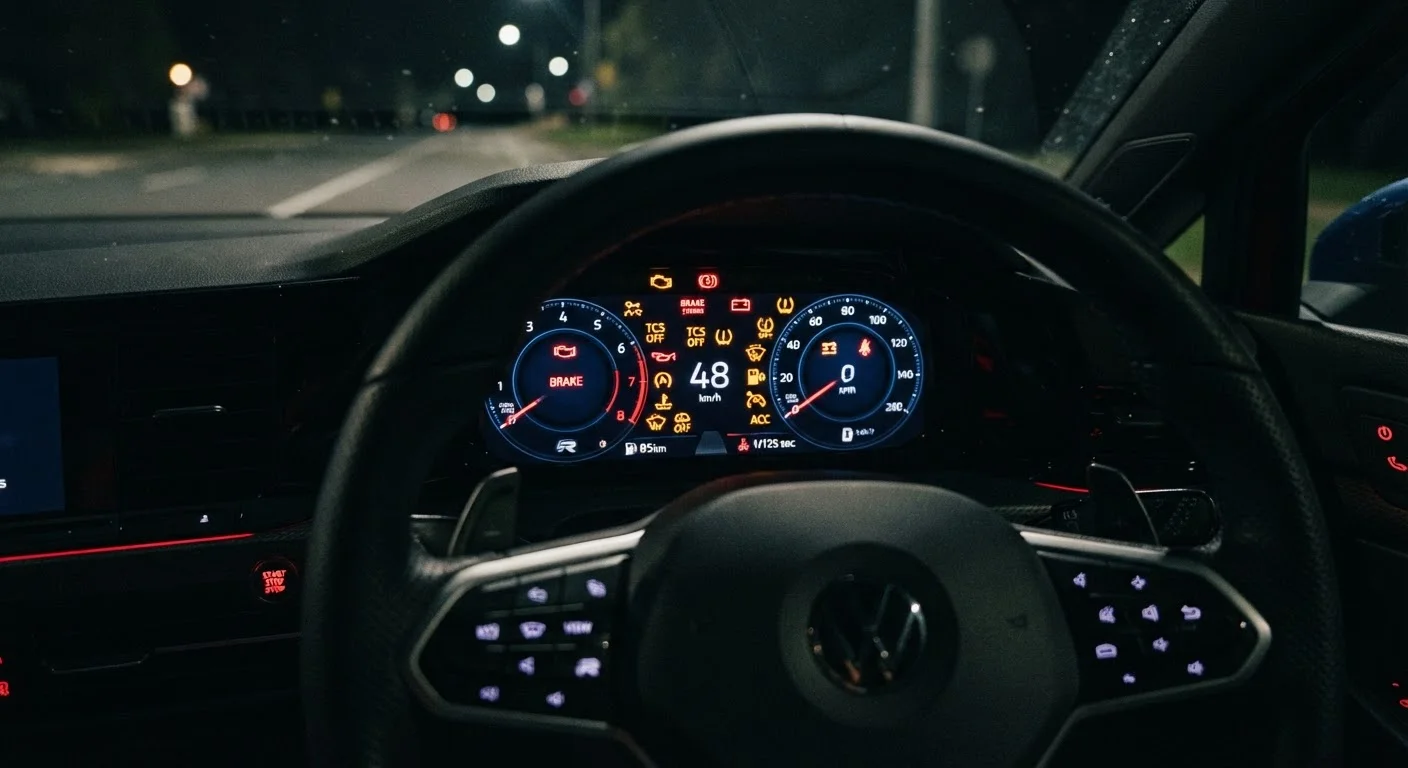
Photo: InfoAlly.net | Finding Info Made Easy editorial
Why Dashboard Warning Lights Exist
Modern vehicles are equipped with an OBD system that continuously monitors dozens of sensors. When something falls outside normal operating parameters, the system triggers a dashboard warning light. These lights aren't suggestions - they're your car's way of flagging a condition that ranges from routine to urgent.
Color coding provides a useful first layer of context: red lights generally indicate a serious issue requiring immediate attention, amber or yellow lights signal something that needs service soon but may not be an emergency, and blue or green lights are usually informational (e.g., high beams are on). However, color alone doesn't tell the whole story - the specific symbol matters enormously.
For a broader look at what responsible car ownership involves, including routine maintenance and insurance basics, see our first-car ownership guide.
| Red light urgency | Stop driving safely as soon as possible |
| Amber light urgency | Schedule service within days to a week |
| OBD-II standard adopted | Required in all US passenger vehicles from 1996 (US EPA / NHTSA) |
| Check engine light cause range | Loose gas cap to catalytic converter failure |
| TPMS federally mandated | Required on all new US vehicles since 2008 (NHTSA) |
| Best reference for your specific vehicle | Owner's manual warning light glossary |
The Lights That Demand Immediate Action
Certain warning lights should prompt you to safely pull over and stop driving as soon as possible:
- Oil Pressure Warning (red oil can icon): Indicates critically low oil pressure, which can cause catastrophic engine damage within minutes if you continue driving. Check the oil level immediately; if it's adequate, have the car towed to a mechanic rather than driving it.
- Engine Temperature Warning (red thermometer in liquid): Signals the engine is overheating. Pull over, turn off the engine, and allow it to cool. Never open the radiator cap while the engine is hot.
- Battery Warning (red battery icon): Suggests the charging system has failed. Your car is running on battery power alone, which typically gives you a limited window before the engine cuts out entirely.
- Brake Warning Light (red exclamation mark in circle): If this appears while driving and the parking brake is fully released, there may be a brake fluid issue or a hydraulic failure - a direct safety concern.
These red-light situations are not drive-to-the-dealer scenarios. When in doubt, call for roadside assistance.
OBD-II
On-Board Diagnostics II - a standardized system built into all US passenger vehicles since 1996 that monitors engine and emissions-related systems and stores fault codes when a problem is detected.
Malfunction Indicator Lamp (MIL)
The technical name for the check engine light. It illuminates when the OBD-II system detects a fault code related to engine performance or emissions.
TPMS
Tyre Pressure Monitoring System - a sensor-based system that alerts the driver when one or more tyres drop significantly below the recommended inflation pressure.
Fault Code
A standardized alphanumeric code (e.g., P0420) stored by the OBD-II system when a sensor reading falls outside its acceptable range. A diagnostic scanner reads these codes to help identify the source of a warning light.
Amber Lights: Schedule Service Promptly
Amber warning lights indicate issues that are real but typically allow you to continue driving carefully for a short period while you arrange service. Ignoring them, however, can allow manageable problems to become expensive ones.
- Check Engine Light (MIL): One of the most misunderstood lights on any dashboard. It can mean anything from a loose gas cap to a failing catalytic converter. A steady check engine light suggests scheduling a diagnostic scan soon; a flashing check engine light indicates an active misfire that can damage the catalytic converter and warrants prompt attention.
- Tyre Pressure Monitoring System (TPMS) Light: One or more tyres have dropped below the recommended pressure threshold. Driving on under-inflated tyres affects handling, fuel economy, and tyre life. See our tyre pressure guide for how to respond correctly.
- Transmission Temperature Warning: The transmission fluid is running hot, often due to towing, stop-and-go traffic, or low fluid levels. Reduce load and have the system inspected.
- Low Fuel Warning: Straightforward, but worth noting - habitually running on empty can stress the fuel pump over time.
A Flashing Check Engine Light Is Different
For a detailed symbol-by-symbol quick reference across makes and models, the Dashboard Warning Lights Quick Reference is a useful companion resource.
What to Do When a Light Comes On
Your response should match the urgency level of the light. Here's a practical framework:
- Stay calm and note the color and symbol. Red means act now; amber means act soon.
- Check your owner's manual. Every vehicle's manual includes a warning light glossary specific to that make and model. This is the single most reliable reference for your car.
- Don't automatically assume the worst - or the best. A check engine light triggered by a loose fuel cap will clear itself once the cap is properly secured and the system recycles. A red oil warning never should be dismissed.
- Get a diagnostic scan. Many auto parts retailers offer free OBD-II scanner readings. A mechanic can provide a more thorough assessment of fault codes.
- Address the underlying issue, not just the light. Resetting a warning light without fixing the root cause only delays - and often worsens - the problem.
Understanding your car's history can also help you interpret recurring warning lights in context. Our used car history report guide explains how past maintenance records and reported issues can inform current diagnostics. For a broader foundation in safe driving habits, explore the Safe and Smart Driving end-to-end guide.
This article is for general informational purposes only. Always consult a qualified mechanic for diagnosis and repair of any vehicle warning or safety concern.
The content on this site is for informational purposes only and is not a substitute for professional advice. Always consult a qualified professional for guidance specific to your situation.