
Dashboard Warning Lights: A Driver's Quick Reference

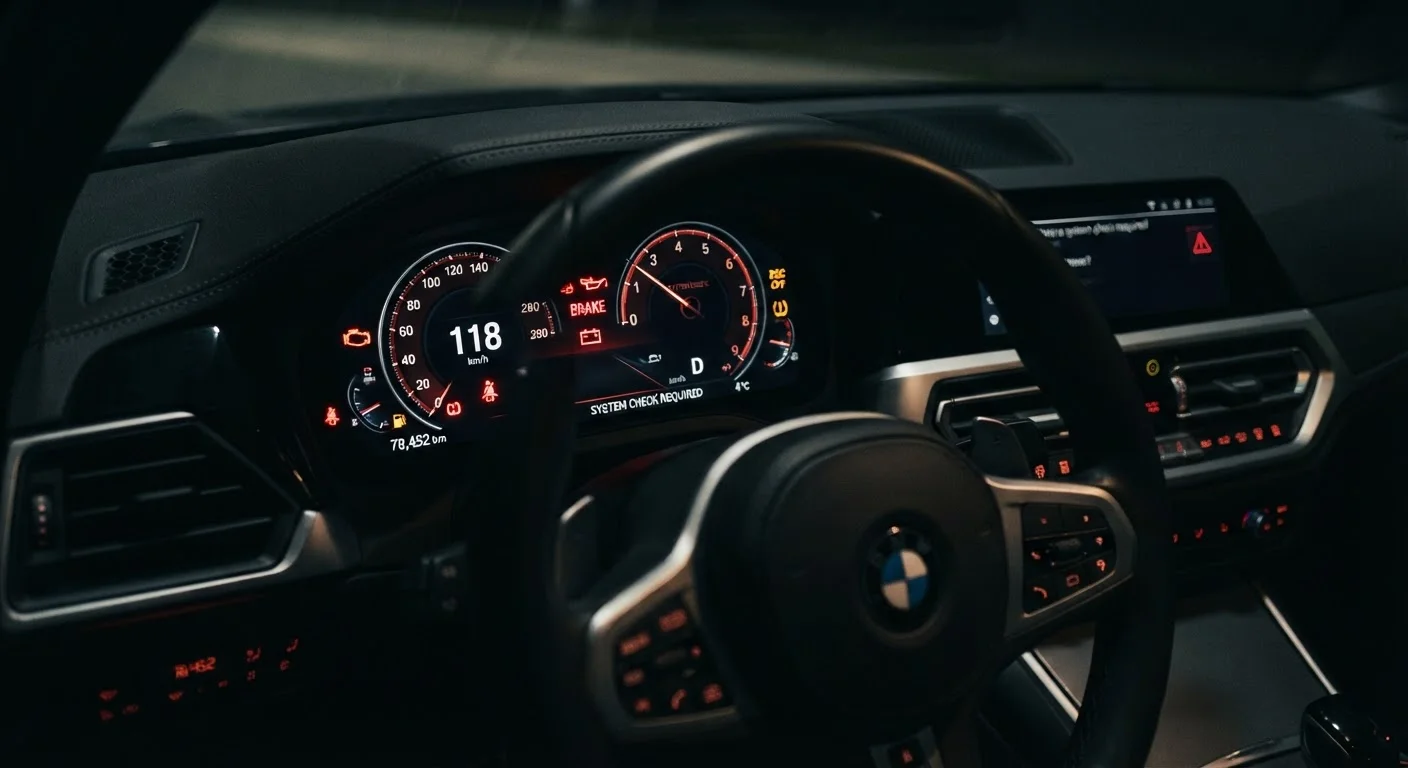
Photo: InfoAlly.net | Finding Info Made Easy editorial
How to Read Dashboard Warning Lights
Your vehicle's dashboard warning system is designed as a tiered alert hierarchy. Understanding that hierarchy is the first step to responding appropriately rather than either panicking or ignoring a genuine problem.
| Red light action | Stop safely as soon as possible |
| Amber light action | Schedule garage visit promptly |
| Most ignored light | Check Engine (CEL) (Commonly cited in automotive service surveys) |
| ESC mandate (US) | Required on all new passenger vehicles since 2012 (NHTSA Federal Motor Vehicle Safety Standard No. 126) |
| TPMS mandate (US) | Required on all new light vehicles since 2008 (NHTSA TPMS Final Rule) |
Red lights demand immediate attention. They signal conditions that can cause engine damage, brake failure, or unsafe driving - pull over safely as soon as possible when one appears. Amber or yellow lights indicate a fault that needs attention soon but generally allows you to continue driving carefully to a garage. Green and blue lights are simply status confirmators - they tell you a system is active, not that something is wrong.
If multiple warning lights illuminate simultaneously, especially alongside unusual sounds or smells, treat the situation as urgent. Consult a qualified mechanic rather than attempting diagnosis yourself. For a broader overview of pre-drive readiness, see the pre-drive routine that takes under three minutes.
Common Warning Lights Decoded
Oil Pressure Warning
A red oil can symbol indicating dangerously low oil pressure in the engine. Stop the vehicle immediately and check oil levels; continuing to drive risks severe engine damage.
Check Engine Light (CEL)
An amber engine outline indicating the vehicle's onboard diagnostic system has detected a fault. Causes range from a loose fuel cap to sensor failure - a garage scan tool is needed to read the specific fault code.
TPMS (Tyre Pressure Monitoring System)
A sensor-based system that alerts the driver when one or more tyres fall significantly below the recommended pressure. It is a supplement to, not a replacement for, regular manual pressure checks.
ABS (Anti-Lock Braking System)
A safety system that prevents wheels from locking during emergency braking, allowing the driver to maintain steering control. An ABS warning light means this safety layer may be unavailable.
ESC (Electronic Stability Control)
A system that automatically applies selective braking to individual wheels to prevent skidding or loss of control. Mandated on new vehicles in the US since 2012.
Coolant Temperature Warning
Signals that engine coolant has exceeded safe operating temperature. Requires immediate safe stopping and engine shutdown to prevent serious mechanical damage.
Beyond definitions, context matters. The tyre pressure monitoring system (TPMS) light, for example, can illuminate because of a slow puncture, significant temperature change, or a faulty sensor - not all of which require the same response. Our guide to what your tyre pressure is actually telling you explains how to interpret pressure readings alongside that dashboard alert.
The engine temperature warning (a thermometer icon submerged in liquid) means your coolant is overheating. Switch off the air conditioning, pull over safely, and turn off the engine - do not open the bonnet or radiator cap until the engine has fully cooled. Ignoring this light risks severe and costly engine damage.
The battery warning light signals that your charging system is not maintaining voltage. In many cases the car will continue running on battery reserve for a short time - use that window to drive directly to a garage, minimising electrical loads by turning off non-essential systems.
Your Owner's Manual Is the Definitive Source
Lights That Affect Braking and Traction
22%
Of serious crashes involve tyre-related issues
According to NHTSA research on pre-crash contributing factors, tyre problems including under-inflation are a notable contributor to road incidents.
1 in 4
Vehicles on US roads have at least one significantly under-inflated tyre
Cited in NHTSA tyre safety research and consumer awareness campaigns.
The ABS (anti-lock braking system) warning light indicates a fault in the system that prevents wheel lock-up during hard braking. Your conventional brakes will still function, but ABS assistance will not be available - increase following distance and drive with extra caution until inspected.
The electronic stability control (ESC) or traction control light flashing during driving is normal - it means the system is actively working. A solid, non-flashing light suggests the system has a fault or has been manually switched off. Traction-related faults are especially relevant in wet or icy conditions, so address them promptly.
A red brake system warning light can mean low brake fluid, a fault in the hydraulic circuit, or - if it appears when the handbrake is released - a more serious brake failure. Do not continue driving without investigation. Safe driving practices like those outlined in our end-to-end safe driving guide depend entirely on a fully functioning brake system.
Regularly checking your tyres alongside brake health is equally important - the safety checks most drivers forget covers both in practical detail.
This article is for general informational purposes only. Always consult your vehicle's owner's manual and a qualified mechanic for guidance specific to your car's make, model, and fault codes.
The content on this site is for informational purposes only and is not a substitute for professional advice. Always consult a qualified professional for guidance specific to your situation.