
Home Workouts vs. Gym Training: Weighing the Real Trade-Offs

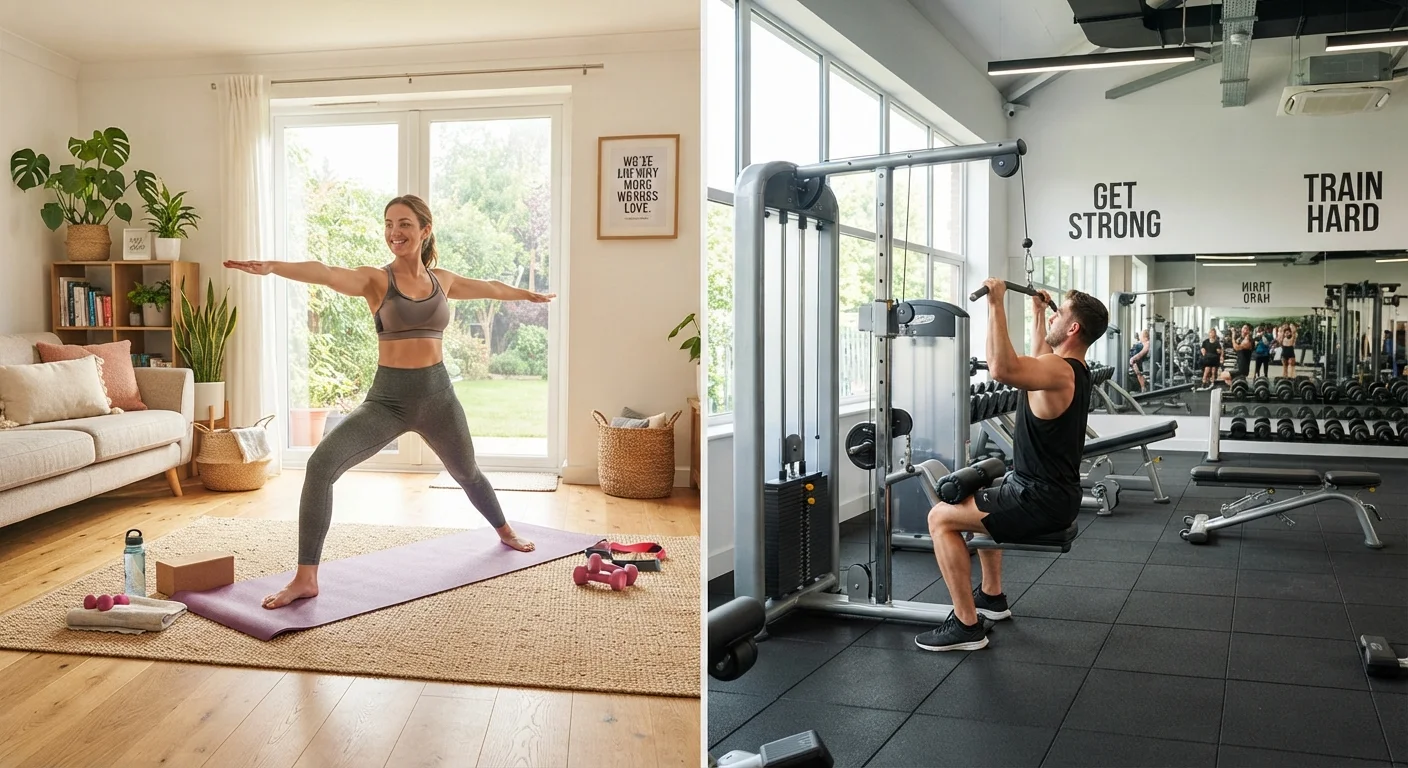
Photo: InfoAlly.net | Finding Info Made Easy editorial
Key Takeaways
- Home workouts offer flexibility and no commute, making consistency easier for busy schedules.
- Gyms provide access to specialized equipment, professional guidance, and a structured environment.
- Neither setting is inherently superior - the best choice is the one you'll actually use regularly.
- Many people find that combining both approaches suits different seasons of life.
- Cost, space, motivation style, and fitness goals are the most important factors to weigh.
What Each Training Environment Actually Offers
Choosing between working out at home and going to a gym isn't simply a matter of convenience - it shapes the type of training you can do, how consistently you do it, and whether you stick with it long-term. Understanding what each environment genuinely provides helps you make a decision grounded in your real life rather than an idealized routine.
Home workouts can range from bodyweight movements and resistance bands to a dedicated home gym setup with free weights, a rack, or a cardio machine. The core advantage is friction reduction: no commute, no membership fee, no waiting for equipment. That accessibility often translates directly into more frequent movement, which research consistently supports as one of the strongest predictors of long-term fitness outcomes. As explored in why consistency matters more than intensity, showing up regularly tends to outperform sporadic high-effort sessions over time.
Gym training provides access to a broader range of equipment - barbells, cable machines, rowing ergometers, squat racks - that is difficult or expensive to replicate at home. Many facilities also offer group classes, certified personal trainers, and a dedicated environment where movement is the sole purpose. For some people, that separation from home life is psychologically valuable and helps them focus.
| Home Workouts | Gym Training | |
|---|---|---|
| Upfront Cost | Low to moderate (equipment optional) | Low (membership) to high (premium clubs) |
| Ongoing Cost | None after equipment purchase | Monthly or annual membership fees |
| Equipment Variety | Limited by space and budget | Wide range typically available |
| Commute Required | None | Yes - adds time each session |
| Scheduling Flexibility | Train any time, any day | Subject to facility hours |
| Social / Community Factor | Minimal unless virtual | Classes, trainers, peer environment |
| Space Needed | Small to moderate depending on setup | Not applicable - facility provides space |
| Professional Guidance Access | App or virtual-based only | On-site trainers often available |
The Real Costs: Time, Money, and Space
Financial and logistical realities shape fitness decisions more than most people admit. Gym memberships vary widely, from budget facilities to premium clubs, and recurring fees add up over months and years. Home equipment carries an upfront cost but no ongoing membership expense. That said, building a functional home setup with a few dumbbells and resistance bands is genuinely achievable at a modest cost - you do not need a fully equipped home gym to train effectively.
Time is often the more significant constraint. A gym visit typically adds 20-40 minutes of travel and transition time each way. Over a week, that accumulates. For people with demanding work schedules, caregiving responsibilities, or unpredictable hours, that time cost can be the single factor that makes home training more sustainable.
Space is the third variable. Apartment dwellers may have room for a mat and a pair of adjustable dumbbells but not a power rack. Homeowners with a garage or spare room have more options. Being honest about your available space prevents investing in equipment that ends up unused.
Start With What Removes the Most Barriers
Motivation, Accountability, and Environment
Motivation is highly individual, and the environment that supports yours matters. Some people find a gym's energy - the ambient activity of others training - genuinely energizing. Group fitness classes provide both structure and social accountability that can be hard to replicate alone at home. If you've noticed that external cues help you follow through, a gym environment may reinforce your habits more effectively.
Others find the gym environment intimidating, particularly those newer to structured exercise. The pressure - real or perceived - of working out around experienced exercisers can create barriers that outweigh any equipment advantage. If fitness myths have already created hesitation around formal training spaces, a home environment may lower the psychological entry cost enough to matter.
Home training places the motivation entirely in your own hands. Without external structure, some people thrive; others find it harder to maintain intensity or push through a plateau. Online programs, virtual coaching, and app-based guidance can partially bridge this gap, though they require self-directed engagement.
It's also worth noting that rest and recovery remain equally important regardless of where you train. Building recovery into any routine - home or gym - is a non-negotiable part of long-term progress.
Which Setting Fits Your Fitness Goals?
Your specific goals should inform this decision meaningfully. Bodyweight training, yoga, Pilates, moderate cardio, and general conditioning translate well to a home environment with minimal equipment. If your primary aim is improving cardiovascular health, flexibility, or building foundational strength, a well-structured home routine can meet those needs effectively.
Goals requiring progressive overload with heavier loads - competitive powerlifting, certain hypertrophy programs, or training that depends on machines - are harder to fully replicate at home without significant equipment investment. In these cases, a gym provides genuine advantages that are difficult to work around.
For those interested in pairing their training with data-driven tracking, choosing the right wearable can complement either training environment. Similarly, understanding the distinct physiological effects of different training modalities - covered in depth in strength training vs. cardio - can help you structure whatever setting you choose more effectively.
Many people find that a hybrid approach serves them best: home training on weekdays for convenience and a gym visit on weekends for heavier work or classes. There is no rule requiring an either-or commitment.
This article is for general informational purposes only and does not constitute medical or personal fitness advice. Consult a qualified healthcare or fitness professional before beginning a new exercise program, especially if you have any health conditions or concerns.
The content on this site is for informational purposes only and is not a substitute for professional advice. Always consult a qualified professional for guidance specific to your situation.