
Smartwatch vs. Fitness Tracker: Which One Suits Your Daily Routine?

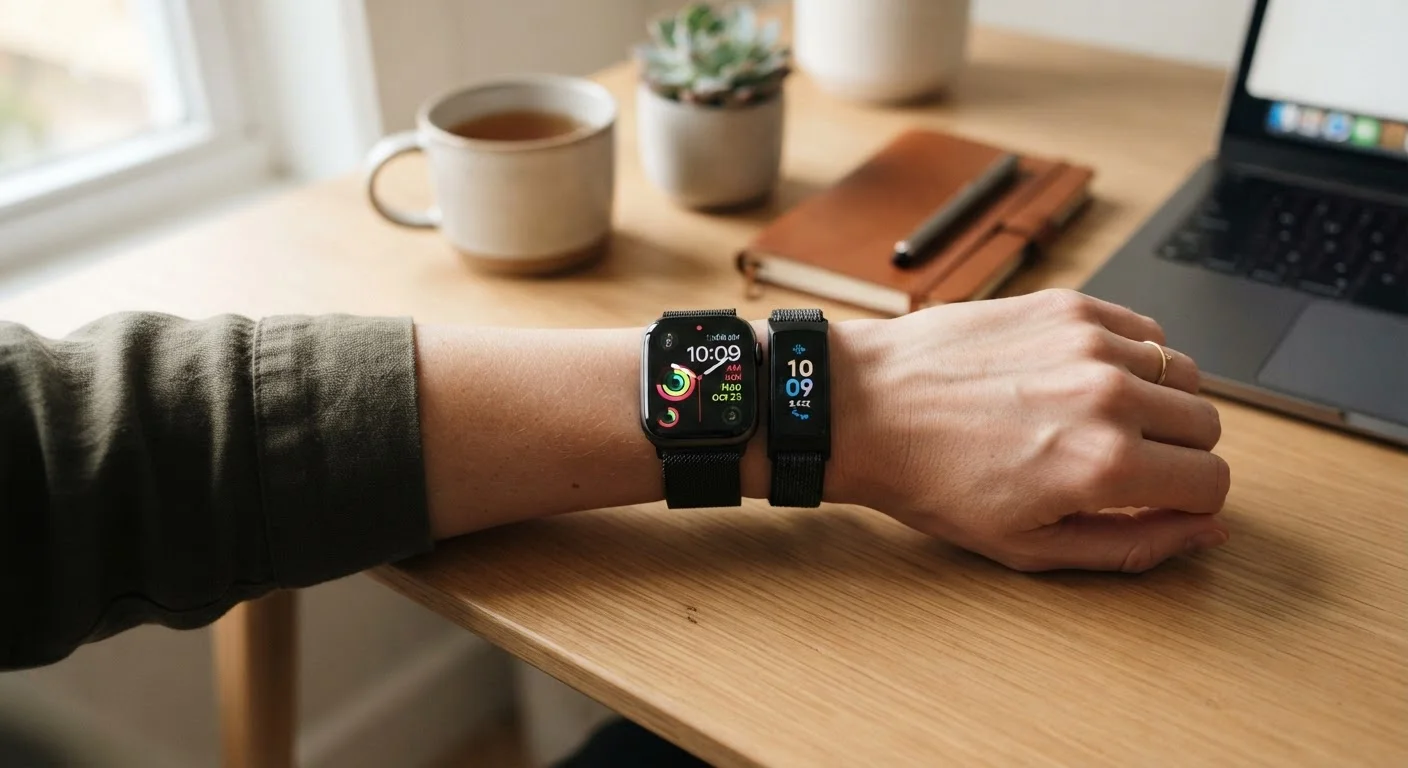
Photo: InfoAlly.net | Finding Info Made Easy editorial
Key Takeaways
- Smartwatches offer broader functionality including apps, payments, and phone notifications.
- Fitness trackers tend to have longer battery life and a lighter, less distracting design.
- Both devices measure core health metrics like steps, heart rate, and sleep, but depth varies.
- Your daily habits - not feature lists - should guide which type of device you choose.
- Wearable sensor data is informational, not medical-grade; always consult a healthcare professional for health concerns.
What Each Device Is Actually Designed to Do
At their core, smartwatches and fitness trackers serve different primary purposes - even though they increasingly share similar sensors. Understanding that design intent helps clarify which one will actually improve your day.
A smartwatch is essentially a compact extension of your smartphone. It runs apps, displays notifications, and can handle tasks like setting reminders or controlling music playback. Health tracking is a meaningful feature, but it sits alongside a broader toolkit aimed at keeping you connected and productive.
A fitness tracker is purpose-built around health and movement. Its interface is intentionally minimal - usually a small screen or no screen at all - because the focus is on recording data quietly in the background rather than demanding your attention. This focused design often translates to a lighter form factor and significantly longer battery life.
For a deeper look at how the underlying sensors in both device types actually work, see what wearable health sensors actually measure.
| Criterion | Smartwatch | Fitness Tracker |
|---|---|---|
| Primary purpose | Connectivity + health tracking | Health and activity tracking |
| Battery life | Typically 1-2 days | Typically 5-14 days |
| Notifications | Full phone notifications | Basic or none |
| App support | Broad third-party apps | Limited or companion app only |
| Form factor | Larger, heavier display | Slim, lightweight band |
| Sleep tracking comfort | Can be bulky overnight | Generally comfortable to wear |
| Health sensors | Heart rate, SpO2, GPS, ECG (varies) | Heart rate, SpO2, sleep (varies) |
| Price range | Generally higher | Generally lower |
Where They Overlap - and Where They Diverge
Both device types now commonly measure heart rate, step count, sleep stages, and calories burned. That overlap can make the choice feel confusing - but the differences show up in how the data is presented and what you do with it.
Smartwatches tend to offer richer on-device displays, letting you drill into data in real time. Fitness trackers often surface high-level summaries, nudging you toward goals without overwhelming you with granular numbers. If data immersion motivates you, a smartwatch's detailed dashboards may help. If you'd rather glance at a simple progress ring and move on, a tracker's stripped-back approach may suit you better.
~5-14 days
Typical fitness tracker battery life
Most fitness trackers last significantly longer per charge than smartwatches, which commonly require daily or every-other-day charging.
30%+
Wearable users who cite comfort as key factor
Industry surveys on wearable adoption consistently identify comfort and ease of use as top reasons people continue - or stop - using a device.
Battery life is one of the most practical divergence points. Many smartwatches require daily charging, while fitness trackers routinely last five to fourteen days per charge. If you want continuous sleep tracking - which requires wearing the device overnight - a tracker's endurance often has a clear edge. For more on what sleep data from wearables can and can't tell you, see wearables and sleep tracking.
Connectivity is another dividing line. Smartwatches typically pair tightly with your phone's ecosystem - receiving calls, texts, and app alerts. Fitness trackers offer basic notification mirroring at best, keeping the focus squarely on health data rather than digital communication.
Matching the Device to Your Daily Routine
The most useful question to ask isn't "which device has more features?" - it's "what does my actual day look like, and what role do I want a wearable to play in it?"
If your mornings involve juggling messages, calendar alerts, and to-do lists while also wanting a step count, a smartwatch earns its place as a wrist-based hub. How smartphones became the hub of the modern morning routine explores this connected-device mindset in more detail.
If your priority is building sustainable movement habits - walking more, sleeping better, monitoring resting heart rate over time - a fitness tracker's low-friction design may keep you more consistent. Research consistently suggests that ease of use and comfort are among the strongest predictors of whether people stick with wearables long term. See getting more out of a fitness tracker for practical guidance on interpreting tracker data meaningfully.
It's also worth noting that needs shift over time. Wearable usage patterns change across life stages - what serves a 25-year-old training for a 5K may differ from what helps a 60-year-old monitor cardiovascular trends.
A Note on Health Data Accuracy
This article is for informational purposes only. Wearable health data is not a substitute for professional medical advice, diagnosis, or treatment. Always consult a qualified healthcare professional with any health concerns.
The content on this site is for informational purposes only and is not a substitute for professional advice. Always consult a qualified professional for guidance specific to your situation.