
What Wearable Health Sensors Actually Measure - and What They Can't

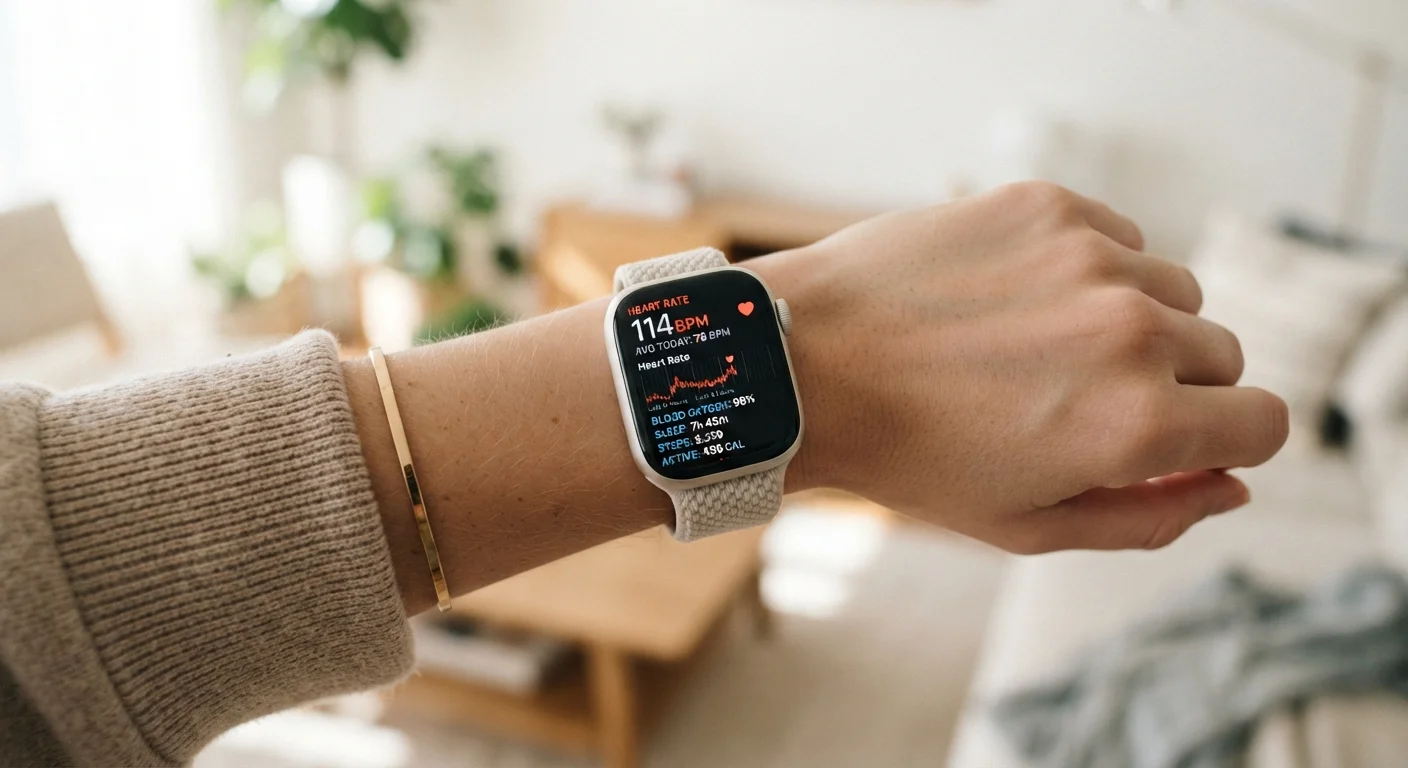
Photo: InfoAlly.net | Finding Info Made Easy editorial
Key Takeaways
- Wearable sensors estimate rather than clinically measure most health metrics.
- Heart rate tracking is the most reliable metric current consumer wearables offer.
- Blood oxygen (SpO2) readings on wearables are not substitutes for medical-grade pulse oximeters.
- Skin tone, device fit, and movement all affect sensor accuracy.
- Sleep tracking identifies patterns but cannot diagnose sleep disorders.
- Wearable data is most useful for spotting trends over time, not for single-moment diagnosis.
The Sensors Inside Your Wristband
Most consumer wearables rely on a small set of core technologies. The most common is photoplethysmography (PPG) - a method that shines green (and sometimes red or infrared) LED light into your skin and detects how much bounces back. Because blood absorbs light differently depending on how much is flowing through your vessels, the sensor can infer your heart rate and estimate blood oxygen saturation (SpO2).
Many devices also include an accelerometer, which measures movement and orientation to count steps, detect activity type, and contribute to sleep-stage estimates. Higher-end models add a dedicated ECG (ECG) electrode - typically a sensor on the back of the watch that you complete a circuit with by touching the crown - to capture a single-lead electrical snapshot of your heart rhythm.
Some wearables incorporate skin temperature sensors and even bioelectrical impedance sensors (used to estimate body composition). Each of these technologies works well within specific conditions and breaks down outside of them - which is why understanding the limits matters as much as understanding the features.
Consumer Devices vs. Medical Devices
What Wearables Measure Well
Resting heart rate is where consumer wearables shine. When you're sitting or sleeping, PPG sensors have a stable, well-lit environment and can produce readings that are generally within a few beats per minute of a medical reference. Over weeks and months, tracking resting heart rate trends can surface meaningful signals - such as gradual improvement from increased fitness or an unusual spike that might indicate illness or stress.
Step counting and general activity are also reasonably reliable. Accelerometers are mature technology, and while no algorithm perfectly distinguishes a walk from a hand gesture, daily step totals are broadly accurate enough to inform movement habits. See our comparison of smartwatches and fitness trackers for how devices differ in their activity-tracking focus.
ECG rhythm detection on supported devices can identify signs of atrial fibrillation (AFib) - an irregular heartbeat. This is one area where regulatory agencies in the U.S. have cleared certain wearable features, though the result is still a screening tool, not a diagnosis.
Track Trends, Not Single Readings
Where the Limits Are Real
SpO2 readings are perhaps the most misunderstood metric on a consumer wearable. Devices that measure blood oxygen saturation using red and infrared light can be thrown off by motion, poor fit, cold skin, nail polish, and - importantly - skin pigmentation. Research has documented that PPG sensors can be systematically less accurate on darker skin tones, a gap the industry is working to close but has not yet fully resolved.
Calorie burn estimates carry significant uncertainty. Wearables use algorithms combining movement data, heart rate, and personal parameters like age and weight. Studies have found error rates that can range widely depending on the activity type and individual physiology. Use these numbers to track relative effort over time, not as a precise accounting of energy expenditure.
Sleep tracking can show you broad patterns - roughly how long you slept and whether your rest was fragmented - but it cannot replicate what a clinical sleep study measures. For a deeper look at what sleep data from wearables actually tells you, see our article on wearables and sleep data.
Wearable usage patterns also shift with age and health context. Our piece on wearables across life stages explores how different users relate to these metrics differently.
~3 bpm
Typical resting heart rate error margin
Multiple independent studies have found consumer PPG sensors achieve roughly this level of accuracy under resting conditions, though accuracy declines during vigorous exercise.
15-40%
Possible calorie estimate error range
Research published in peer-reviewed journals has documented this range of error in wearable calorie expenditure estimates, depending on activity type and individual factors.
1 lead
ECG channels in consumer wearables
Consumer wearable ECGs capture a single electrical lead, compared with the 12-lead ECGs used in clinical settings, limiting what arrhythmias they can detect.
Using Wearable Data Wisely
The most productive mindset for wearable health data is trend awareness, not clinical certainty. If your resting heart rate climbs 10 beats per minute over two weeks with no change in lifestyle, that is worth noting and possibly discussing with a doctor. If a single reading seems unusual, context matters more than the number itself.
Device fit and placement significantly affect readings. A loose band, a band worn too close to the wrist bone, or one that shifts during exercise can all degrade sensor contact and skew results. Wearing the device snugly - but not uncomfortably - and positioning it a finger's width above the wrist bone generally improves accuracy.
Wearables are tools for informed awareness, not self-diagnosis. They work best alongside, not instead of, professional healthcare. If data from your device raises a concern - an irregular rhythm alert, a pattern of poor sleep, an unexpected spike in resting heart rate - treat it as a prompt to have a conversation with a qualified healthcare professional, not a conclusion on its own.
For an honest look at the day-to-day experience of wearing these devices, including where they genuinely help and where they create friction, see our article on living with a wearable.
This article is for informational and educational purposes only and is not medical advice. Always consult a qualified healthcare professional for any health concerns or before making decisions based on wearable health data.
Frequently Asked Questions
The content on this site is for informational purposes only and is not a substitute for professional advice. Always consult a qualified professional for guidance specific to your situation.