
Wearables Across Life Stages: How Usage Patterns Shift from Youth to Later Life

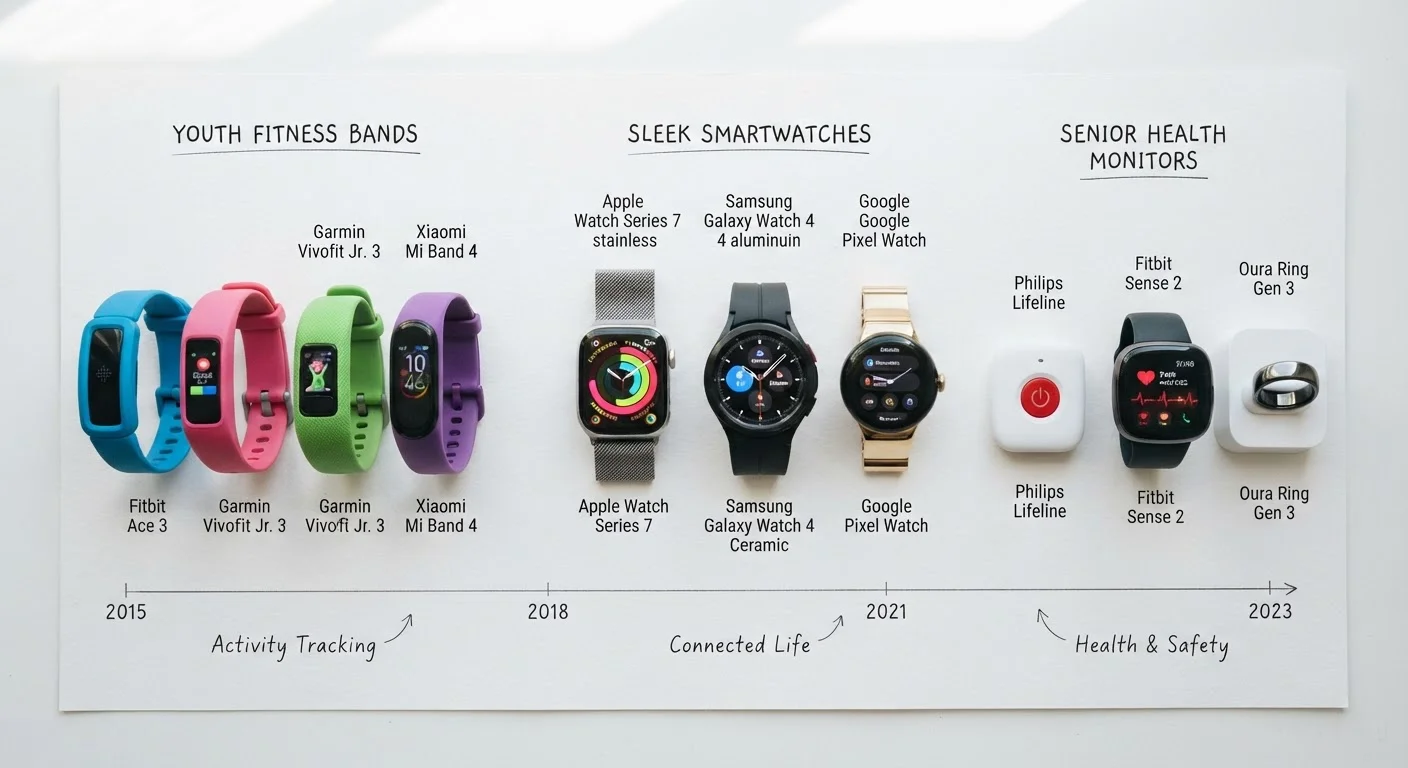
Photo: InfoAlly.net | Finding Info Made Easy editorial
Key Takeaways
- Younger users typically prioritize performance metrics like pace, calories, and workout streaks.
- Adults in midlife often shift toward stress tracking, sleep quality, and work-life balance signals.
- Older adults increasingly use wearables for passive health monitoring, including heart rate and fall detection.
- Comfort, simplicity, and battery life tend to become more important than feature count as users age.
- No single wearable design fits all life stages equally well - needs genuinely differ.
Youth and Early Adulthood: Performance and Social Motivation
For teenagers and young adults, wearables often function as performance tools and social objects simultaneously. The appeal tends to center on visible metrics - step counts, workout durations, calories burned - that can be shared with friends or compared through app leaderboards. Competition features and achievement badges are particularly effective engagement drivers at this stage.
Sports performance tracking is a natural fit here. Younger users engaged in team sports or recreational running often want detailed pace data, heart rate zones, and recovery estimates. The focus is largely on optimizing output rather than monitoring health risks.
However, this stage also carries a caution worth noting. Using a fitness tracker thoughtfully matters especially for younger users, who are more susceptible to becoming overly fixated on hitting numeric targets at the expense of intuitive, enjoyable movement.
Encourage Intentional Use Over Metric Chasing
Midlife: From Performance to Balance and Stress Awareness
As responsibilities accumulate in midlife - careers, families, caregiving - the wearable use case shifts noticeably. Raw performance metrics become less central. Instead, features that illuminate how stress, sleep, and recovery interact tend to rise in value.
Heart rate variability (HRV), a measure of subtle variation between heartbeats, is often cited as a useful indicator of recovery and stress load. Many midlife users begin paying closer attention to sleep quality data and resting heart rate trends rather than workout statistics. The limitations of sleep tracking data are worth understanding before drawing firm conclusions from nightly scores, however.
Notification management also becomes a more deliberate concern. A wearable that buzzes constantly can add to the cognitive load of a busy adult life rather than reducing it. Users at this stage often benefit from customizing alerts carefully.
~30%
U.S. adults who own a smartwatch or fitness tracker
According to Pew Research Center data, roughly three in ten American adults reported owning a smartwatch or fitness tracker, with ownership varying significantly by age group.
Highest among 30-49
Age group with greatest wearable ownership
Pew Research Center found that adults aged 30-49 showed the highest rates of smartwatch and fitness tracker ownership among U.S. age groups surveyed.
Later Life: Passive Monitoring, Safety, and Simplicity
For adults in their 60s and beyond, the most valued wearable capabilities tend to be those that work quietly in the background. Fall detection - which can automatically signal an emergency if a serious fall is detected - is frequently cited as a compelling reason for adoption in this group. Irregular heart rhythm notifications are similarly valued as a prompt to seek medical evaluation, though they are not diagnostic tools.
Ease of use and reliability become paramount. A device with a cluttered interface, short battery life, or complicated setup is a real barrier. Many older adults prefer a wearable that a family member or caregiver can help configure once, then largely runs itself.
It's important to frame these tools correctly: consumer wearables are not medical devices. They can surface patterns and prompt conversations with a doctor, but they cannot replace clinical assessment. For anyone managing a chronic condition, a healthcare provider should guide how to interpret and act on wearable data.
Wearables Are Not Medical Devices
For a broader view of how wearables fit into daily routines at any age, see our complete overview of phones and wearables in modern life.
What Changes - and What Stays the Same
Across all life stages, a few principles hold steady. Wearables work best when they fit naturally into existing routines rather than demanding that routines adapt to them. Comfort matters at every age - a device that feels unpleasant to wear gets left on the nightstand. And the most useful wearable is one whose data the user actually engages with meaningfully.
What shifts is the priority hierarchy. Performance and social features dominate early. Balance, recovery, and stress awareness rise in midlife. Passive safety and health monitoring become primary later on. Understanding where you or a family member sits in that arc can help clarify which features genuinely deserve attention - and which are simply marketing noise.
Choosing between a smartwatch and a fitness tracker is one practical decision shaped heavily by life stage, since the two device types serve somewhat different priorities.
Frequently Asked Questions
The content on this site is for informational purposes only and is not a substitute for professional advice. Always consult a qualified professional for guidance specific to your situation.