
Wearables and Sleep: What the Data Shows - and What It Doesn't

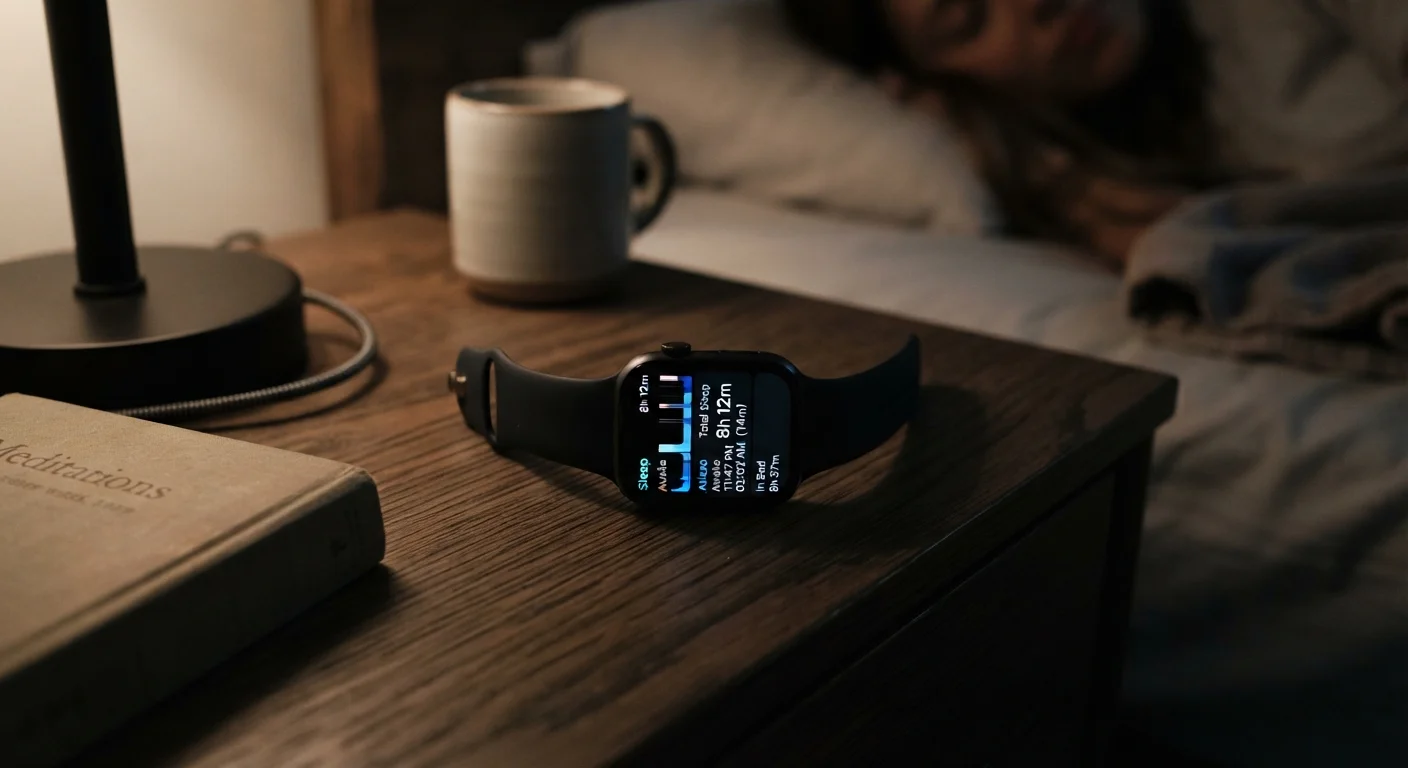
Photo: InfoAlly.net | Finding Info Made Easy editorial
Key Takeaways
- Wearables estimate sleep stages using movement and heart rate, not brain activity measurements.
- Consumer sleep trackers can raise awareness of patterns but are not clinical diagnostic tools.
- Over-reliance on sleep scores can sometimes increase anxiety rather than improve rest.
- Tracking trends over weeks is more useful than fixating on any single night's data.
- A healthcare provider should always be consulted for persistent sleep concerns.
Surfaces long-term sleep pattern trends
Weeks of data can reveal consistent correlations - like how caffeine intake or evening exercise affects your rest - that are hard to notice without tracking.
Estimates total sleep duration reasonably well
Research suggests consumer trackers are fairly reliable at measuring overall sleep duration, which is one of the most consequential sleep variables for daily function.
Encourages awareness of sleep habits
Seeing overnight data regularly prompts many users to prioritize consistent bedtimes and wind-down routines, which are foundational to better sleep hygiene.
Captures resting heart rate during sleep
Overnight resting heart rate and heart rate variability data can act as useful indicators of recovery and general cardiovascular trends over time.
Sleep-stage estimates are often inaccurate
Multiple studies comparing wearables to clinical polysomnography have found that stage-level data - deep sleep, REM, light sleep - can be significantly miscategorized by consumer devices.
Cannot replace clinical sleep assessment
Conditions like sleep apnea, restless leg syndrome, or narcolepsy require medical-grade testing that wearables are fundamentally not designed or validated to detect.
Score fixation can worsen sleep quality
Researchers have identified orthosomnia - anxiety driven by obsessive monitoring of sleep scores - as a real risk, where the act of tracking paradoxically disrupts the sleep it aims to improve.
Algorithms vary widely across devices
Each manufacturer uses proprietary algorithms trained on different datasets, so identical sleep can produce different scores on different devices, making cross-device comparison unreliable.
Wear comfort can itself disturb sleep
Some users find wearing a device on the wrist overnight uncomfortable, particularly during warmer months or for those sensitive to light or haptic notifications.
How Wearables Track Sleep
Fitness trackers and smartwatches estimate sleep primarily through two signals: accelerometry (detecting body movement) and photoplethysmography, or PPG - the optical sensor that reads heart rate by shining light through the skin. Devices use algorithms to infer when you fall asleep, when you wake, and which sleep stage you're in based on changes in movement and heart rate variability.
This is a fundamentally different approach from clinical sleep studies, called polysomnography (PSG), which measure brain electrical activity via EEG electrodes, eye movement, and muscle tone simultaneously. Consumer wearables have no way to measure brain activity directly. Instead, they model sleep stages statistically, using population-level data to make educated inferences about your individual night.
For a deeper look at what these sensors are actually doing under the hood, see what wearable health sensors actually measure.
What the Data Does Well
Surfaces long-term sleep pattern trends
Weeks of data can reveal consistent correlations - like how caffeine intake or evening exercise affects your rest - that are hard to notice without tracking.
Estimates total sleep duration reasonably well
Research suggests consumer trackers are fairly reliable at measuring overall sleep duration, which is one of the most consequential sleep variables for daily function.
Encourages awareness of sleep habits
Seeing overnight data regularly prompts many users to prioritize consistent bedtimes and wind-down routines, which are foundational to better sleep hygiene.
Captures resting heart rate during sleep
Overnight resting heart rate and heart rate variability data can act as useful indicators of recovery and general cardiovascular trends over time.
The real value of wearable sleep data tends to emerge over time. A single night's readout is noisy and imprecise, but a month of consistent data can surface meaningful patterns - like reliably shorter sleep after late evenings, or consistently lower heart rate on days you exercise. That kind of longitudinal self-awareness is genuinely difficult to achieve without some form of tracking.
Research published in peer-reviewed journals has found that consumer-grade sleep trackers can broadly distinguish sleep from wakefulness with reasonable accuracy, and that they tend to perform acceptably when estimating total sleep duration. That's a useful starting point, even if the stage-level detail is less reliable.
Where the Data Falls Short
Sleep-stage estimates are often inaccurate
Multiple studies comparing wearables to clinical polysomnography have found that stage-level data - deep sleep, REM, light sleep - can be significantly miscategorized by consumer devices.
Cannot replace clinical sleep assessment
Conditions like sleep apnea, restless leg syndrome, or narcolepsy require medical-grade testing that wearables are fundamentally not designed or validated to detect.
Score fixation can worsen sleep quality
Researchers have identified orthosomnia - anxiety driven by obsessive monitoring of sleep scores - as a real risk, where the act of tracking paradoxically disrupts the sleep it aims to improve.
Algorithms vary widely across devices
Each manufacturer uses proprietary algorithms trained on different datasets, so identical sleep can produce different scores on different devices, making cross-device comparison unreliable.
Wear comfort can itself disturb sleep
Some users find wearing a device on the wrist overnight uncomfortable, particularly during warmer months or for those sensitive to light or haptic notifications.
The most significant limitation is sleep-stage accuracy. Studies comparing wearable data to PSG have found that devices often overestimate deep sleep and misclassify lighter stages. If your tracker says you got two hours of deep sleep, it's reporting a model's best guess - not a verified measurement.
There's also the issue of orthosomnia - a term researchers have used to describe anxiety that develops from excessive focus on sleep tracker data. When people become preoccupied with achieving a perfect sleep score, that preoccupation itself can disrupt sleep quality. The tool intended to help can inadvertently become a source of stress.
Sleep Tracking Is Not a Diagnosis
For a grounded perspective on using wearables without letting the numbers take over, getting more from a fitness tracker without obsessing offers practical framing.
Using Sleep Data Wisely
The most productive way to use wearable sleep data is as a directional signal rather than a definitive verdict. Focus on trends across several weeks - are you generally getting enough hours? Do certain behaviors correlate with better or worse nights? Those patterns are more informative than any individual score.
Avoid adjusting medication, supplements, or major lifestyle routines based solely on tracker data. If you're experiencing persistent fatigue, difficulty falling asleep, or suspect a condition like sleep apnea, a wearable reading is not a substitute for evaluation by a healthcare professional. The Mind & Sleep hub covers evidence-based approaches to restorative sleep that go well beyond what any device can measure.
~78%
Wakefulness detection accuracy (approximate)
Studies published in journals such as Sleep Medicine Reviews suggest consumer trackers correctly identify wakefulness versus sleep roughly 78% of the time on average, with wide variation by device.
~50%
Deep sleep stage accuracy
Research comparing wearable output to polysomnography has found deep-sleep stage identification can be correct only around half the time, highlighting significant classification uncertainty.
Sleep needs and tracking habits also shift across life stages - something worth keeping in mind as you interpret your data. How wearable usage shifts across life stages explores this in detail.
This article is for general informational purposes only and does not constitute medical advice. For concerns about sleep health or persistent sleep difficulties, please consult a qualified healthcare professional.
The content on this site is for informational purposes only and is not a substitute for professional advice. Always consult a qualified professional for guidance specific to your situation.