
Physical Activity Terms Everyone Should Know: A Plain-Language Reference

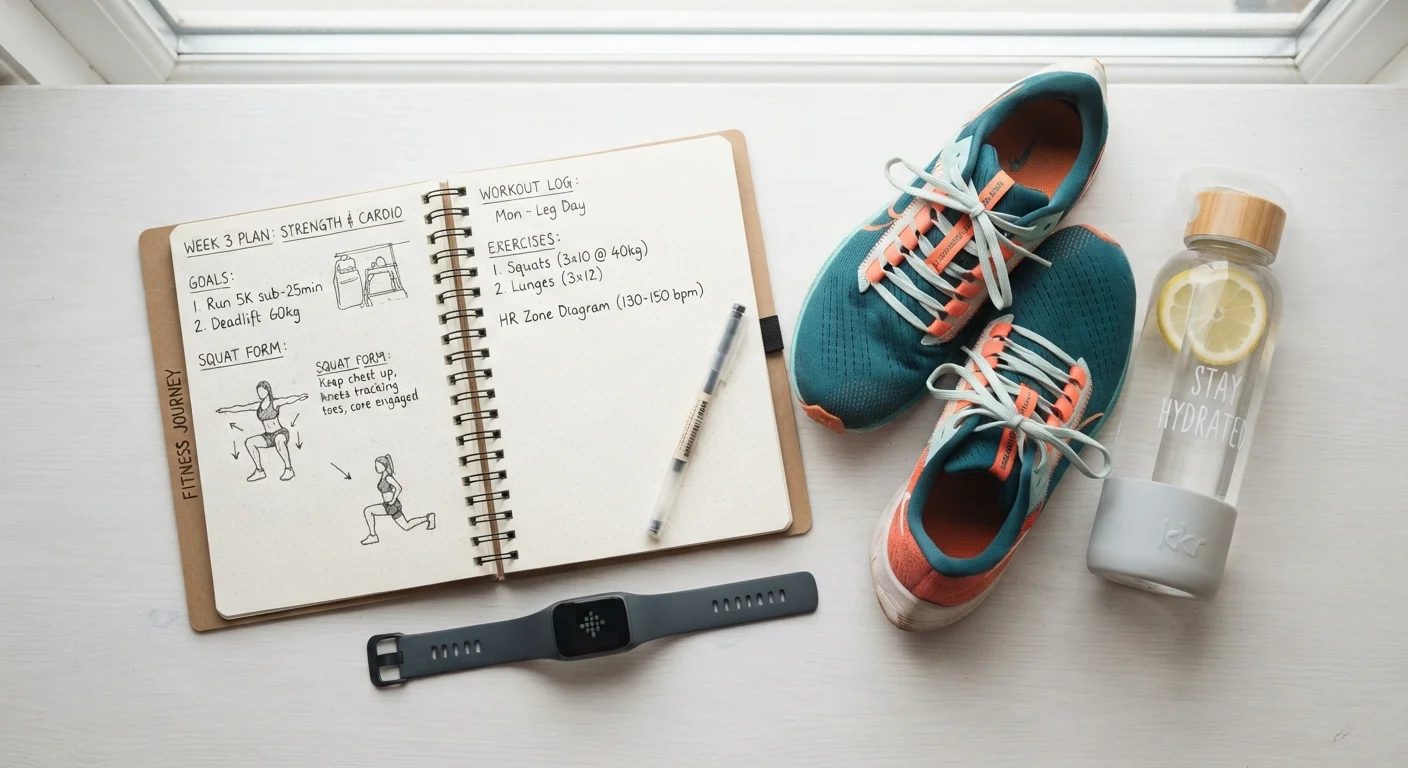
Photo: InfoAlly.net | Finding Info Made Easy editorial
Why Fitness Jargon Matters
Walk into a gym, browse a workout app, or flip through a fitness magazine, and you'll encounter a wall of unfamiliar terms: HIIT, RPE, VO2 max, periodization. That vocabulary can make exercise feel like an exclusive club - one you need a membership card just to understand.
It doesn't have to be that way. Knowing what these terms actually mean helps you follow workout instructions accurately, communicate with trainers, and evaluate whether a fitness plan suits your needs. This plain-language reference covers the terms you're most likely to encounter, from basic movement concepts to performance measures.
If you've ever wondered whether fitness culture itself is part of what's holding you back, our companion piece examines common fitness myths that discourage people before they even begin.
Repetition (Rep)
One complete performance of an exercise movement - for example, one squat or one bicep curl. Reps are usually grouped into sets.
Set
A group of consecutive repetitions performed without rest. A typical instruction might read '3 sets of 10 reps,' meaning you perform 10 reps, rest, then repeat twice more.
HIIT
High-Intensity Interval Training. A workout structure alternating short bursts of intense effort with brief recovery periods. The ratio of work to rest varies by protocol.
RPE
Rate of Perceived Exertion. A self-reported scale - commonly 1 to 10 or 6 to 20 - used to gauge how hard an activity feels to the person doing it, independent of heart rate or speed.
VO2 Max
The maximum volume of oxygen your body can use during intense exercise. It's a measure of cardiorespiratory fitness often cited in endurance contexts, measured in milliliters of oxygen per kilogram of body weight per minute.
Aerobic Exercise
Physical activity that relies on oxygen to sustain energy production over a longer duration. Brisk walking, cycling, and swimming are common examples.
Anaerobic Exercise
High-intensity activity that outpaces the body's ability to supply oxygen, relying on stored energy instead. Sprinting and heavy resistance training are typical examples.
Progressive Overload
The principle of gradually increasing the demand placed on the body - through more weight, more reps, or less rest - to continue building strength or endurance over time.
Recovery
The rest period between training sessions that allows muscles and connective tissue to repair and adapt. Adequate recovery is considered a core component of any effective training plan.
MET
Metabolic Equivalent of Task. A unit expressing the energy cost of an activity relative to sitting at rest. A MET of 1 is resting; vigorous activities typically register above 6 METs.
Periodization
A planned variation in training intensity, volume, or focus over time - organized into phases - to optimize performance and reduce injury risk.
Functional Movement
Exercises that mimic or directly support everyday physical tasks, such as squatting, hinging, pushing, or pulling, with the goal of improving real-world movement quality.
Key Terms at a Glance
The quick-reference card below captures the most commonly cited figures and frameworks you'll see in fitness guidance. These are population-level benchmarks from public health organizations - not personal targets. Always discuss individual goals with a qualified health professional.
| Weekly moderate-intensity activity target (adults) | 150-300 minutes (U.S. Department of Health and Human Services Physical Activity Guidelines for Americans, 2nd edition) |
| Weekly vigorous-intensity activity target (adults) | 75-150 minutes (U.S. Department of Health and Human Services Physical Activity Guidelines for Americans, 2nd edition) |
| Recommended muscle-strengthening days per week | 2 or more (U.S. Department of Health and Human Services Physical Activity Guidelines for Americans, 2nd edition) |
| Common RPE scale range | 1-10 (or 6-20 on Borg scale) (Borg, G. (1982). Psychophysical bases of perceived exertion. Medicine & Science in Sports & Exercise.) |
| MET value of vigorous activity threshold | ≥ 6 METs (Ainsworth et al., Compendium of Physical Activities) |
| Minimum bout length recognized for moderate activity | Any duration counts (2018 Physical Activity Guidelines Advisory Committee Scientific Report) |
For context, many everyday activities - gardening, brisk walking, even active housework - already count toward these benchmarks. Our article on everyday activities that count as exercise breaks down which habits contribute meaningfully to your overall movement.
These Are Reference Points, Not Rules
Building Your Fitness Vocabulary
Understanding these terms is the foundation, not the finish line. Once you can read a workout plan with confidence, you're better positioned to adapt routines to your life, track genuine progress, and avoid approaches that don't fit your current fitness level.
If you're thinking beyond the basics, sustainable fitness habits explores the structural principles - variety, realistic pacing, and consistency - that support long-term active living. And for those curious about the movement quality side of fitness, our piece on mobility vs. flexibility clarifies a distinction that often gets lost in general fitness talk.
This article is for general informational and educational purposes only and is not a substitute for personalized medical or fitness advice. Consult a qualified healthcare professional before starting or changing any exercise program, particularly if you have existing health conditions.
The content on this site is for informational purposes only and is not a substitute for professional advice. Always consult a qualified professional for guidance specific to your situation.