
Chronic Sleep Deprivation vs. Occasional Poor Sleep: Why the Difference Matters

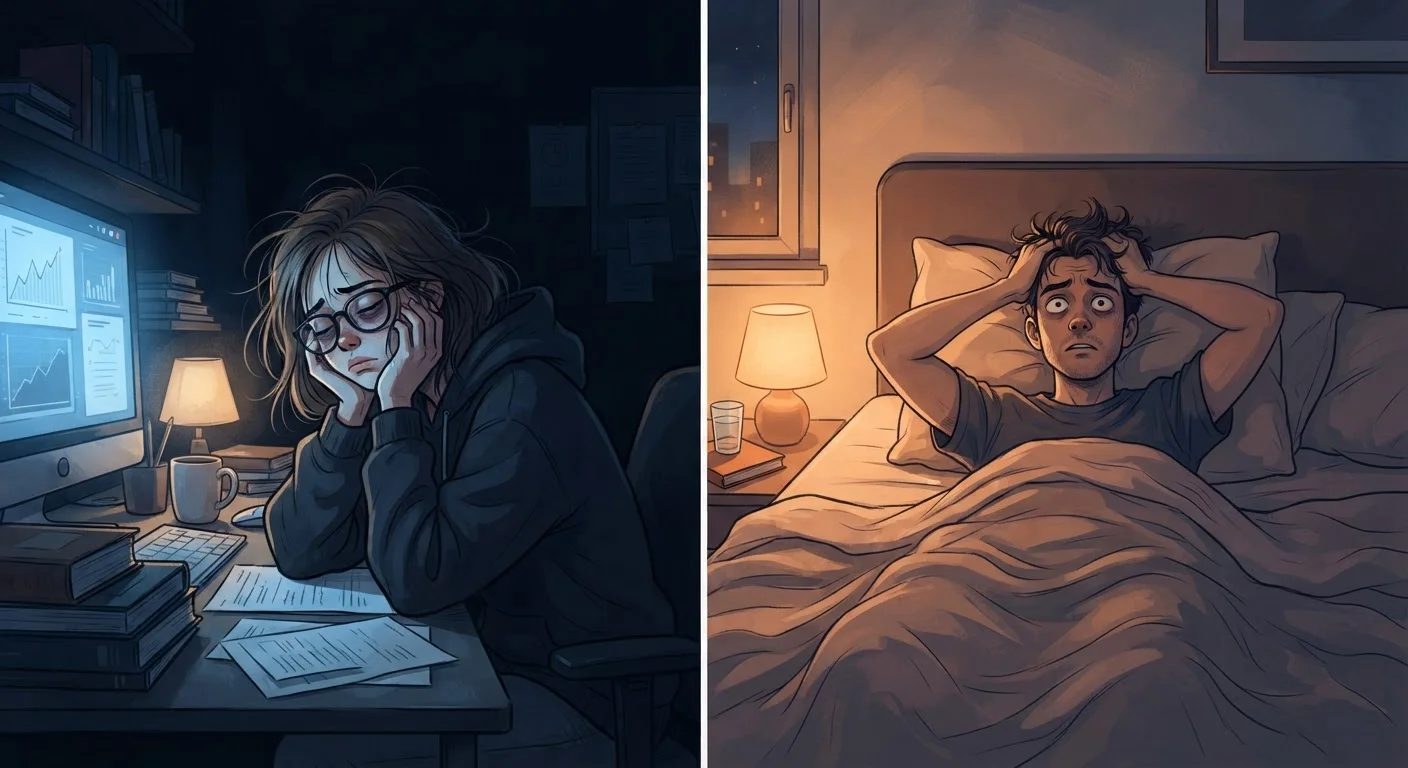
Photo: InfoAlly.net | Finding Info Made Easy editorial
Key Takeaways
- Chronic sleep deprivation accumulates over time and is linked to serious physical and mental health consequences.
- A single poor night is generally recoverable, with most cognitive effects resolving after normal sleep resumes.
- The body's stress-response systems react differently to one night of poor sleep versus sustained deprivation.
- Consistent sleep scheduling may reduce the impact of occasional disruptions on overall sleep quality.
- Anyone experiencing persistent sleep difficulties should consult a qualified healthcare professional.
How Each Pattern Is Defined
Sleep researchers generally define chronic sleep deprivation as consistently obtaining insufficient sleep - usually considered to be fewer than seven hours per night for most adults - over an extended period, often several weeks or longer. The key word is consistently: the deficit accumulates in what scientists sometimes call "sleep debt," a backlog that the body cannot fully erase with a single recovery night.
Occasional poor sleep, by contrast, refers to isolated nights of fragmented rest, difficulty falling asleep, or early waking - typically tied to identifiable short-term factors such as travel, stress, caffeine, or an unfamiliar environment. Most adults will experience this at some point. The disruption is real, but it is self-limiting once the contributing circumstance passes.
The distinction matters clinically because the body's response to one versus the other differs significantly. Sleep and mental health are deeply intertwined, and whether the disruption is acute or chronic determines how profoundly that relationship is affected.
Head-to-Head: What the Research Generally Shows
The table below contrasts how each sleep pattern tends to affect key areas of health, based on findings from sleep science research. These are general population-level observations, not individual predictions.
| Criterion | Chronic Sleep Deprivation | Occasional Poor Sleep |
|---|---|---|
| Duration | Weeks to months of insufficient sleep | One to a few isolated nights |
| Cognitive impact | Sustained attention and memory deficits | Temporary focus and reaction-time dips |
| Mood effects | Elevated risk of depression and anxiety | Short-term irritability and low mood |
| Hormonal changes | Disruption to cortisol, insulin, and appetite hormones | Mild, generally transient stress-hormone spike |
| Immune function | Measurably reduced immune response over time | Minimal impact on immune system overall |
| Recovery timeline | Days to weeks; some effects may linger | Usually one or two recovery nights |
| Clinical concern level | Warrants professional evaluation | Usually manageable with routine adjustments |
One important nuance: individual responses vary considerably. Genetics, age, health status, and lifestyle factors all influence how resilient a given person is to sleep loss. As noted in sleep needs across the lifespan, older adults and adolescents may be especially sensitive to disruption.
Mental Health: A Key Differentiator
Perhaps the most striking contrast between the two patterns emerges in mental health outcomes. After a single poor night, most people notice irritability, reduced patience, and mild difficulty concentrating. These effects are real and sometimes significant in the short term, but they are generally temporary.
Chronic deprivation operates on a different level. Research consistently associates long-term insufficient sleep with elevated risk for depression, anxiety disorders, and emotional dysregulation. The mechanisms involve disruption to the prefrontal cortex - the brain region responsible for emotional regulation and executive function - as well as changes in how the amygdala (the brain's threat-response center) reacts to stressors.
When Occasional Becomes Chronic
It is also worth recognising that the relationship runs both ways: mental health conditions frequently disrupt sleep, which can deepen the original problem. This bidirectional dynamic makes addressing chronic sleep loss particularly important for overall wellbeing. Those curious about the underlying biology can explore why sleep and mental health are inseparable.
Recovery: What It Looks Like for Each Pattern
Recovery from occasional poor sleep is typically straightforward. Returning to a regular sleep schedule - ideally including a consistent wake time - usually restores mood and cognitive function within one or two nights. Keeping a stable wake time appears to be particularly effective for regulating the body's internal clock after short disruptions.
Recovery from chronic deprivation is more complex. Studies suggest that while some cognitive performance does improve after extended recovery sleep, certain measures - including sustained attention and emotional stability - may take longer to fully normalize. Some research raises questions about whether all effects of prolonged sleep debt fully reverse, though the science here is still developing and individual outcomes vary.
Habits that seem to help - or hinder - recovery are worth examining carefully. Some common assumptions about "catching up" on weekends, for instance, are more complicated than they appear. Several popular sleep beliefs deserve scrutiny.
For anyone finding that poor sleep is a recurring pattern rather than an occasional event, it is worth reviewing evening habits that may be quietly undermining sleep quality as a practical starting point - then speaking with a healthcare provider if the problem persists.
This article is for general informational and educational purposes only and is not a substitute for professional medical advice, diagnosis, or treatment. If you are experiencing persistent sleep difficulties, please consult a qualified healthcare professional.
The content on this site is for informational purposes only and is not a substitute for professional advice. Always consult a qualified professional for guidance specific to your situation.