
Whole Foods vs Processed Foods: What the Difference Really Means for Your Diet

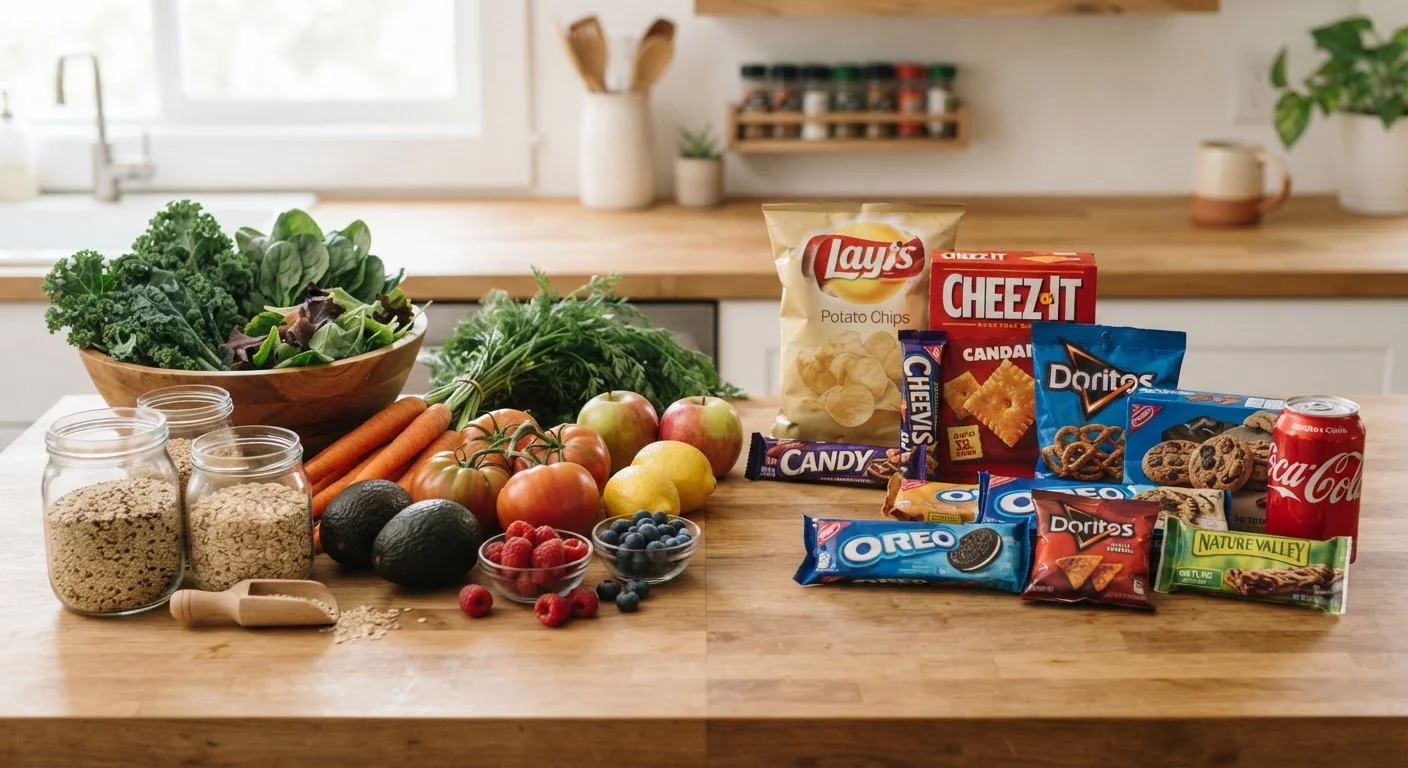
Photo: InfoAlly.net | Finding Info Made Easy editorial
Key Takeaways
- Processing exists on a spectrum - not all processed foods are nutritionally equivalent or harmful.
- Whole foods generally deliver more fiber, vitamins, and minerals with fewer additives.
- Ultra-processed foods, a specific category, are linked by research to poorer health outcomes.
- Lightly processed foods like frozen vegetables or canned beans retain strong nutritional value.
- Building a diet around mostly whole foods while using processed options wisely is a practical approach.
- Reading nutrition labels is essential for evaluating any packaged food's true nutritional quality.
What 'Processing' Actually Means
The word processed gets used as shorthand for unhealthy, but in nutrition science it simply means any food that has been altered from its raw state. That definition covers an enormous range - from washing and cutting a cucumber to extruding a cheese-flavored corn snack. Not all processing carries the same nutritional consequence.
Researchers commonly use a classification system called NOVA, which groups foods into four categories based on the extent and purpose of processing. At one end sit unprocessed or minimally processed foods - fresh produce, plain meats, eggs, and dried legumes. In the middle are culinary ingredients (oils, flour, salt) and processed foods (canned tomatoes, cheese, smoked fish). At the far end are ultra-processed foods: industrially formulated products that typically contain additives, flavor enhancers, emulsifiers, and large amounts of added sugar, sodium, or refined fat.
Understanding where a food sits on this spectrum is more useful than a simple whole vs. processed binary. A can of chickpeas is technically processed, yet nutritionally it competes favorably with dried chickpeas cooked from scratch. A flavored breakfast pastry, by contrast, shares little nutritionally with the grains it was originally derived from.
The NOVA System Is a Research Tool, Not a Label
Nutritional Trade-Offs Side by Side
Whole foods - vegetables, fruits, whole grains, legumes, nuts, seeds, and minimally processed proteins - typically arrive with their fiber, micronutrients, and phytonutrients intact. The processing that elevates a grain into a refined product often strips away the bran and germ, removing fiber and B vitamins that must then be added back through fortification.
| Criterion | Whole Foods | Processed Foods |
|---|---|---|
| Fiber content | Naturally high in most varieties | Often reduced; may be added back |
| Added sugars | None naturally occurring | Variable; often high in ultra-processed |
| Sodium levels | Naturally low | Frequently elevated for preservation or flavor |
| Micronutrient retention | Largely intact | May be stripped then fortified |
| Convenience | Often requires preparation | Ready-to-eat or quick to prepare |
| Shelf life | Generally shorter | Extended by preservatives or packaging |
| Cost per serving | Variable; fresh produce can be higher | Often lower, especially in bulk |
| Additive content | None | Ranges from minimal to extensive |
Ultra-processed products frequently compensate for low palatability with salt, sugar, and fat in combinations rarely found in nature. Research published in journals including The BMJ and JAMA Internal Medicine has observed associations between high ultra-processed food consumption and elevated risks for cardiovascular disease, type 2 diabetes, and obesity - though researchers note these are associations in observational studies, not proven direct causation. For a deeper look at how well-studied dietary patterns prioritize whole-food foundations, see our overview of Mediterranean, DASH, and whole-diet approaches.
Where Processed Foods Can Still Fit
Convenience and cost are real factors in what people actually eat, and lightly processed foods fill genuine gaps. Frozen vegetables are harvested and frozen quickly, often preserving more nutrients than fresh produce that has traveled long distances. Canned beans provide affordable protein and fiber; plain yogurt and aged cheeses offer protein and calcium without excessive additives. These foods make a nutritious diet more achievable for many households.
The concern sharpens around ultra-processed products - items where the ingredient list reads more like a chemistry index than a recipe. When these foods displace whole or minimally processed options across most meals, the cumulative nutritional trade-off becomes significant. The goal is not eliminating processing entirely, but calibrating how much of your overall diet comes from each tier.
When evaluating packaged foods, reading a nutrition label carefully is one of the most practical skills you can develop. Front-of-pack claims like "natural" or "multigrain" are marketing language, not regulated nutritional standards. The ingredient list and nutrition facts panel tell the more complete story.
~57%
Share of US calories from ultra-processed foods
Research published in BMJ Open estimated that ultra-processed foods account for roughly 57% of total daily caloric intake among US adults.
2x+
Fiber content advantage of whole grains over refined
Whole grains typically contain more than twice the dietary fiber of their refined counterparts, according to USDA nutritional data comparisons.
4 groups
NOVA food classification tiers
The NOVA system, developed by researchers at the University of São Paulo, organizes all foods into four groups based on the degree and purpose of industrial processing.
Building a Practical Whole-Food-Forward Diet
Shifting toward more whole foods doesn't require an overhaul of every meal. A useful frame is to treat whole foods as the default and processed options as tools used with intention. Stock staples like dried or canned legumes, whole grains, frozen vegetables, and fresh produce. When reaching for packaged foods, look for short ingredient lists, modest sodium levels, and no added sugars as a first-pass check.
Snacking is often where ultra-processed foods make their biggest inroads into a diet. Understanding what makes a snack nutritionally worth it can help you identify choices that genuinely sustain energy rather than simply satisfying a habit. Similarly, pairing whole grains and legumes with other protein sources - including plant-based proteins like legumes, grains, and seeds - builds meals that are both nutritious and filling.
No single food choice defines a diet. Patterns matter more than individual decisions, and a diet that is predominantly whole-food-based leaves ample room for processed items used thoughtfully without undermining overall nutritional quality.
This article is for general informational and educational purposes only and does not constitute medical or dietary advice. Please consult a qualified healthcare professional or registered dietitian for guidance tailored to your individual health needs.
The content on this site is for informational purposes only and is not a substitute for professional advice. Always consult a qualified professional for guidance specific to your situation.