
Fixed vs. Variable Expenses: A Budgeter's Glossary

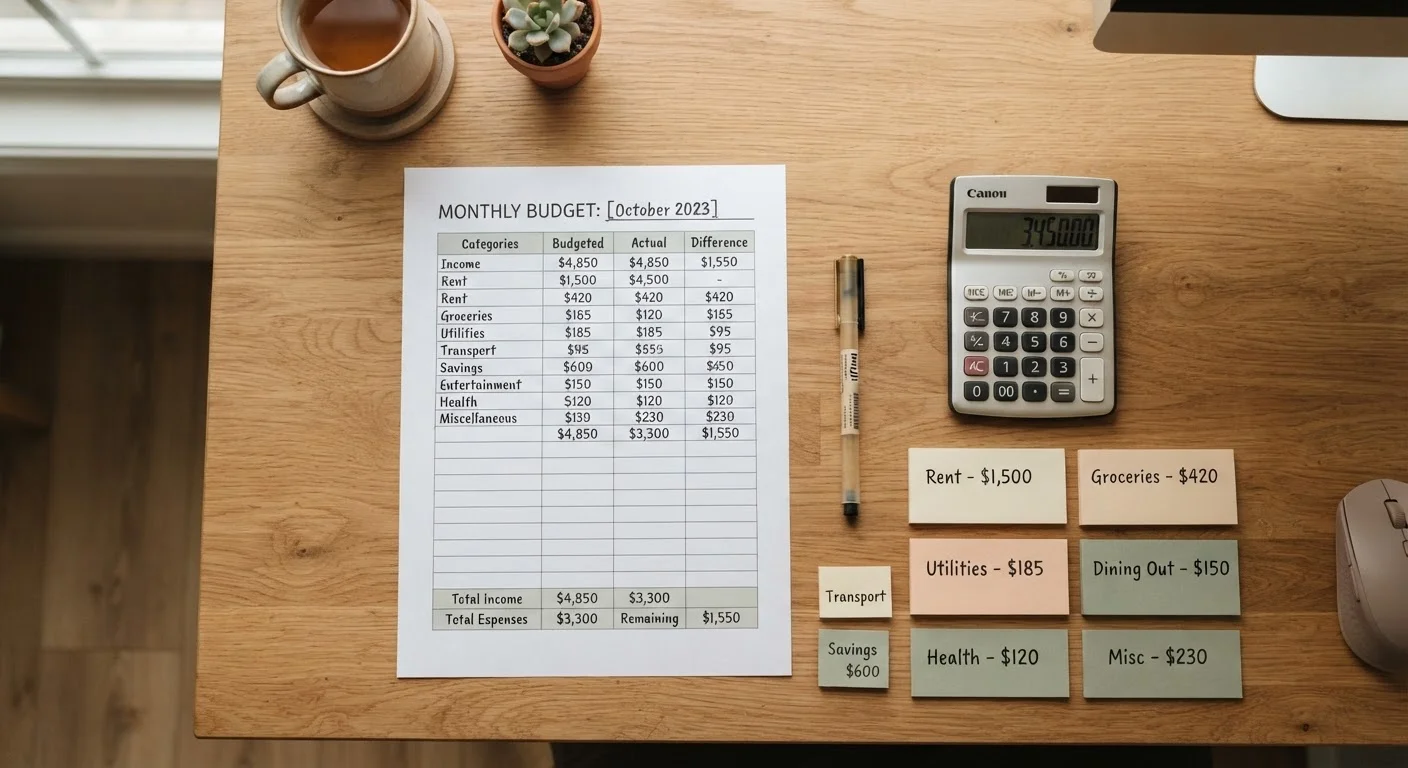
Photo: InfoAlly.net | Finding Info Made Easy editorial
Why Expense Categories Matter
Before you can build a budget that actually works, you need to understand what kind of spending you're dealing with. Not all expenses behave the same way - some hit your account like clockwork, others fluctuate month to month, and a few arrive without warning. Grouping your spending into clear categories makes it far easier to plan, spot problems, and adjust when life changes.
This glossary defines the core expense types used in personal budgeting, with real-life examples for each. Whether you're starting from scratch or refining an existing system, these definitions give you a shared language for talking about money. For a full introduction to building a budget, see Personal Budgeting from the Ground Up.
Fixed Expense
A recurring cost that stays the same amount each billing period, regardless of usage or behavior. Rent, mortgage payments, and fixed-rate loan installments are typical examples.
Variable Expense
A recurring cost whose amount changes from month to month based on usage, prices, or habits. Groceries, utilities, and gasoline are common variable expenses.
Discretionary Expense
Spending on wants rather than needs - items or services you choose to purchase but could reduce or cut without serious hardship. Entertainment and dining out are classic examples.
Irregular (Periodic) Expense
A predictable cost that does not occur every month, such as an annual insurance premium or vehicle registration fee. Planning for these requires dividing the expected annual cost across monthly savings.
Non-Discretionary Expense
Spending on essentials you cannot reasonably eliminate, such as housing, food, and basic utilities. Both fixed and variable expenses can be non-discretionary.
Budget Category
A labeled grouping used to organize and track spending, such as housing, transportation, or food. Categories help you see where your money goes and where adjustments are possible.
The Core Expense Types Defined
Most personal budgets sort spending into four broad types. Understanding how each category behaves tells you where you have flexibility - and where you don't.
| Fixed Expenses | Same amount every cycle |
| Variable Expenses | Recur but amount changes |
| Discretionary Expenses | Wants, not needs - reducible |
| Irregular Expenses | Predictable but infrequent |
| Best strategy for irregular costs | Divide annual total by 12; save monthly |
Fixed Expenses
Fixed expenses stay the same amount every billing cycle. Because they don't fluctuate, they're the easiest category to plan for. Examples: rent or mortgage payment, car loan installment, subscription streaming services, renters or homeowners insurance premium.
Variable Expenses
Variable expenses recur regularly but the amount changes from month to month. These are typically needs - you'll always spend something in this category, but the total depends on your behavior or circumstances. Examples: groceries, gasoline, utilities (electricity, water), and dining out. Because variable costs flex with your habits, they're also where most budgeters find the most room to adjust.
Discretionary Expenses
Discretionary spending covers wants rather than needs - purchases you choose to make but could reduce or eliminate without serious consequence. In practice, many variable expenses have both a need component (groceries) and a discretionary layer (premium brands, prepared meals). Examples: entertainment, hobbies, gym memberships beyond basic fitness needs, personal care upgrades, and gifts.
Irregular or Periodic Expenses
These expenses don't arrive every month but are entirely predictable if you plan ahead. Forgetting them is one of the most common reasons a budget feels like it fails. Examples: annual auto registration, semi-annual insurance premiums, holiday spending, car maintenance, and back-to-school supplies. The fix is straightforward: estimate the annual total, divide by 12, and set that amount aside each month in a dedicated savings bucket.
Managing debt payments often spans multiple categories - a minimum credit card payment behaves like a fixed expense, while the amount you choose to pay above that minimum is discretionary. For more on how credit fits into your overall picture, visit our Debt & Credit hub.
Putting the Categories to Work
Labeling your expenses isn't just an organizational exercise - it shapes how you respond to budget gaps. If money is tight, fixed expenses are largely off the table for quick cuts (renegotiating them takes time). Variable and discretionary spending is where you have immediate leverage.
Savings Can Behave Like a Fixed Expense
A simple three-column tracking sheet - fixed, variable, and irregular - gives you an instant snapshot of which parts of your budget are locked in and which are in your control. Once you've categorized a month or two of real spending, patterns emerge quickly.
After a few months, a monthly review helps you catch drift before it compounds. The Monthly Budget Review Checklist walks you through comparing planned versus actual spending by category. And if you've hesitated to budget at all, check out Budget Myths That Keep People from Starting - common misconceptions may be the only thing standing between you and a workable plan.
This article is for general informational and educational purposes only and does not constitute personalized financial advice. For guidance specific to your situation, consider consulting a qualified financial professional.
The content on this site is for informational purposes only and is not a substitute for professional advice. Always consult a qualified professional for guidance specific to your situation.