
Spreadsheet Budgeting vs. Budgeting Apps

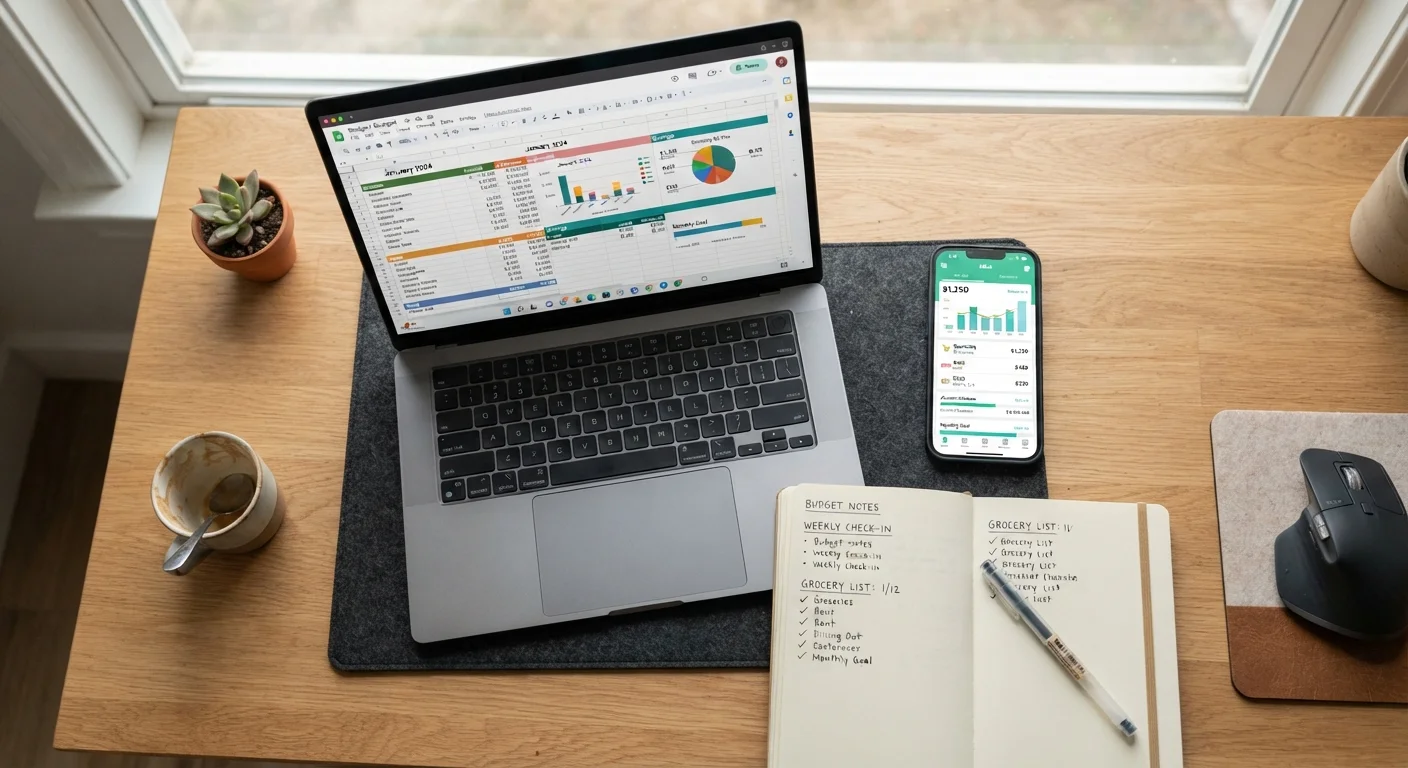
Photo: InfoAlly.net | Finding Info Made Easy editorial
Key Takeaways
- Spreadsheets offer total customization but require consistent manual upkeep to stay accurate.
- Budgeting apps automate transaction tracking but may require sharing financial account credentials.
- Neither method guarantees results - consistency and honest review matter more than the tool.
- Your choice should reflect your privacy preferences, technical comfort, and daily habits.
- Many people successfully combine both approaches depending on their financial complexity.
How Each Method Actually Works
Spreadsheet budgeting means building your own financial tracking system in tools like Google Sheets or Microsoft Excel. You manually enter income, set spending categories, and track expenses - either by logging each transaction yourself or importing a CSV from your bank. The budget is only as current as your last update.
Budgeting apps, by contrast, typically connect directly to your bank and credit card accounts using secure financial data aggregators. Once linked, they automatically categorize incoming transactions and display your spending against your set limits - often in real time. Setup takes minutes rather than hours, though initial category mapping may need some adjustment.
If you're newer to budgeting and want to understand the foundational concepts before choosing a tool, Personal Budgeting from the Ground Up is a useful place to start.
| Criterion | Spreadsheet Budgeting | Budgeting Apps |
|---|---|---|
| Setup time | Hours (build from scratch) | Minutes (guided onboarding) |
| Transaction tracking | Manual entry required | Automated via account sync |
| Customization | Unlimited - fully user-defined | Limited to app's framework |
| Data privacy | Stored in your own tools | Shared with third-party service |
| Cost | Free (if using free tools) | Free to paid subscription tiers |
| Collaboration | Possible but manual to coordinate | Often has built-in sharing features |
| Learning curve | Moderate (formula knowledge helps) | Low - guided and visual |
| Platform dependency | None - fully portable | Tied to app availability |
The Real Trade-Offs: Control, Privacy, and Effort
The most meaningful difference between these methods isn't technology - it's the ongoing time investment and your comfort with data sharing.
Spreadsheets demand discipline. Every transaction has to be entered, and if you skip a few days it becomes easy to fall behind. On the upside, your data stays exactly where you put it. There's no third-party platform holding your account information, which matters to many people.
Apps reduce daily friction significantly. Automated syncing means you can check your budget status in under a minute without any manual entry. The trade-off is that most apps require you to grant read access to your financial accounts via a data aggregator service - a consideration worth weighing carefully.
~1 in 3
Americans who follow a formal budget
Surveys by the National Foundation for Credit Counseling have consistently found that roughly one-third of U.S. adults maintain a detailed monthly budget.
Top reason
Why budgets fail: lack of consistency
Financial educators frequently cite irregular tracking - not poor planning - as the primary reason personal budgets break down over time.
Privacy aside, apps also introduce a dependency: if the service changes its pricing, shuts down, or alters its data-sharing agreements, your budgeting system could be disrupted. Spreadsheets, by comparison, don't disappear.
For those managing money with another person, Budgeting as a Household explores how different tools affect shared-finance dynamics.
Choosing the Right Fit - and Making It Stick
The most effective budget is the one you'll actually use consistently. A beautifully designed spreadsheet that gets updated once a month provides less insight than a simple app you check weekly.
Ask yourself a few honest questions: Do you enjoy working with data, or does it feel like a chore? Are you comfortable linking financial accounts to a third-party service? Do you need your budget to work seamlessly with another person?
No Tool Replaces the Review Habit
Some people split the difference: they use an app for day-to-day transaction visibility and a spreadsheet for monthly planning and goal tracking. This hybrid approach adds some complexity but captures benefits from both sides.
Whatever method you choose, pairing it with a regular review habit matters as much as the tool itself. The Monthly Budget Review Checklist can help you build that habit regardless of whether you're working in a spreadsheet or an app.
You might also consider how your budgeting method connects to broader spending habits. Habits that align spending with your values reinforce any budgeting system you put in place.
This article is for general informational and educational purposes only and does not constitute personalized financial advice. For guidance tailored to your individual situation, consider consulting a qualified financial professional.
The content on this site is for informational purposes only and is not a substitute for professional advice. Always consult a qualified professional for guidance specific to your situation.