
Dry Food vs. Wet Food: Weighing the Nutritional Trade-Offs for Cats and Dogs

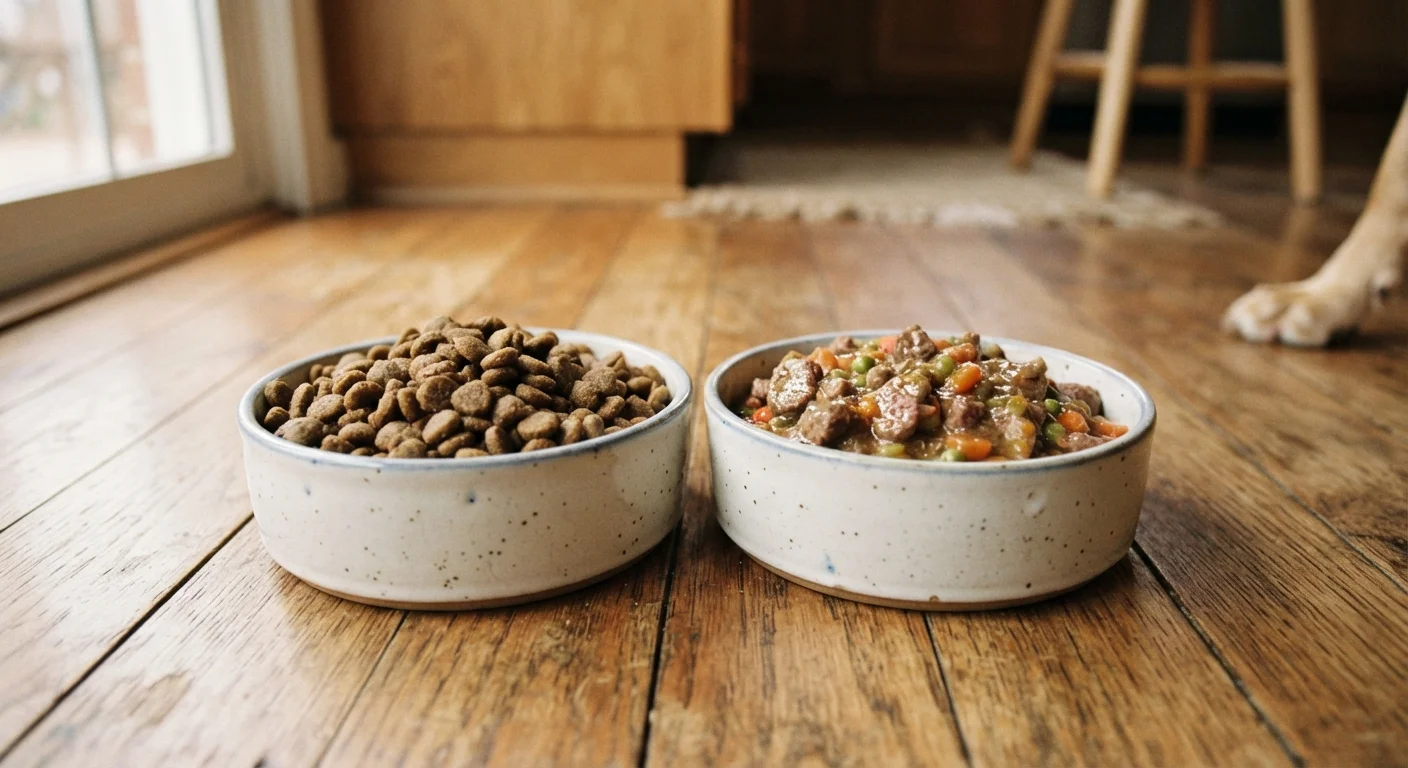
Photo: InfoAlly.net | Finding Info Made Easy editorial
Key Takeaways
- Wet food contains roughly 70-80% moisture, making it significantly more hydrating than kibble's 10% moisture content.
- Dry food is calorie-dense and cost-effective, but portion control is critical to preventing overfeeding.
- Neither format is universally superior - your pet's age, health status, and individual needs should guide the choice.
- Cats, as obligate carnivores with a low thirst drive, may particularly benefit from wet food's moisture content.
- Always consult your veterinarian before making major dietary changes, especially for pets with chronic conditions.
How Dry and Wet Foods Are Made - and Why It Matters
Kibble is produced through a process called extrusion: ingredients are mixed, cooked under high heat and pressure, then shaped and dried to a low-moisture final product. This process makes kibble shelf-stable for months and highly calorie-dense. Wet food, by contrast, is blended with water or broth, sealed in cans or pouches, and heat-sterilized - preserving nutrients while retaining substantial moisture.
These manufacturing differences directly affect the nutritional profile a pet receives. Dry food typically delivers more protein and fat per cup compared to an equivalent weight of wet food, simply because the water has been removed. Understanding this helps owners compare labels accurately. For a deeper look at interpreting those labels, reading pet food packaging is a skill worth developing.
| Criterion | Dry Food (Kibble) | Wet Food (Canned) |
|---|---|---|
| Moisture Content | 6-10% | 70-80% |
| Calorie Density | High per cup | Lower per equivalent weight |
| Shelf Life (unopened) | Months to over a year | 1-5 years (varies) |
| Cost per Calorie | Generally lower | Generally higher |
| Palatability | Moderate | Typically higher |
| Dental Abrasion Potential | Modest (some formulas) | Minimal |
| Hydration Support | Low | High |
| Ease of Portion Control | Moderate (easy to overfeed) | Easier by can/pouch size |
Hydration: The Factor Most Owners Underestimate
Water is essential for kidney function, digestion, circulation, and temperature regulation - and the form of food your pet eats significantly affects how much water they consume. Dry food contains roughly 6-10% moisture. Wet food ranges from 70-80%. For cats especially, this gap is biologically meaningful.
Cats evolved from desert-dwelling ancestors and have a naturally low thirst drive, often relying on prey moisture for hydration. A cat eating exclusively dry food may chronically under-consume water, potentially contributing to urinary tract issues or reduced kidney function over time. This doesn't mean kibble is harmful for all cats, but it's a risk factor worth discussing with your vet, particularly for animals already prone to urinary concerns.
Dogs are generally better at self-regulating water intake, but pets recovering from illness, living in hot climates, or managing kidney disease can also benefit meaningfully from the extra hydration wet food provides. See how dietary needs shift with age in our article on senior pet care.
70-80%
Moisture content in wet pet food
Compared to approximately 6-10% in dry kibble, making wet food substantially more hydrating per serving.
~50%
Of US cats fed primarily dry food
Veterinary nutritionists note that cats' low natural thirst drive makes moisture intake from food especially important for urinary health.
350-500 kcal
Typical calories per cup of dry kibble
Calorie density varies by formula; always consult the feeding guidelines and your vet to determine appropriate portion sizes.
Calorie Density, Weight Management, and Digestibility
Because moisture is removed, dry food packs more calories into a smaller physical volume. A single cup of kibble may contain 350-500 calories, while an equivalent weight of wet food might deliver 80-150 calories. This has important implications for portion control: it's easy to overfeed kibble, especially with free-choice feeding, where a bowl is left available throughout the day.
Wet food's higher water content creates more physical volume per calorie, which can promote a feeling of fullness and help weight-prone pets maintain a healthier body condition. For cats managing obesity, a measured wet-food diet may support satiety without excess calories. That said, caloric needs vary widely by species, breed, size, activity level, and age - overfeeding wet food is equally possible if portions aren't monitored.
Digestibility is another dimension worth noting. Wet food ingredients are often less processed than highly extruded kibble, and some research suggests higher apparent digestibility - meaning the body may absorb a greater percentage of nutrients. However, quality varies considerably between products, and a well-formulated kibble can absolutely meet a pet's complete nutritional requirements. Avoid the common feeding mistakes that can undermine even a well-chosen diet.
Dental Health: A Nuanced Picture
Dry food is often credited with keeping pets' teeth cleaner due to the mechanical abrasion of chewing. There is some evidence that certain kibble textures and specially formulated dental diets - those evaluated by the Veterinary Oral Health Council (VOHC) - can reduce plaque and tartar accumulation. However, this benefit is often overstated for standard kibble: many dogs and cats don't chew thoroughly enough for the abrasion effect to be significant, and kibble can leave starch residue that contributes to tartar.
Wet food, by its nature, doesn't provide the same chewing action. But dental health is ultimately shaped more by genetics, individual chewing habits, and - most importantly - regular professional veterinary cleanings than by food texture alone. Relying on kibble as a dental hygiene substitute is not a sound strategy. Whatever food format you choose, periodic veterinary dental assessments remain essential.
Mixing Dry and Wet Food Is an Option
This article is for general informational purposes only and is not a substitute for professional veterinary advice. Always consult a licensed veterinarian for guidance tailored to your pet's specific health needs.
The content on this site is for informational purposes only and is not a substitute for professional advice. Always consult a qualified professional for guidance specific to your situation.